
A practical guide to vacuuming and mopping for cleaner floors
Vacuuming and mopping are two distinct cleaning methods that work best together. Vacuuming removes dry debris from both carpet and hard floors, while mopping lifts stains and sanitises hard surfaces with water. Used in the right order and on the right surfaces, they cover each other’s gaps and leave floors genuinely clean.
What Vacuuming Does
Vacuuming uses suction to lift dry particles from floor surfaces and trap them inside a dustbin or bag. This includes everyday debris such as dust, pet hair, food crumbs, sand, and fine grit that settles throughout the day.
On carpet, vacuuming is the only viable method for deep cleaning because mopping will saturate fibres and cause damage. On hard floors like timber, laminate, and tile, vacuuming removes loose particles before they get pushed around or ground into the surface. For homes with pets or allergy sufferers, this containment matters: particles captured in a dustbin cannot re-enter the air.
For allergy management specifically, vacuuming is the most effective routine cleaning method available at home. A vacuum with a HEPA filter traps dust mite allergens, pollen, and pet dander that drive most household allergic reactions. Mopping cannot remove these particles from carpet, and on hard floors it only addresses what has already settled, not what remains airborne. Frequency matters more than power: vacuuming high-traffic and bedroom areas at least twice a week keeps allergen levels meaningfully lower.
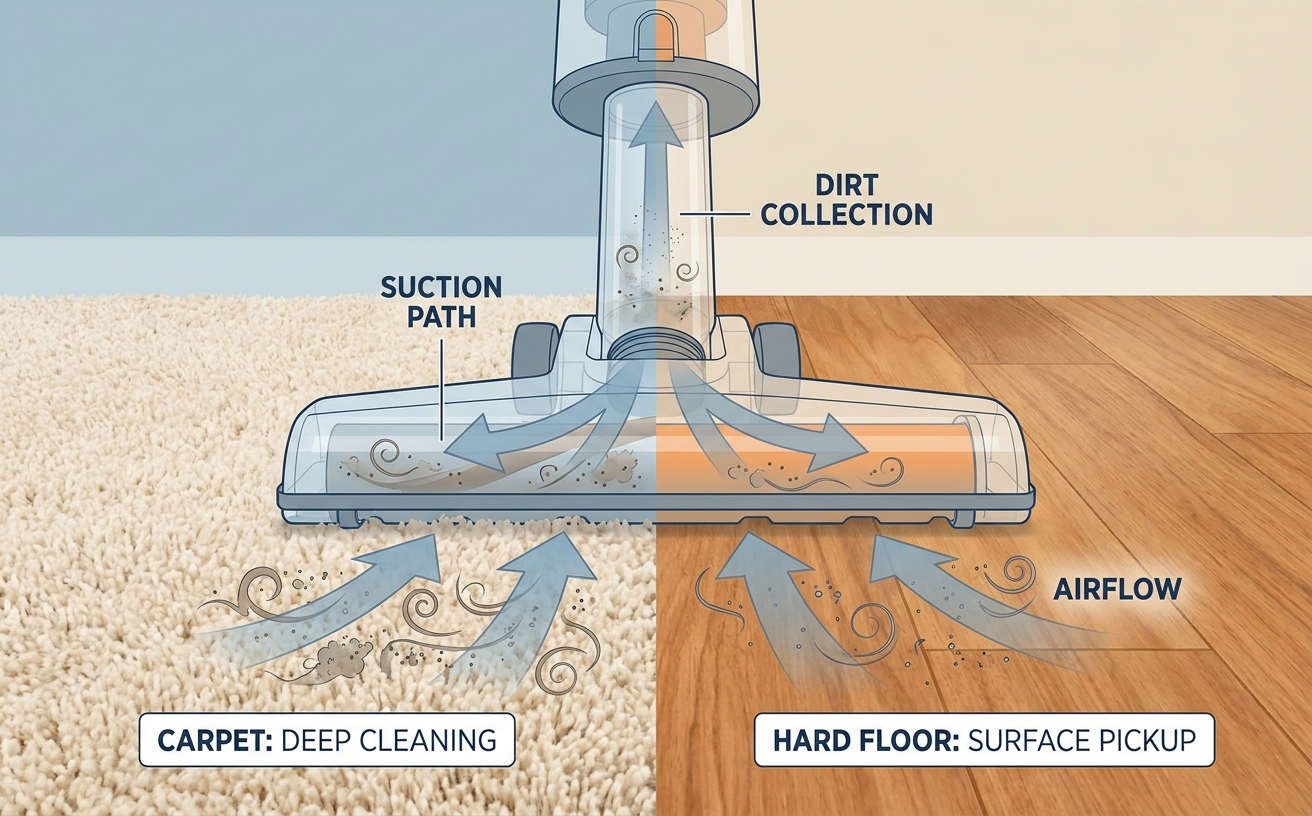
Vacuuming captures dry debris from both carpet and hard floor surfaces
What Mopping Does
Mopping uses water or a cleaning solution to dissolve and wipe away residue that dry cleaning cannot shift. Sticky spills, grease, dried food, muddy footprints, and bacteria on hard surfaces all require moisture to be removed effectively.
A mop also sanitises in a way that vacuuming cannot. Water-based cleaning breaks down microbial residue on tile and stone, which is why regular mopping matters for kitchens and bathrooms. Steam mopping adds a higher level of sanitation by using heat to kill surface bacteria without chemicals.
Mopping is suited only to hard, water-tolerant floors. It should never be used on carpet, and on timber or laminate only with a nearly dry mop. For technique, water amount, and cleaner choice on each surface, see our guide on how to mop floors.
Should You Mop or Vacuum First?
Always vacuum before mopping. This is the correct sequence for almost every cleaning situation, and the reason is straightforward: a mop dragged over loose grit and dust turns dry debris into muddy streaks that are harder to remove than the original mess.
Vacuuming first removes the dry layer of particles. Mopping then works on a clean surface, so the water and cleaning solution focus entirely on dissolving stuck-on residue rather than pushing loose dirt around. The result is a genuinely clean floor, not just a rearranged one.
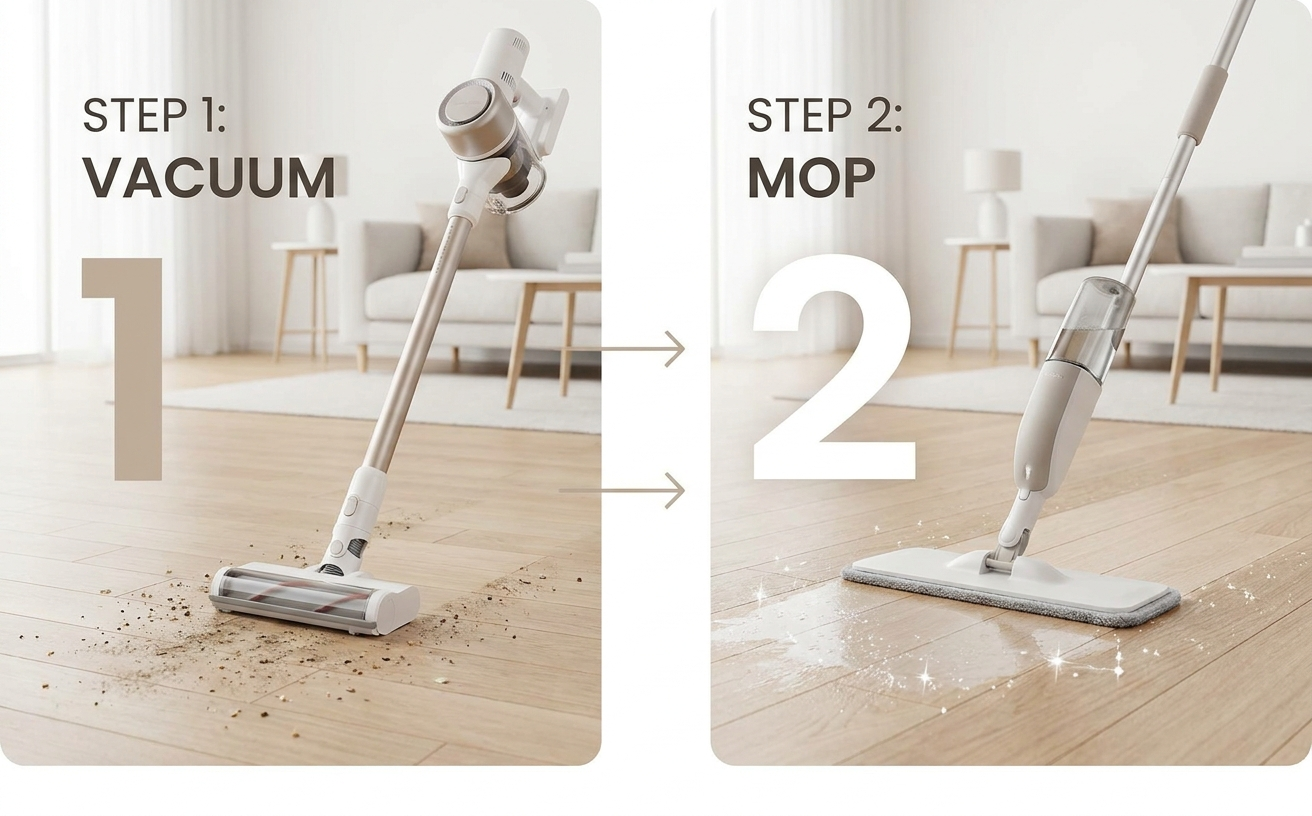
The correct cleaning sequence: vacuum to remove loose debris, then mop for a streak-free finish
The exception is a large fresh wet mess: remove the bulk first, let the area dry, then vacuum before the next scheduled mop.
Which Floors Need Vacuuming and Which Need Mopping
Not every floor needs both methods equally. The surface type determines which approach applies and how carefully it needs to be managed.
Carpet and Rugs
Carpet requires vacuuming only. Mopping saturates fibres, promotes mould growth, and damages the backing material. High-traffic carpet areas benefit from vacuuming two to three times per week; rugs under dining tables may need it daily. For a deeper clean, professional steam extraction is the appropriate method, not domestic mopping.
Tile and Stone
Tile is the most forgiving surface for both methods. It tolerates water well and benefits most from regular mopping because grout lines trap bacteria and food residue that vacuuming alone cannot address. Vacuum to remove surface grit, then mop with a diluted cleaning solution to keep grout hygienic.
Timber and Hardwood
Timber floors need careful handling. Vacuum regularly to prevent fine grit from scratching the surface, but mop sparingly and always with a nearly dry or damp mop, not a wet one. Excess moisture is the primary cause of warping and lifting in hardwood floors. A microfibre mop with minimal water and a timber-safe cleaner is the safest approach.
Laminate and Vinyl
Laminate and vinyl behave similarly to timber in terms of moisture sensitivity. Vacuum regularly and mop only with a well-wrung mop. Avoid steam mops on laminate, as the heat and steam penetrate the surface layer and cause bubbling or delamination over time.
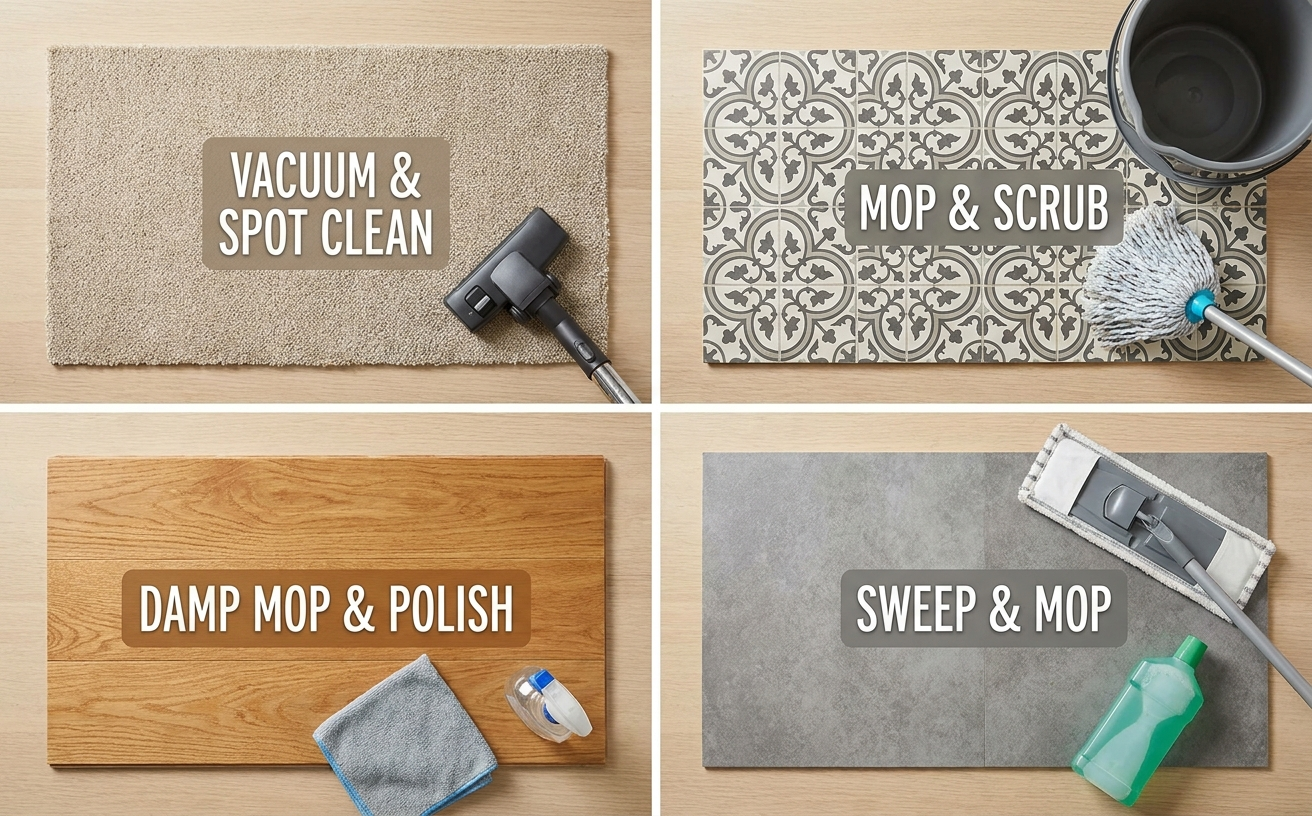
Each floor type has specific vacuuming and mopping requirements
How Often Should You Vacuum and Mop?
Frequency depends on household size, pets, and how much foot traffic moves through the home. There is no universal rule, but the following benchmarks are practical for most Australian households. For a deeper breakdown of how often you should vacuum by floor type and household, see our dedicated guide.
- Vacuuming hard floors: two to three times per week in moderate-traffic homes; daily in households with pets that shed heavily.
- Vacuuming carpet: two to three times per week as a baseline; more frequently in bedrooms and under dining furniture.
- Mopping hard floors: once per week for kitchens and bathrooms; fortnightly for bedrooms and hallways.
- Spot mopping: immediately after spills, regardless of scheduled cleaning days.
Can One Tool Handle Both Vacuuming and Mopping?
Increasingly, yes. Two product categories are worth understanding here.
Cordless Wet and Dry Vacuums
If vacuuming and mopping are normally two separate steps, a cordless wet and dry vacuum compresses them into one. The machine sprays clean water onto the floor through a roller, the roller scrubs while it moves, and a suction channel pulls the dirty water straight off the surface in the same pass. Dry debris and wet residue both end up in a dirty water tank rather than spread back across the floor.
The Narwal S30 Pro is built around this approach. It cleans hard floors in a single pass using a self-cleaning roller that flushes itself with fresh water as it moves, so the part touching the floor stays clean throughout the run. For households where most floors are hard surfaces and the bottleneck is time spent doing two cleaning steps back-to-back, this collapses the routine into one.
[cta:narwal-s30-pro-wet-dry-vacuums]
Robot Vacuum and Mop Combinations
Robot vacuum and mop combinations automate the full vacuum-then-mop sequence without manual involvement. The machine vacuums first, mops after, and lifts the mop automatically when it crosses onto carpet so fibres stay dry.
The Narwal Flow uses a track-style mop that rinses itself in real time during the cleaning run. As the mop moves across the floor, warm water continuously flushes the mop surface and a built-in scraper wipes residue off, so the mop is never dragging accumulated dirt across new ground. This addresses the common failure mode of robot mops, where dirty water from one room ends up smeared into the next. For more detail on what to look for in a robot vacuum and mop, see our buying guide.
[cta:narwal-flow-robot-vacuum-mop]
Neither category replaces the other: a cordless wet and dry vacuum offers hands-on control for targeted cleaning, while a robot handles routine maintenance autonomously.
FAQs
When shouldn’t you vacuum?
Avoid vacuuming over large amounts of liquid, broken glass, or fine ash with a standard dry vacuum. Liquids damage the motor; glass shards can puncture the dust container or hose; fine ash and plaster dust slip past most filters and clog the system. For wet messes, use a wet and dry vacuum specifically rated for liquids, or wipe up the bulk first and let the area dry before vacuuming.
Do mops carry bacteria?
Yes, particularly when the mop head stays damp and is reused without proper cleaning. Bacteria multiply quickly in moist mop fibres, which means a poorly maintained mop can spread more bacteria than it removes. To prevent this, rinse the mop head thoroughly after each use, wash it regularly in hot water, and let it dry fully before storing. Self-cleaning mop systems and disposable mop pads avoid the issue by design.
What are the drawbacks of vacuum mops?
Combined vacuum mops have real limitations. They generally produce lower suction than a dedicated vacuum, so they handle fine dust and embedded carpet debris less effectively. Most cannot mop carpet at all and require switching modes or models for mixed-floor homes. Tanks add weight, and water tanks need refilling and emptying after each use. For homes with mostly carpet, a dedicated vacuum still outperforms a vacuum mop on the surfaces that matter.
What is the best cleaning order for a whole house?
Start from the top of each room and work down: dust shelves and surfaces first so debris falls to the floor, then vacuum throughout the house, then mop hard floors last. Within the house, clean less-used rooms first and finish in high-traffic areas like the kitchen and entryway, so the cleanest version of the floor is the one most exposed to immediate use.


