
Candle wax on carpet before removal
Candle wax on carpet can look like a disaster, but it is one of the easier stains to deal with once you know the right approach. The key is working in two stages: harden the wax so it breaks away cleanly, then use controlled heat to lift whatever remains. Most households already have everything needed.
What You'll Need to Remove Wax from Carpet
Gather these items before you begin so you are not running back and forth mid-clean:
- Ice cubes or a sealed ice pack
- A plastic scraper, butter knife, or credit card
- White paper bags or plain white cloths/towels (no dyes or prints)
- A clothes iron or hairdryer
- Rubbing alcohol or a carpet spot cleaner (for dye stains)
- A vacuum cleaner
Using white cloths is important. A patterned or coloured towel can transfer its own dye onto the carpet fibres while the heat is applied.
Step-by-Step Wax Removal Process
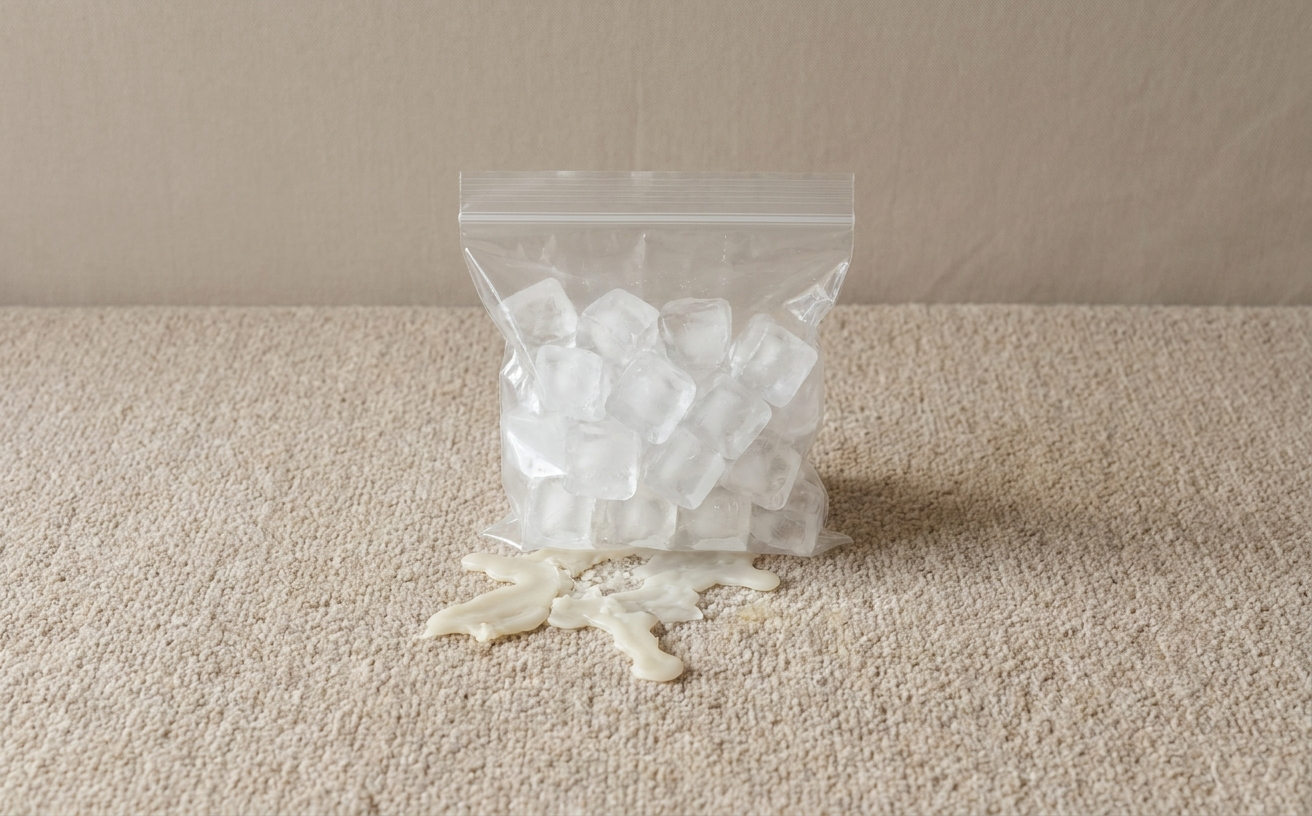
Freeze the wax with ice before scraping
Step 1: Freeze the Wax
Place a sealed bag of ice cubes or an ice pack directly on the wax. Leave it in place for five to ten minutes. The cold hardens the wax, making it brittle and much easier to remove without smearing it deeper into the pile.
If the wax is still soft or warm, wait for it to cool on its own first. Trying to scrape warm wax will only spread it further.
Step 2: Scrape Away the Bulk
Once the wax is fully hardened, use a plastic scraper, butter knife, or the edge of an old credit card to chip and break it away from the carpet. Work from the outside of the stain inward to avoid spreading wax onto clean fibres. Aim to remove as much solid wax as possible at this stage.
Follow this with a quick vacuum to pull up all the loose fragments before moving on.
Step 3: Heat Transfer with an Iron
This step draws the remaining wax out of the carpet fibres and into an absorbent material. Place a plain white paper bag or a clean white cloth over the residual wax. Set your iron to a low to medium heat setting with no steam. Press it down on the cloth for about ten to thirty seconds.
The warmth melts the trapped wax, which then absorbs into the paper or cloth rather than staying in the carpet. Lift the iron and check. Move to a clean section of the paper or cloth each time so you are not pressing melted wax back onto the carpet. Repeat until no more wax transfers.
If you do not have an iron, a hairdryer on medium heat works as an alternative. Hold it a few centimetres above the cloth and check frequently.
Step 4: Remove Any Remaining Stain
If the candle was coloured, you may still see a faint dye mark even after the wax is gone. Dampen a clean white cloth with a small amount of rubbing alcohol and blot the area. Do not scrub, as this can distort carpet fibres. Work from the edges of the stain toward the centre. For a stubborn mark, use a dedicated carpet spot cleaner according to the product instructions.
Always test any cleaning solution on a hidden section of carpet first, particularly with wool or delicate fibres.
Step 5: Let the Area Dry and Vacuum
Allow the area to air-dry completely, then vacuum once more. This lifts any compressed fibres and restores the texture of the carpet.
Does the Type of Candle Wax Matter?
Most household wax spills come from candles, and standard paraffin or soy candles respond well to the freeze-and-heat method described above. Coloured candles are the main complication, since the dye can cling to fibres after the wax itself is removed. This is when the rubbing alcohol or carpet cleaner step becomes necessary.
Beeswax and soy wax behave similarly to paraffin when frozen, so the same process applies. The only time you need a different approach is with wax products that contain oils, such as some pillar candles or specialty blends. In those cases, a small amount of dry-cleaning solvent can help dissolve any oily residue after the wax is removed.
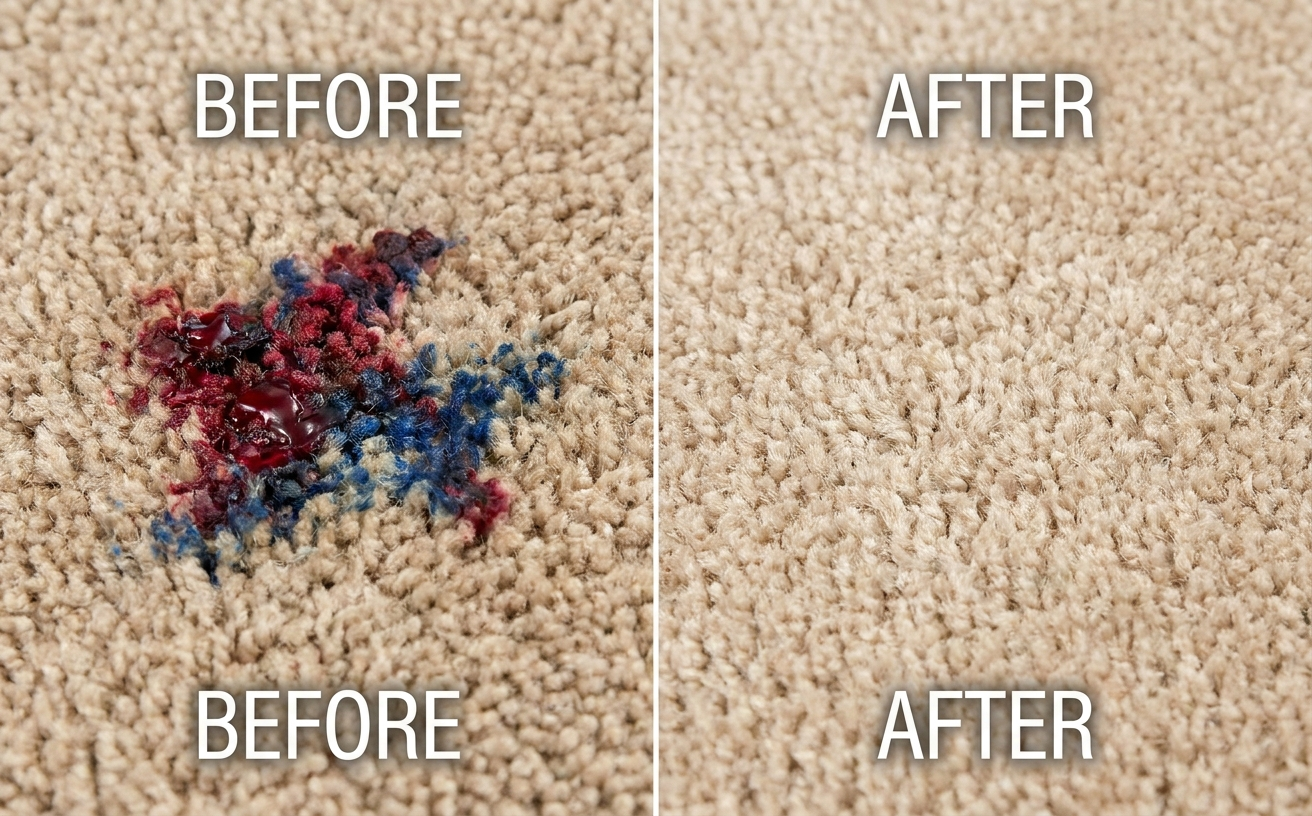
Carpet before and after wax removal
Tips to Avoid Damaging Your Carpet
- Never leave a hot iron sitting still on carpet. Keep it moving or lift it every ten to thirty seconds.
- Avoid using coloured cloths or printed paper during the heat step. Any dye in the material can transfer to your carpet under heat.
- Do not try to scrape warm wax. Waiting until it is fully cold prevents spreading.
- Test alcohol or carpet cleaner on a concealed spot first, especially on wool, silk, or patterned carpets.
- For large spills or high-pile rugs, work in small sections rather than trying to treat the whole area at once.
Household Products That Remove Wax from Carpet
If the freeze-and-iron method has lifted the wax but you are weighing what to use on any leftover residue, here is how the most common household options actually perform on carpet.
Rubbing Alcohol (Isopropyl Alcohol)
Rubbing alcohol is the most reliable household product for breaking down the dye residue left behind by coloured candles. It does not dissolve solid wax efficiently on its own, so it works best after the freeze, scrape, and iron stages have already lifted the bulk. Apply a small amount to a white cloth and blot the area. On most synthetic carpets it is safe, but always test on a hidden patch first, and avoid saturating the fibres.
White Vinegar
White vinegar is often suggested for general carpet stains, but it is not the right tool for wax. Vinegar is acidic and water-based, which means it does little to break down the oily structure of candle wax. It can help with some lingering odour after cleaning, but it should not replace the heat-transfer step.
Dish Soap
A small amount of mild dish soap mixed with warm water can help with greasy residue from oil-based or scented candles. Use it sparingly after the wax itself is removed, blot rather than scrub, and rinse with a damp cloth so no soap is left in the fibres. It is not effective on the wax itself.
WD-40
WD-40 occasionally appears in DIY cleaning lists, but it is petroleum-based and can leave an oily mark that attracts more dirt over time. For carpet, it carries more risk than benefit and is best avoided. Stick to the freeze-and-iron method or rubbing alcohol for stubborn dye.
When to Call a Professional Carpet Cleaner
The DIY method works well for most fresh or recently dried wax spills. There are a few situations where calling a professional is the better option:
- The stain covers a large area or has been left untreated for a long time
- Multiple rounds of the heat method have not fully removed a coloured dye stain
- The carpet is made of a delicate or specialty material such as wool, sisal, or a vintage rug
- There is any sign of carpet fibre distortion or pile damage after at-home treatment
Professional steam cleaning can tackle deep-set residue that home methods miss, and technicians can identify the safest approach for sensitive materials. Wool carpets in particular need a gentler routine overall, so it helps to follow a dedicated wool rug cleaning guide for ongoing care.
FAQs
Will the wax stain permanently if I treat it with heat right away?
No, but you need to freeze the wax first. Applying heat to wax before it is broken up can push it deeper into the carpet backing, making it harder to remove. Always freeze and scrape before using any heat.
Is this method safe for all carpet types?
It works well on most synthetic carpets including nylon, polyester, and polypropylene. For natural fibre carpets such as wool or sisal, use lower heat and check frequently to avoid damaging the fibres. When in doubt, test on a hidden area first or consult a professional before proceeding.
Can I use a plastic bag instead of a cloth during the heat step?
No. Plastic will melt under the iron. Use brown paper bags, plain white paper towels, or white cotton cloths. These absorb the melted wax without adding any risk of damage to the carpet.
Will isopropyl alcohol ruin my carpet?
Isopropyl alcohol is generally safe on synthetic carpets when used sparingly and applied to a white cloth rather than poured directly. Avoid saturating the area, work from the outside of the stain inward, and always test on a hidden patch first. On wool or silk carpets, skip the alcohol and use a wool-safe spot cleaner instead.
Does vinegar remove wax from carpet?
Not effectively. Vinegar is water-based and acidic, so it cannot break down the oily structure of candle wax. The freeze, scrape, and iron method is far more reliable for removing the wax itself. Vinegar may help with light residual odour after cleaning, but it is not a substitute for the heat-transfer step.

