
Clean hardwood floorboards need controlled moisture, not a soaking wet mop.
Mopping floorboards safely starts with one rule: use a damp mop, not a wet one. Hardwood and timber floors can be damaged by excess water, especially when moisture seeps into gaps, scratches, worn coating, or board edges.
For sealed hardwood floors, the safest method is to vacuum or sweep first, then mop with a lightly damp microfibre mop and a pH-neutral wood floor cleaner. Work with the grain, clean in small sections, and dry any remaining moisture quickly.
This guide covers how to mop hardwood floorboards, how often to mop hardwood, what cleaners to use, and which mistakes to avoid in Australian homes.
Check Your Floor Type Before Mopping
Most hardwood floorboards in Australian homes are sealed, which means they have a protective coating over the timber. Sealed hardwood can usually be damp-mopped carefully.
Be more cautious if your floor is:
- Unsealed timber
- Waxed timber
- Oiled timber
- Badly scratched or worn
- Engineered timber with exposed seams
- Laminate designed to look like timber
If the finish is unclear, test your cleaner in a hidden spot first. If water darkens the timber, leaves a mark, or absorbs quickly, avoid mopping until you confirm the correct care method.
What to Use for Mopping Floorboards
Use tools that remove dirt without scratching the finish or flooding the boards.
You will need:
- A vacuum with a hard floor head or soft brush attachment
- A soft broom or dry microfibre dust mop
- A clean microfibre mop
- A pH-neutral cleaner made for wood or sealed timber floors
- A bucket or spray bottle
- A clean dry cloth or dry mop pad
Avoid string mops, abrasive brushes, scouring pads, bleach, ammonia, harsh degreasers, and strong vinegar mixtures. These can leave residue, dull the finish, or increase the risk of surface damage.
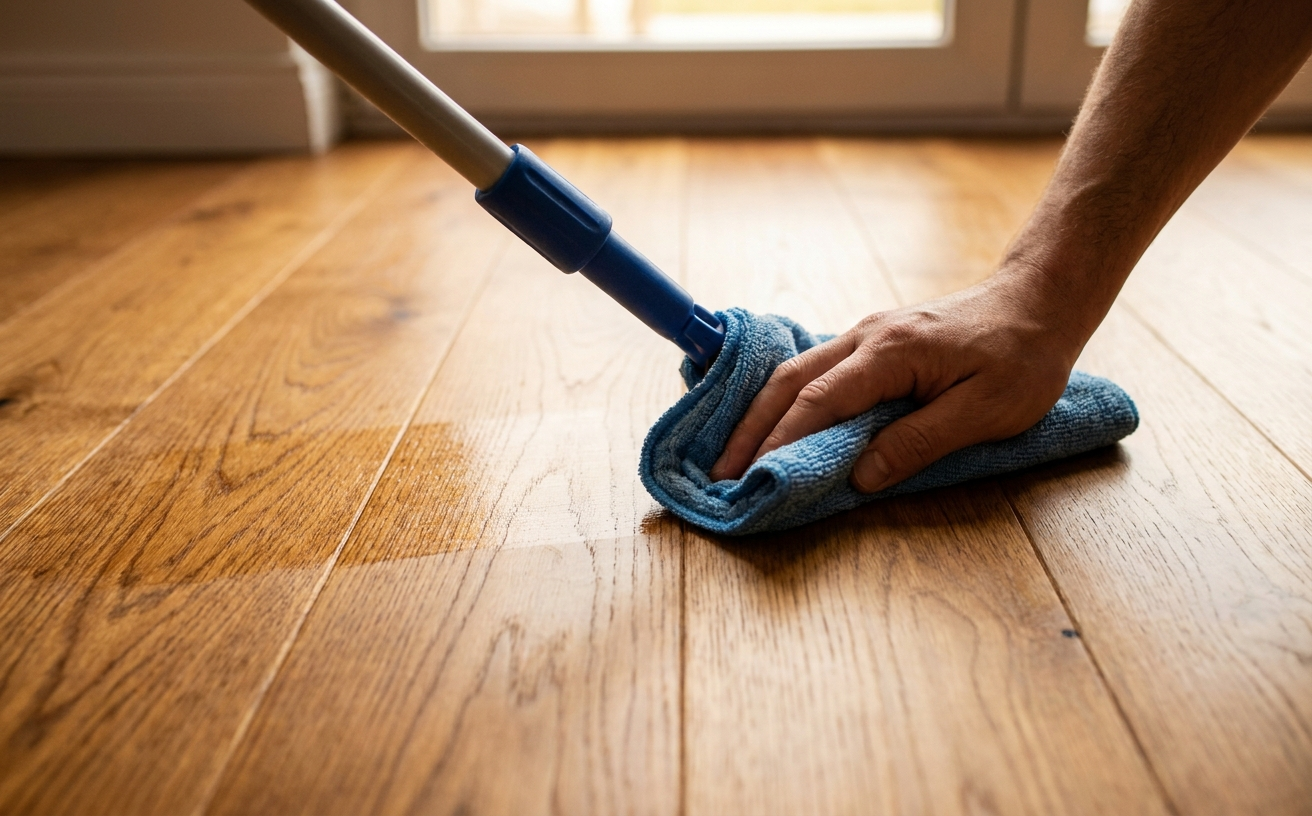
A lightly damp microfibre mop helps clean floorboards without soaking the timber.
Best Cleaner for Hardwood Floorboards
The best cleaner for hardwood floorboards is a pH-neutral wood floor cleaner made for sealed timber. It should clean without stripping the finish, leaving residue, or requiring excess water.
For light dust and footprints, a damp microfibre mop may be enough. For sticky marks, use a small amount of wood-safe cleaner on a cloth or mop pad.
Avoid:
- Bleach
- Ammonia
- Strong vinegar solutions
- Steam
- Abrasive powders
- Oil soaps unless approved by the floor manufacturer
- General multipurpose cleaners not marked safe for wood
How to Mop Hardwood Floorboards
A safe mopping routine is about sequence and moisture control. For hardwood floorboards, keep the steps below focused on protecting the timber finish.
1. Remove Dust, Sand, and Grit First
Vacuum or sweep before mopping. Grit can scratch the surface when it is dragged across the floor by a mop.
Use a hard floor vacuum setting, a soft brush head, or a dry microfibre mop. Pay extra attention to entrances, kitchens, dining areas, hallways, and places where pets track dirt indoors.
2. Use a Wood-Safe Cleaner
Choose a pH-neutral cleaner labelled safe for sealed hardwood, timber, or wood floors. Follow the dilution instructions on the bottle.
Do not add extra cleaner for a stronger result. Too much product can leave a cloudy film, attract dirt, or make floorboards feel sticky.
3. Wring the Mop Properly
The mop should be damp enough to lift marks, but not wet enough to drip. If water drips from the mop, wring it again.
A good mop pass should leave a light damp trail that starts drying quickly. If water pools on the floor or sits in the joins between boards, stop and dry the area.
4. Mop With the Grain
Mop in the direction of the wood grain where possible. This helps reduce streaks and makes it easier to lift dirt from the natural lines in the floor.
Clean in small sections instead of wetting the whole room at once. Start at the far side of the room and work back toward the exit.
5. Dry Damp Areas Straight Away
Hardwood should not stay wet after mopping. Use a dry microfibre pad or clean towel on damp patches, especially near joins, skirting boards, doorways, and under furniture.
In humid weather, open windows or use a fan to help the floor dry faster.
How Often to Mop Hardwood Floors
How often to mop hardwood depends on foot traffic, pets, children, weather, and how much outdoor dirt enters the home.
| Area | Suggested mopping frequency |
|---|---|
| Bedrooms and low-traffic rooms | Every 2 to 4 weeks |
| Living rooms and hallways | Every 1 to 2 weeks |
| Kitchens and dining areas | Weekly, or when visibly dirty |
| Homes with pets or children | Weekly in busy areas |
| Coastal, sandy, or muddy homes | Spot clean often, damp mop as needed |
Dry cleaning can be done more often than damp mopping. Vacuuming or dry mopping several times a week helps control dust and grit without exposing the floor to unnecessary moisture.
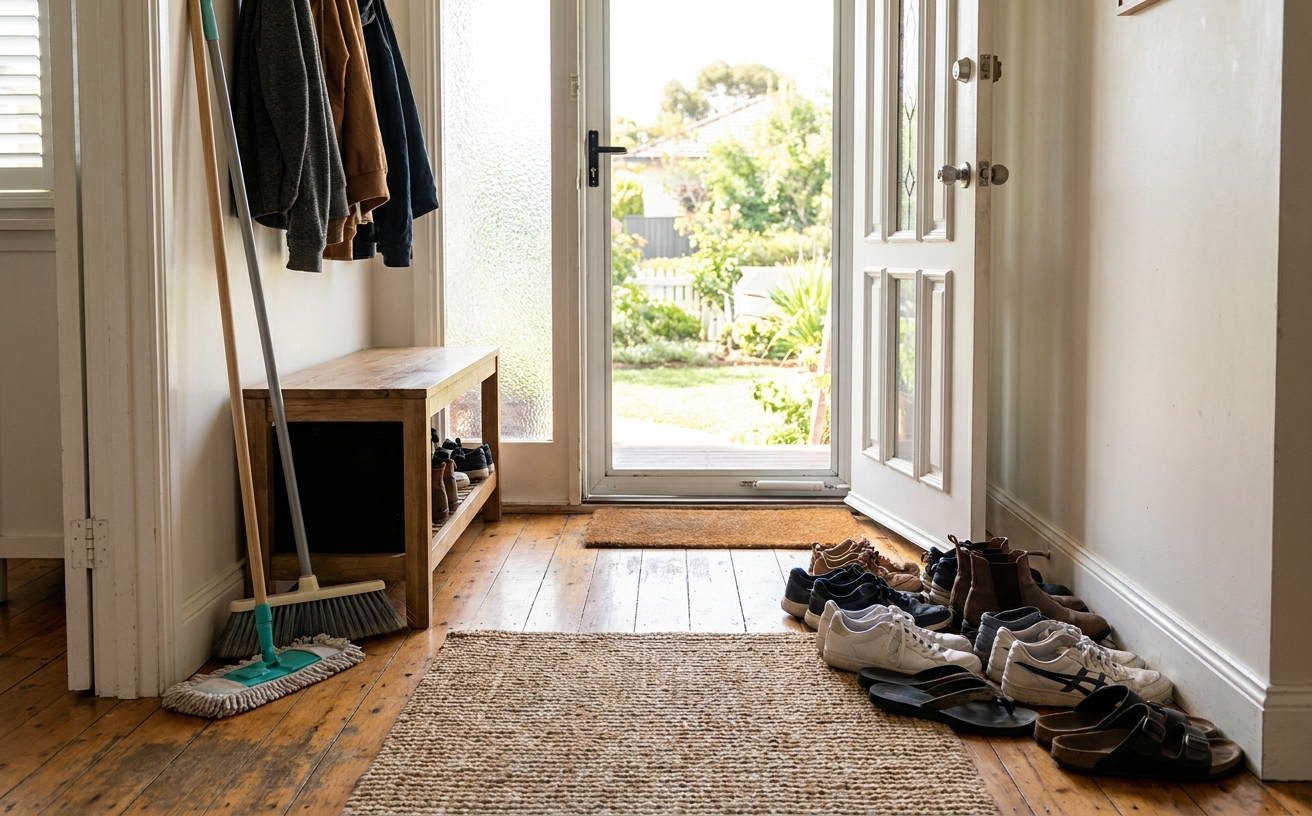
High-traffic areas usually need more frequent cleaning than bedrooms.
Can You Mop Hardwood Floors Every Day?
Daily wet mopping is not recommended for most hardwood floors. It adds unnecessary moisture and can shorten the life of the finish.
For daily maintenance, use a dry microfibre mop, soft broom, or vacuum with a hard floor attachment. Damp mop only when the floor has visible marks, sticky residue, spills, or heavier soil.
Small areas such as pet bowls, kitchen prep zones, and dining spaces can be spot cleaned more often. Keep the cloth or mop lightly damp and dry the area afterwards.
Should You Use Hot Water on Hardwood Floors?
Warm water can help loosen light grime, but it does not make hardwood safer to mop. Moisture control matters more than temperature.
Use warm water only with a suitable wood floor cleaner and a well-wrung mop. Avoid very hot water if your floor has a delicate, worn, waxed, or oiled finish.
Common Mistakes When Mopping Floorboards
Most floorboard damage comes from repeated cleaning habits, not one careful clean. The mistakes below are the ones most likely to leave hardwood dull, scratched, swollen, or harder to maintain.
Using Too Much Water
Standing water can seep into seams and damaged coating. Over time, this may cause swelling, cupping, warping, or dull patches.
Using a Steam Mop
Steam can force heat and moisture into timber. Unless your floor manufacturer clearly says steam is safe, avoid using a steam mop on hardwood.
Mopping Before Vacuuming
Mopping over grit can create fine scratches. Always remove loose dirt first.
Using Harsh Cleaners
Bleach, ammonia, acidic cleaners, and strong degreasers can damage the finish or leave the floor looking dull.
Letting the Floor Air-Dry Too Slowly
A lightly damp floor can air-dry, but visible wet patches should be dried manually. This is especially important in humid conditions.
What Damages Hardwood Floors Over Time?
Hardwood floors are most often damaged by repeated moisture exposure, grit, harsh cleaners, steam, and worn protective coating. A single careful damp mop is rarely the problem. The bigger issue is repeated over-wetting, slow drying, or cleaning with products that weaken the finish.
Scratches also make floorboards more vulnerable because water and cleaner residue can settle into damaged areas. Keeping grit off the floor, using soft cleaning tools, and drying wet patches quickly all help protect the timber for longer.
How to Clean Sticky Spots on Hardwood
For sticky spots, spray a small amount of wood-safe cleaner onto a cloth, not directly onto the floor. Hold the cloth over the mark briefly, then wipe gently with the grain.
For dried food, mud, or pet mess, remove the solid material first. Clean the remaining mark with a damp cloth and dry the area immediately.
Do not scrape with metal tools or scrub with abrasive pads.
Mopping Floorboards in Australian Homes
Australian homes often deal with beach sand, red dust, open doors, pets, kids, and humid weather. These conditions make dry cleaning especially important.
Practical habits help reduce how often you need to mop:
- Place mats at entrances
- Remove shoes indoors where practical
- Vacuum sandy areas before mopping
- Wipe spills as soon as they happen
- Keep pet bowls on mats
- Use fans or airflow in humid weather
- Lift rugs only after the floor is fully dry
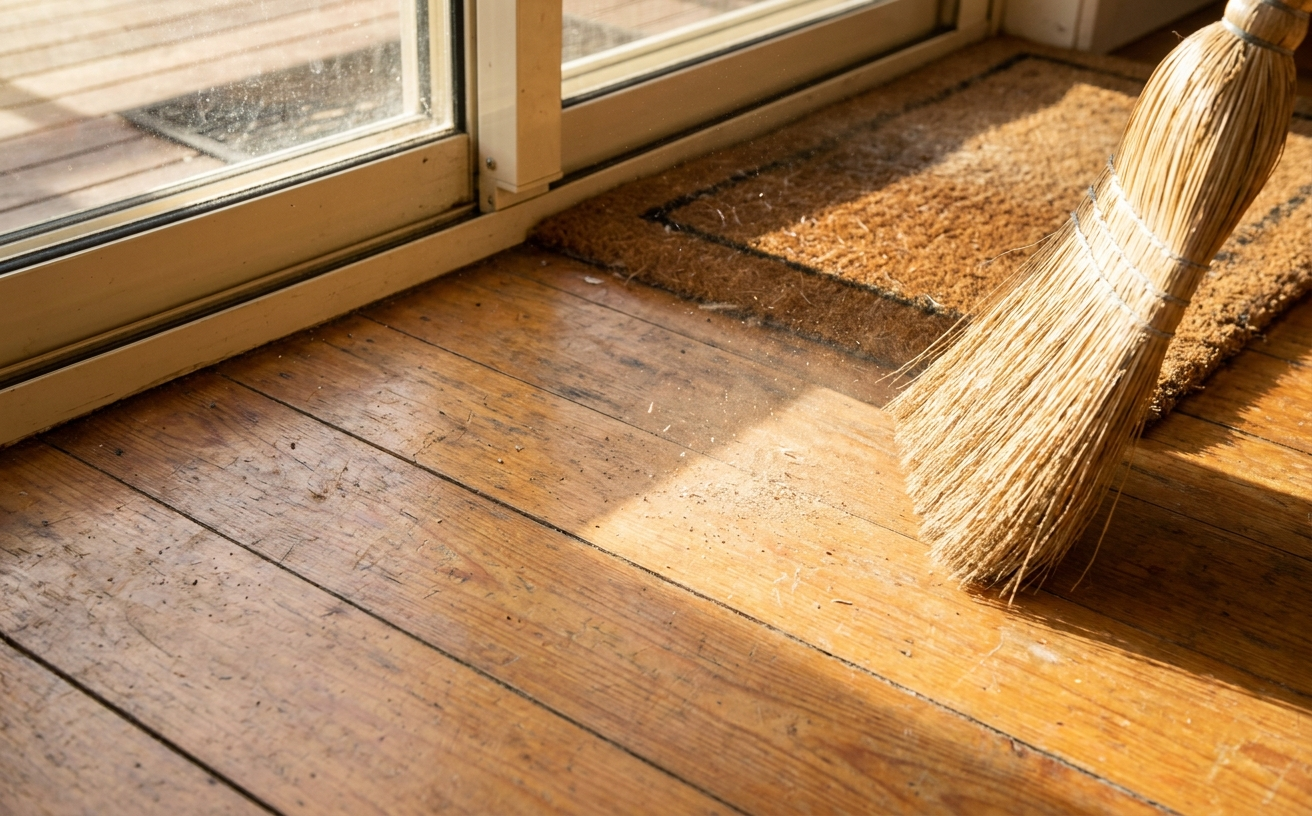
Removing grit before mopping helps protect hardwood from fine scratches.
Can Robot Mops or Wet-Dry Vacuums Be Used on Hardwood?
Robot mops and wet-dry vacuums can be useful on sealed hardwood when they help control the part of mopping that matters most: how much moisture stays on the floor.
Narwal Australia’s S30 Pro wet-dry vacuum and S30 wet-dry vacuum are relevant for floorboards because they use fresh-water washing while extracting dirty water, so the floor is not being wiped repeatedly with a dirty mop. Both models offer 20,000 Pa suction and a Wood Floor Mode designed to clean wood floors with less water. Their self-cleaning and drying functions also help keep the roller ready for the next clean instead of leaving a damp mop head sitting after use.
For automated maintenance, Narwal Flow robot vacuum and mop uses a real-time self-cleaning track mop with 16-way water spray, 12N mopping pressure, and dirty-water extraction. That combination supports a more consistent clean on hard floors by rinsing the mop during cleaning and removing dirty water as it works.
The practical benefit is simple: these features reduce manual effort while supporting the same hardwood care principle used in hand mopping, which is clean with controlled moisture and avoid leaving dirty water behind.
Quick Routine for Regular Floorboard Care
For normal maintenance, keep the routine short and consistent.
For floorboards:
- Vacuum or sweep loose dirt.
- Use a pH-neutral wood floor cleaner.
- Wring the microfibre mop until lightly damp.
- Mop with the grain in small sections.
- Dry wet patches immediately.
- Let the floor fully dry before replacing rugs.
For many homes, frequent dry cleaning and occasional damp mopping is better than heavy weekly wet mopping.
FAQ
These answers cover the practical questions that often come up after the main cleaning method is clear.
Why do my hardwood floors look streaky after mopping?
Streaks are usually caused by too much cleaner, dirty mop water, residue from old products, or mopping against the grain. Use less cleaner, rinse or replace the mop pad, and mop with the wood grain.
Can I mop engineered hardwood the same way?
Usually, yes, if it is sealed. Engineered hardwood still needs moisture control, so use a lightly damp mop, avoid steam, and dry wet patches quickly.
Can I use dishwashing liquid to mop hardwood floors?
It is not the best choice. Dishwashing liquid can leave residue and may make floorboards look dull or sticky if it is not fully removed. A pH-neutral wood floor cleaner is safer for regular mopping.
Can I use Swiffer Wet or pre-moistened floor pads on hardwood?
You can use them only if the product is labelled safe for sealed hardwood and the pad does not leave the floor too wet. Avoid using wet pads on unsealed, waxed, oiled, or worn timber floors.
Is oil soap or Murphy-style soap good for hardwood floors?
Only use oil soap if your floor manufacturer recommends it. Some oil soaps can leave a film on sealed hardwood, which may dull the finish or make future cleaning harder.
What can make hardwood floors shine again after mopping?
Start by removing residue with a wood-safe cleaner and a clean microfibre pad. If the finish still looks dull, the floor may need a manufacturer-approved polish or professional recoating rather than a DIY shine trick.

