
Mopping a floor the right way means sweeping or vacuuming first, using a damp (not soaking) mop with the correct cleaning solution for your floor type, and working in small sections from the furthest corner toward the exit. Most Australian households with timber, tile or vinyl floors only need to mop once or twice a week, but homes with pets, children or high foot traffic benefit from mopping more often. In Australian homes, seasonal dust, sand tracked in from outside and humidity swings between dry summers and wet winters all make proper technique and water control especially important for protecting floors long-term.
Proper mopping technique starts with the right approach and the right tools
What You Need Before You Start Mopping
A good mop, a bucket (ideally two), and a cleaning solution matched to your floor type. Microfibre flat mops are the most versatile choice for Australian homes because they trap dirt effectively, use less water than string mops, and work safely on timber, tile, vinyl and laminate. Spin mops are also a strong option because the wringing mechanism gives you precise control over moisture.
The two-bucket method is worth adopting if you mop manually. One bucket holds your cleaning solution, the other holds clean rinse water. Every few passes, rinse the mop in the clean water bucket before dipping it back into the solution. This stops you from spreading dirty water around and is the single biggest improvement most people can make to their mopping results.
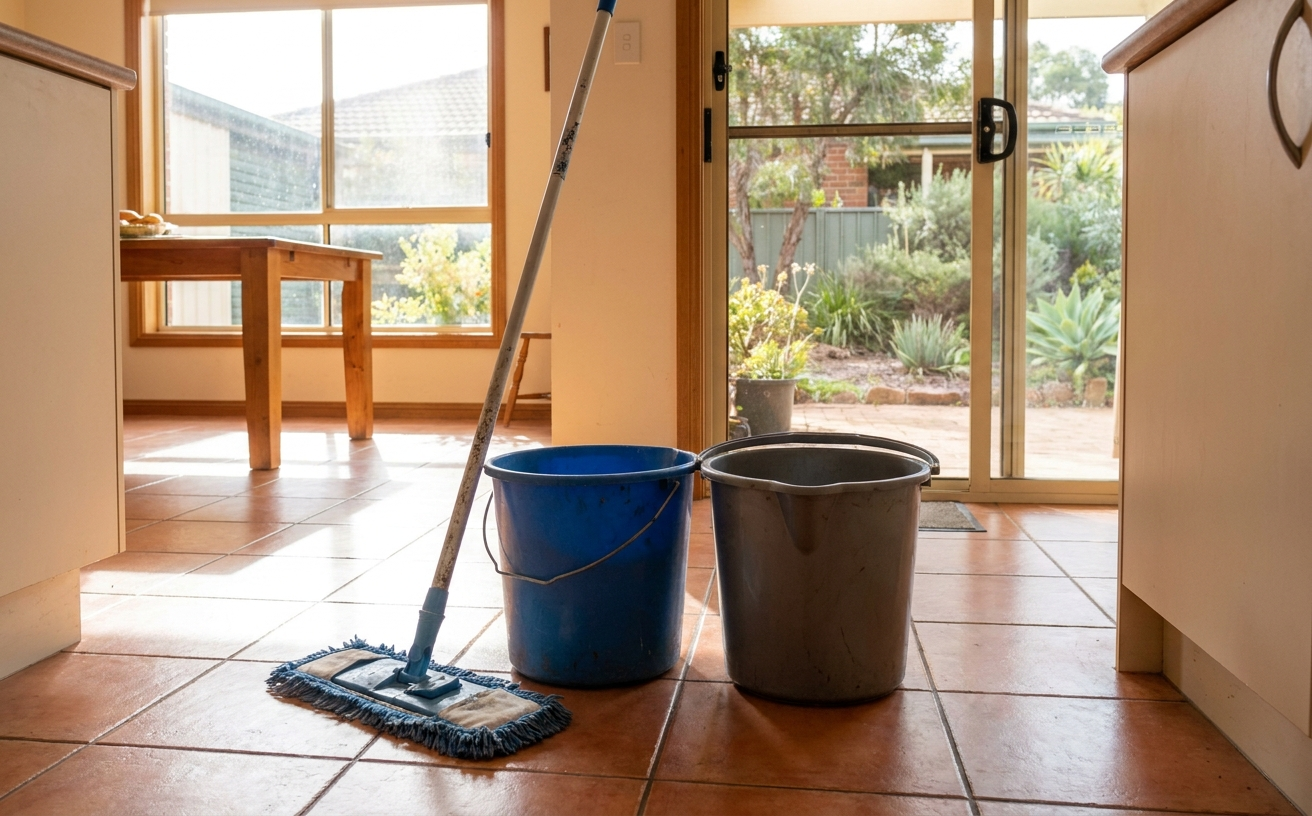
The two-bucket method keeps your rinse water separate from your cleaning solution
How to Mop a Floor Step by Step
Each step below builds on the previous one. Skipping the prep or rushing the rinse stage is where most mopping results fall apart.
Clear the Floor and Vacuum
Remove rugs, shoes, pet bowls and any loose items. Move lightweight furniture where possible and stack chairs on tables. Then sweep or vacuum thoroughly. Mopping over loose dust and crumbs turns them into a muddy paste that smears rather than cleans. If you are unsure whether vacuuming alone is enough or whether mopping is also needed, see our guide on vacuuming vs mopping.
Mix Your Cleaning Solution
Fill your solution bucket with warm water and add the recommended amount of cleaner. Stick to the dilution ratio on the label. Excess detergent leaves a sticky film that attracts dirt within hours and makes floors look cloudy.
Mop from the Far Corner Out
Dip the mop, then wring it out until it is damp rather than dripping. For timber and laminate, the mop should feel almost dry to the touch. Start at the furthest corner from the exit and work backward so you never step on freshly mopped areas.
Use a figure-eight or S-shaped motion rather than pushing back and forth in straight lines. The curved motion keeps the leading edge of the mop in constant contact with fresh floor surface, which traps dirt instead of pushing it ahead.
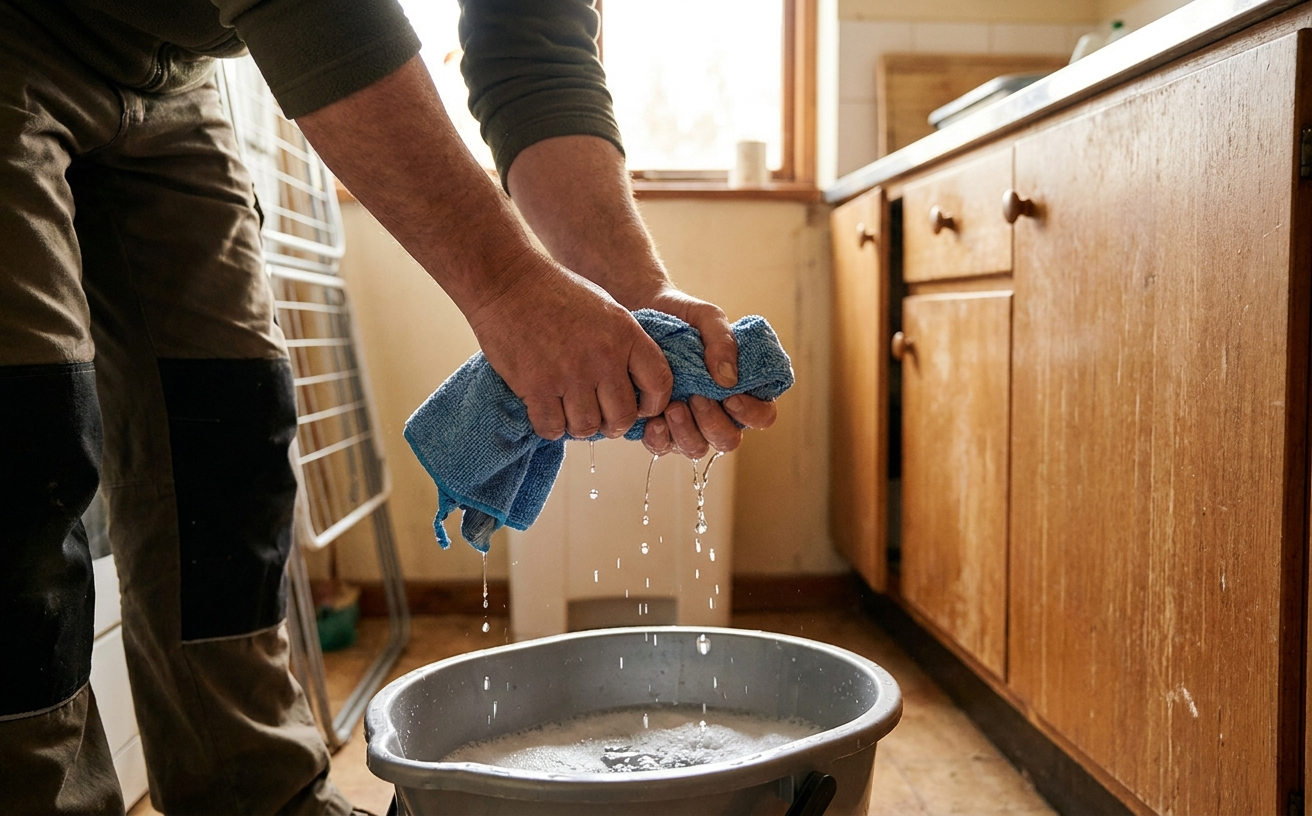
Wringing the mop until it is damp, not dripping, protects water-sensitive floors
Rinse Often and Change the Water
Work in sections of roughly two to three square metres. Rinse and wring the mop frequently, and swap the water in both buckets as soon as the rinse water turns cloudy. Let the floor air dry completely before walking on it. On humid days, opening windows or running a ceiling fan helps prevent moisture from sitting too long on water-sensitive surfaces.
Best Way to Mop Each Floor Type
Australian homes commonly have a mix of tile, timber, laminate, vinyl and sometimes concrete or natural stone. Each material handles water and cleaning products differently. For a deeper look at cleaning methods for specific surfaces, see our floor-by-floor mopping guide.
| Floor Type | Best Mop | Water Level | Cleaner | Key Caution |
|---|---|---|---|---|
| Ceramic/Porcelain Tile | Microfibre flat or spin mop | Damp | Mild all-purpose or diluted dish soap | Rinse often to avoid grout residue |
| Hardwood/Timber | Microfibre flat mop | Barely damp | pH-neutral wood floor cleaner | Excess water causes warping and mould |
| Laminate | Spray mop or microfibre | Barely damp | Laminate-specific cleaner | Water seeps into seams and swells boards |
| Vinyl/Linoleum | Microfibre flat mop | Damp | pH-neutral floor cleaner | Avoid abrasive pads and harsh chemicals |
| Natural Stone | Soft microfibre mop | Barely damp | Stone-specific cleaner (non-acidic) | Vinegar and citrus products etch stone |
| Concrete | String or microfibre mop | Damp to wet | All-purpose cleaner or diluted detergent | Sealed concrete handles water; unsealed stains easily |
For timber and laminate, if you can see pooling or a sheen of water after a mop pass, the mop is too wet. For tile, do a final pass with clean water to prevent detergent haze from building up in grout lines over time. For natural stone, avoid vinegar entirely; its acidity strips sealant and etches the surface.
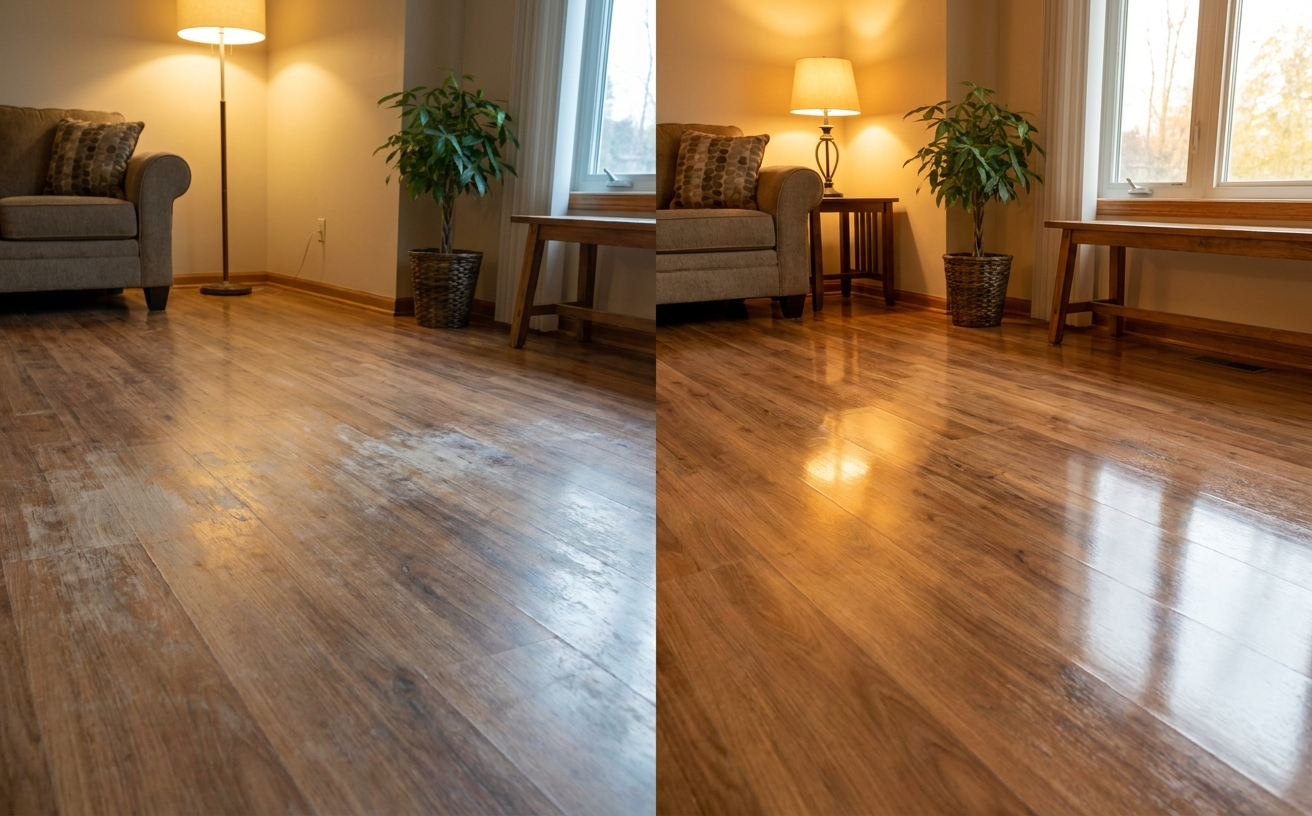
Detergent residue on the left vs a properly rinsed floor on the right
How Often Should You Mop Your Floors?
Most floors in a typical Australian household stay clean with a weekly mop. High-traffic zones like kitchens, entryways and bathrooms benefit from mopping twice a week.
Homes with pets or young children usually need more frequent mopping. Pet hair, paw prints from the backyard and food spills accumulate fast. In northern Australia where tropical conditions bring extra humidity and red dust, mopping two to three times a week is common. For a more detailed breakdown by floor type and household situation, see our guide on how often to mop floors.
Spot-cleaning spills as they happen with a damp cloth or a cordless wet-dry vacuum extends the time between full mops, which is especially practical for kitchens and dining areas.
Can a Robot Mop Handle Your Daily Floor Cleaning?
A robot mop running on a schedule gives floors a light clean every day or two, which prevents grime from building up and reduces the scrubbing needed during manual sessions. For daily maintenance across a whole home, a robot does this more consistently than most people manage by hand. For heavy stains and targeted scrubbing, manual mopping or a cordless vacuum still does the job better.
The core problem with any mop, manual or robotic, is that it gets dirty as it cleans. The Narwal Flow robot vacuum and mop addresses this directly: its rolling track mop feeds through a built-in wash module that rinses the pad with 45°C water continuously as it moves. By the time the pad contacts the next section of floor, it has already been washed, scraped clean and re-dampened. The result is that the robot never drags yesterday’s grime across today’s floor. Downward pressure sits at 12N, enough to lift dried spills without flooding the surface, and the mop extends to within 5mm of walls. On mixed flooring, it lifts the mop 12mm when crossing onto carpet and vacuums at 22,000Pa.
For households where daily hard-floor mopping is the priority and the budget is tighter, the Narwal Freo X10 Pro robot vacuum and mop covers much of the same ground at $1,499 vs the Flow’s $2,999. Its triangular mop pads extend and swing into edges and toe kicks, and a self-washing dock cleans the pads between runs. It pairs 11,000Pa suction with a DualFlow tangle-free brush, so long hair and pet fur pass straight into the dustbin instead of wrapping around the roller and gradually choking performance.
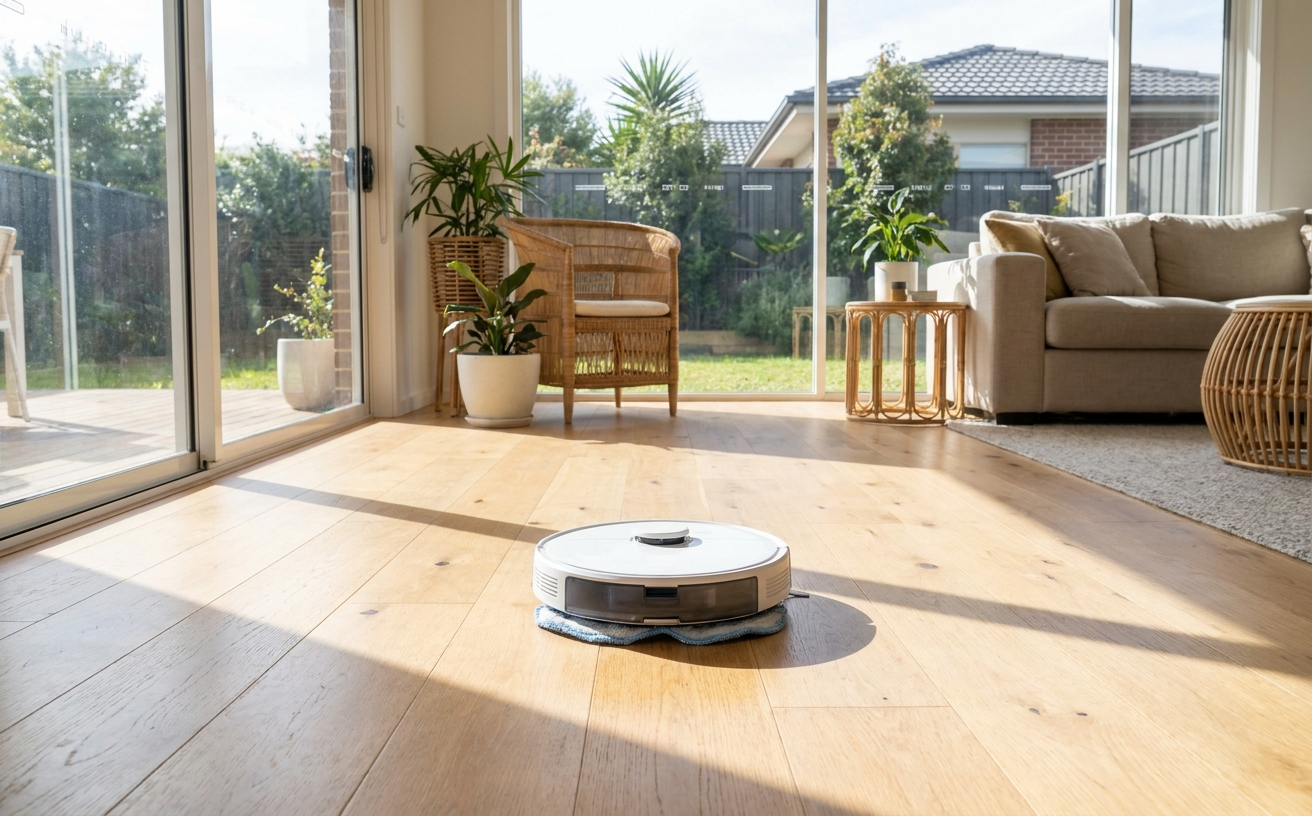
A robot mop handles daily maintenance so floors stay cleaner between manual deep cleans
For the spills a robot cannot reach in time, the Narwal S30 Pro cordless wet and dry vacuum handles spot-cleaning with 20,000Pa suction and 20N downward force. It cleans right to the edge of baseboards on both sides, and lies flat at 180° to reach under low furniture. After each use, it self-cleans with 90°C water and iron-dries the roller brush at the same temperature, so the brush stays soft and ready instead of stiffening between uses.
A practical setup for many Australian households is a robot mop for daily maintenance and a cordless wet-dry vacuum for spills and heavy messes. This reduces traditional bucket-and-mop sessions to once a fortnight or less.
How to Keep Floors Cleaner for Longer
Doormats at every exterior entry catch sand, soil and moisture before they reach your floors. In coastal and rural Australian homes, this alone can cut tracked-in dirt significantly.
Felt pads under furniture legs prevent scuff marks. Wiping up liquid spills immediately stops them from drying into sticky patches. And keep mop heads clean: wash microfibre pads after every use without fabric softener (it clogs fibres), and replace them every two to three months when they look matted.
FAQs
Should I mop with hot or cold water?
Warm water works best. It dissolves cleaning solution more effectively than cold and helps break down grease without being hot enough to damage finishes on timber or laminate. Avoid boiling water, which can warp wood and soften adhesive under vinyl tiles.
Is a steam mop safe for timber floors?
Most timber floor manufacturers recommend against it. High heat and moisture can penetrate the finish and cause boards to swell or delaminate. Steam mops work well on sealed tile and some vinyl, but check the manufacturer’s care guide for timber and engineered wood.
Can I use dish soap to mop my floors?
A few drops of dish soap in warm water work well on tile and vinyl. On timber and laminate, dish soap can leave a filmy residue that dulls the finish over time, so a pH-neutral wood floor cleaner is a safer choice for those surfaces.
What should you not use on hardwood floors?
Vinegar, steam mops, excess water, abrasive scrubbing pads and ammonia-based cleaners. All of these can strip the polyurethane finish, cause swelling, or leave permanent dull patches. Stick to a barely damp microfibre mop and a cleaner made for timber.
What can I use to make floors smell good after mopping?
Add a few drops of essential oil (eucalyptus, lemon or lavender) to your mop water. This works on tile and vinyl. For timber, choose a wood floor cleaner that already includes a light fragrance, since adding oils directly can leave residue on sealed finishes.

