




Floors stay sticky after mopping for one main reason: residue. Leftover detergent, dirty mop water, the wrong cleaner for your floor type, or skipping a final rinse all leave a thin film that feels tacky once dry. Almost every case can be fixed with the right cleaner, a clean tool, and a proper rinse. This guide covers the seven real causes, three proven fixes, and what actually works on tile, vinyl, laminate, and hardwood.
Quick Summary
- Sticky floors are usually caused by cleaner residue, dirty water, unclean tools, or no final rinse.
- Too much cleaner or the wrong type leaves a film that traps dust.
- The fastest fix: mop again with clean water or a properly diluted pH-neutral cleaner, then dry the floor.
- Hardwood, laminate, tile, and vinyl each need different products.
- Frequent water changes, clean tools, and light routine maintenance prevent buildup.
- A robot mop such as the Narwal Flow helps maintain floors between deeper manual cleanings.
Why Is My Floor Sticky After Mopping?
Sticky floors come from cleaner residue, dirty water, or poor cleaning habits. A thin film is left behind and makes the surface feel tacky once it dries. The seven causes below cover almost every case.
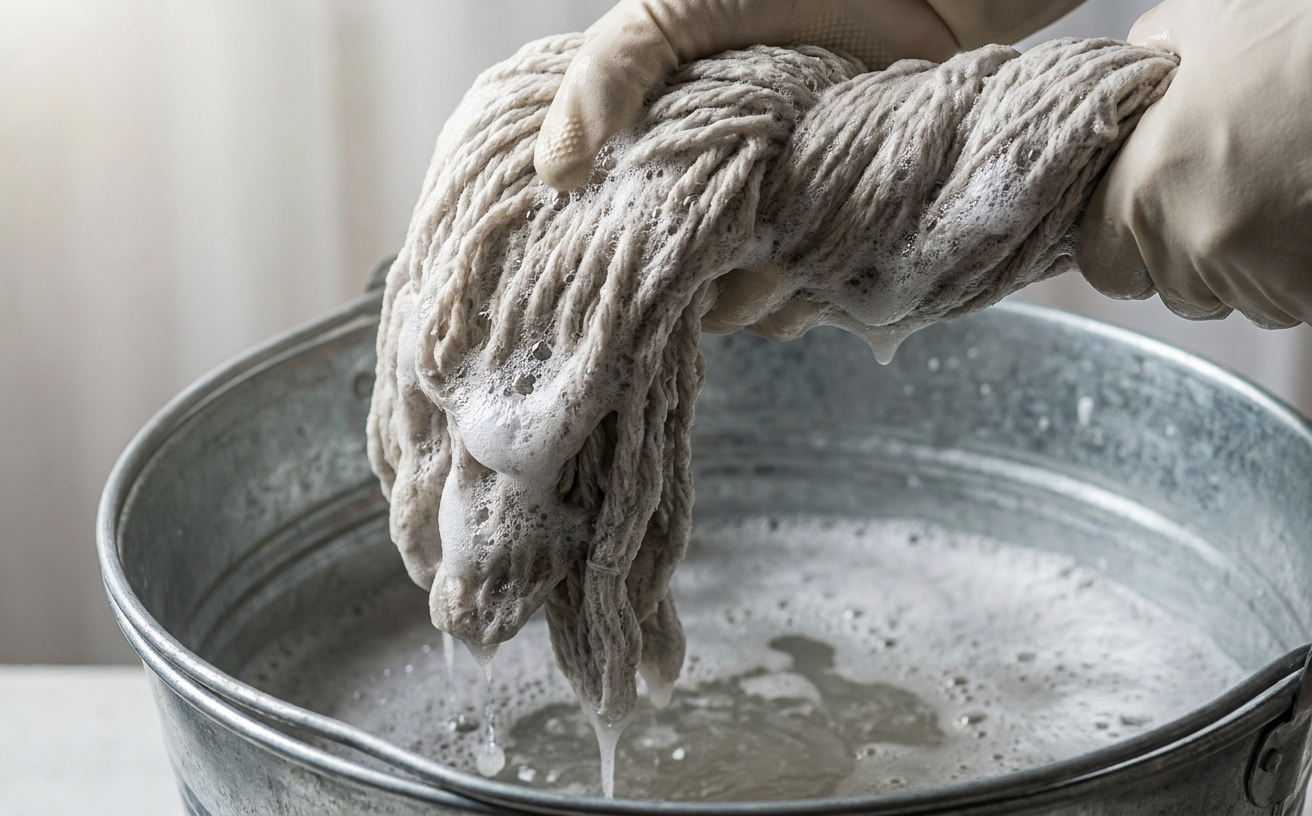
Excess detergent and reused dirty water are the two most common causes of residue
1. Too Much Cleaning Solution
Undiluted or over-concentrated cleaner leaves a soapy film that traps dust.
Fix: Follow the label dilution. If the floor still feels sticky, mop again with plain clean water.
2. Wrong Type of Cleaner
All-purpose cleaners on wood or laminate often leave a waxy or oily finish.
Fix: Use a pH-neutral cleaner made for your specific floor type.
3. Dirty or Reused Cleaning Water
Reused mop water redeposits dirt and soap onto the floor as it dries.
Fix: Change water often. The two-bucket method — one clean, one for rinsing — keeps the final pass cleaner. For the full manual routine, see how to mop a floor.
4. Unclean Mop or Tools
A dirty mop head carries dried detergent and old residue into every new clean.
Fix: Wash mop pads after every use, replace worn heads, and rinse buckets before storing.
5. Not Rinsing After Mopping
Cleaner left on the floor hardens as it dries, creating a sticky layer.
Fix: Go over the floor again with plain warm water, then dry with a clean microfiber cloth.
6. Hard Water or Mineral Buildup
Calcium and magnesium in hard water combine with soap to leave streaks or rough sticky patches.
Fix: Use distilled or filtered water. A mild vinegar solution dissolves mineral buildup on suitable floors.
7. Environmental Factors
Humidity and poor airflow keep floors damp, letting residue settle instead of evaporating.
Fix: Open windows or run a fan so the floor dries quickly.
| Cause | Why It Happens | Quick Fix |
|---|---|---|
| Too much cleaner | Soap film remains on the floor | Use less detergent, rinse with clean water |
| Wrong cleaner type | Leaves chemical residue or oily finish | Use a pH-neutral cleaner for your floor |
| Dirty mop water | Grime is redeposited as it dries | Change water often |
| Unclean mop or tools | Old residue transfers back onto the floor | Wash or replace cleaning tools |
| No final rinse | Detergent dries in a sticky layer | Rinse and dry after cleaning |
| Hard water | Minerals combine with soap | Use filtered water or a mild vinegar mix |
| Humidity | Slow drying traps residue | Improve ventilation |
Why Is My Floor Still Sticky After Mopping with Vinegar?
Vinegar can leave its own residue when it's too strong, not rinsed off, or used on the wrong floor type. The acidity that cuts soap film can also react with leftover detergent and form a tacky layer once dry.
Four common reasons vinegar makes floors sticky:
- Concentration too high. The safe ratio is 1 cup of white vinegar per 1 gallon of warm water.
- No final rinse. Vinegar dries on the surface and traps any dust that lands on it.
- Wrong floor type. Avoid vinegar on natural stone, marble, unsealed hardwood, or wax-coated floors — it dulls the finish.
- Reaction with old detergent. Vinegar can react with an existing soapy film and create a worse residue.
Fix: Mop again with plain warm water and dry with a microfiber cloth. For routine cleaning on sealed tile or vinyl, use a pH-neutral cleaner unless you specifically need to dissolve mineral buildup.
How to Clean Sticky Floors After Mopping (3 Proven Methods)
Three methods cover most cases — light residue, daily maintenance, and recurring stickiness.
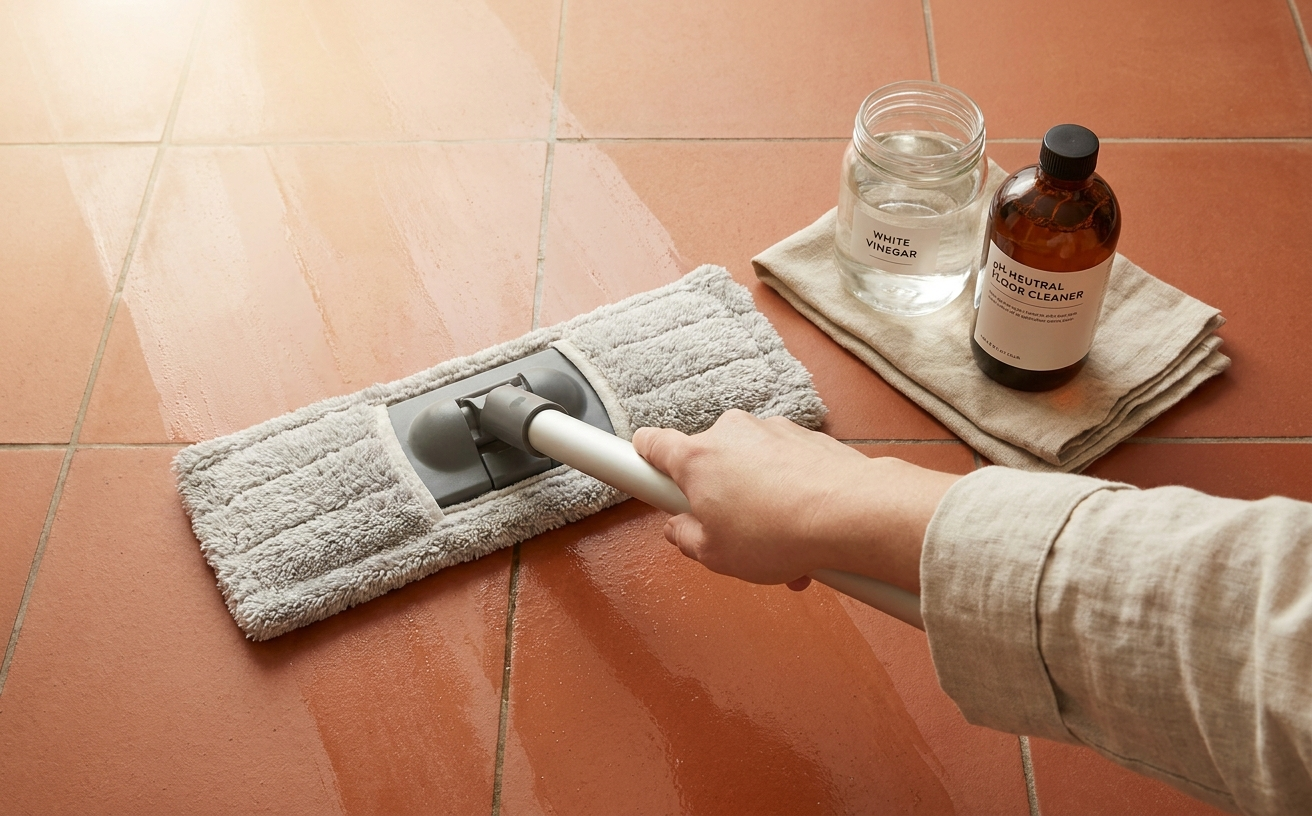
The traditional method works for light to moderate stickiness
1. Traditional Cleaning Method (Vinegar or pH-Neutral Cleaner)
Best for light to moderate stickiness.
Steps
- Sweep or vacuum to remove dust and loose debris.
- Mix 1 cup of white vinegar with 1 gallon of warm water, or dilute a pH-neutral cleaner per the label.
- Soak the mop, then wring it until only damp.
- Mop one side of the room to the other, overlapping each pass.
- Replace the water when it turns cloudy.
- Rinse with clean warm water.
- Dry with a clean microfiber cloth or dry mop.
Why it works
Vinegar's mild acidity dissolves soap scum and mineral residue. Warm water softens buildup, and a final rinse stops new residue from forming.
When to use it
Every 1 to 2 weeks for upkeep, or whenever stickiness appears.
2. Smart Cleaning Method (Robot Mop Deep Cycle)
Robot mops keep floors residue-free between manual cleanings. Models such as the Narwal Flow use a FlowWash real-time self-cleaning track mop that rinses with warm water on every pass, so dirty water is never reapplied. On-board dirt sensing decides where to re-mop until the surface is clean. For surface-specific robot choices, compare robot vacuum for tile floors and robot vacuum for hardwood floors.
[cta:narwal-flow-robot-vacuum-mop]
Steps
- Clear large debris, cords, and obstacles.
- Fill the clean water tank. If needed, add a small amount of manufacturer-approved mild or pH-neutral cleaner.
- Select a deep-cleaning or sticky-floor mode if available.
- Let the robot complete a full cycle.
- Let the base station wash and dry the mop pads automatically.
Why it works
Consistent pressure and controlled moisture prevent overwetting and detergent buildup. Real-time mop washing stops dirty residue from being spread across the floor.
When to use it
Daily or every other day, especially in kitchens and high-traffic areas.
3. Combined Method (Deep Clean + Smart Maintenance)
Best for households where sticky floors return often.
Steps
- Run the traditional method every 1 to 2 weeks for heavier residue.
- Use a robot mop daily or every other day for light maintenance.
- Stick to mild or pH-neutral cleaners for both.
- Let the floor dry fully before walking on it.
Why it works
Manual cleaning removes stubborn buildup; daily maintenance stops residue from returning.
When to use it
Busy households, homes with pets, or kitchens where grease and spills cause recurring stickiness.
| Method | Best For | Tools Needed | Frequency | Effectiveness |
|---|---|---|---|---|
| Traditional | Deep residue removal | Mop, bucket, vinegar or neutral cleaner | Every 1–2 weeks | High |
| Smart | Daily maintenance | Robot mop, mild cleaner | Daily or every other day | Moderate to high |
| Combined | Long-term cleanliness | Mop + robot mop | Manual weekly + robot daily | Highest |
Test any new cleaning solution on a small, hidden area first.
Best Tools and Cleaners to Remove Sticky Residue
The right cleaner removes the film without damaging the floor. The table below maps each product type to what it does best. For hardwood-specific wet-dry tools, compare a hardwood floor vacuum mop.
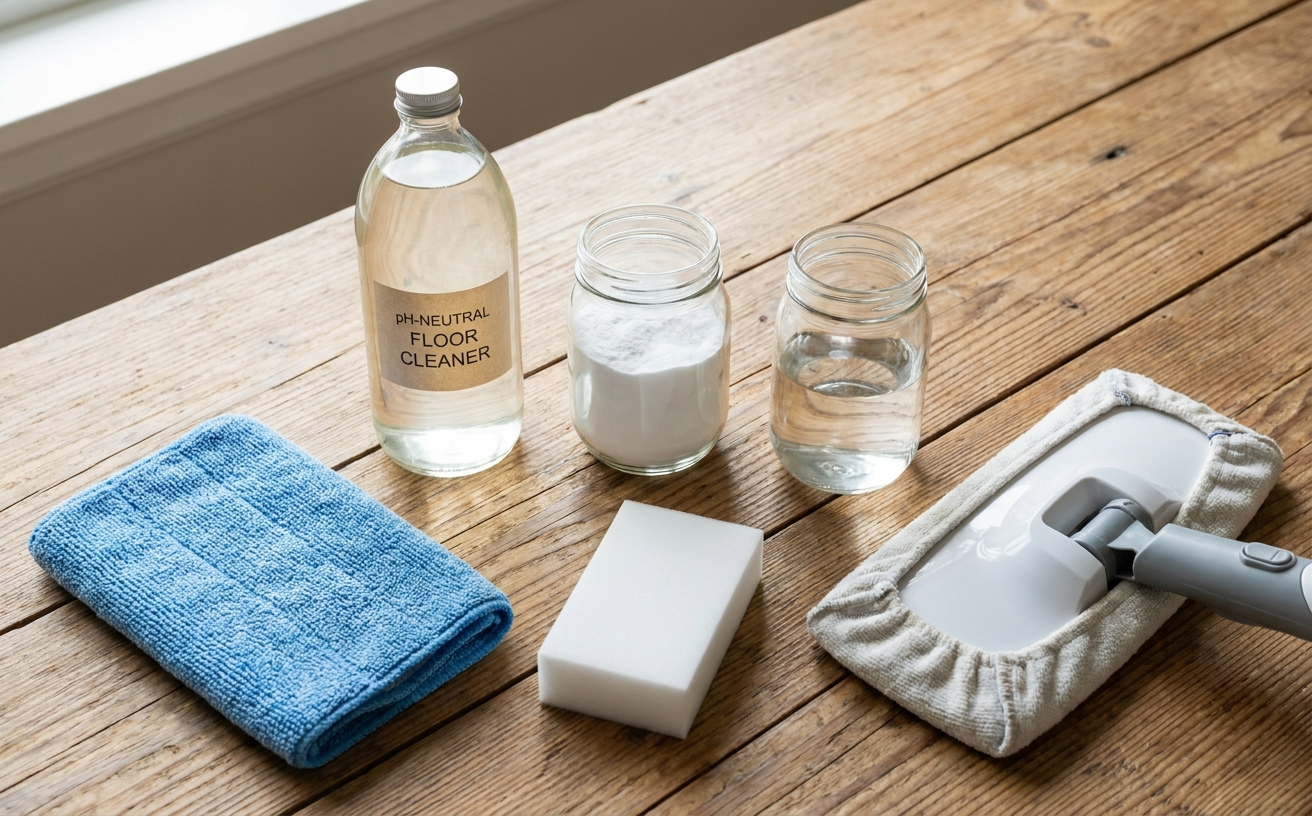
Matching the cleaner to the residue type makes the difference
| Type | Name / Category | Best For | Why It Works | Key Tips / Cautions |
|---|---|---|---|---|
| Natural | Vinegar solution | Tile, vinyl, laminate | Mild acidity dissolves soap film and minerals | 1 cup vinegar : 1 gallon warm water; avoid on stone or marble |
| Natural | Baking soda paste | Sticky spots, light grease | Gentle abrasion lifts buildup | Apply, wait 5 min, wipe, rinse |
| Commercial | pH-neutral cleaner | All sealed floors | Cleans without leaving residue | Follow dilution; use warm water |
| Commercial | Enzymatic cleaner | Food spills, pet messes | Breaks down organic residue | Let it sit briefly; check floor compatibility |
| Commercial | Neutral degreaser | Kitchen, oily areas | Lifts grease without harshness | Don't mix with acidic or alkaline products |
| Commercial | Alcohol-based cleaner | Hardwood, laminate | Fast evaporation, no overwetting | Test in a small area first |
| Manual tool | Microfiber mop | All sealed floors | Traps fine dust and detergent film | Use clean pads each time |
| Manual tool | Steam mop | Sealed tile, vinyl, stone | Heat loosens hardened grime | Avoid unsealed wood or wax-coated floors |
| Manual tool | Dual-tank spray mop | Daily light cleaning | Keeps clean and dirty water separate | Use distilled water or mild cleaner |
| Manual tool | Melamine sponge | Small stubborn patches | Light abrasion lifts residue | Use gentle pressure; avoid polished wood |
| Smart tool | Robot mop (e.g. Narwal Flow) | Daily automatic cleaning | Controlled water + real-time mop washing prevents buildup | Use only mild or approved cleaners |
Which Cleaner and Tool by Scenario
| Scenario | Floor Type | Common Residue | Recommended Cleaner | Recommended Tool |
|---|---|---|---|---|
| Floor sticky after mopping | Vinyl, laminate | Soap or detergent film | pH-neutral cleaner | Microfiber mop |
| Kitchen, cooking area | Tile, hybrid | Grease, oil buildup | Neutral degreaser | Steam mop or dual-tank mop |
| Pet or dining area | Tile, vinyl | Food, organic residue | Enzymatic cleaner | Microfiber mop or robot mop |
| Hardwood maintenance | Hardwood | Light oily film | Alcohol-based or residue-free cleaner | Microfiber mop |
| Quick daily refresh | Any sealed floor | Light dust or haze | Mild vinegar mix or pH-neutral cleaner | Robot mop such as Narwal Flow |
| Stubborn patches | Any hard surface | Glue, juice, sugar stains | Baking soda paste or melamine sponge | Hand cleaning |
Sticky Floors by Floor Type: Tile, Vinyl, Laminate & Hardwood
Each material reacts differently to cleaners, water, and residue, so the fix changes with the surface.
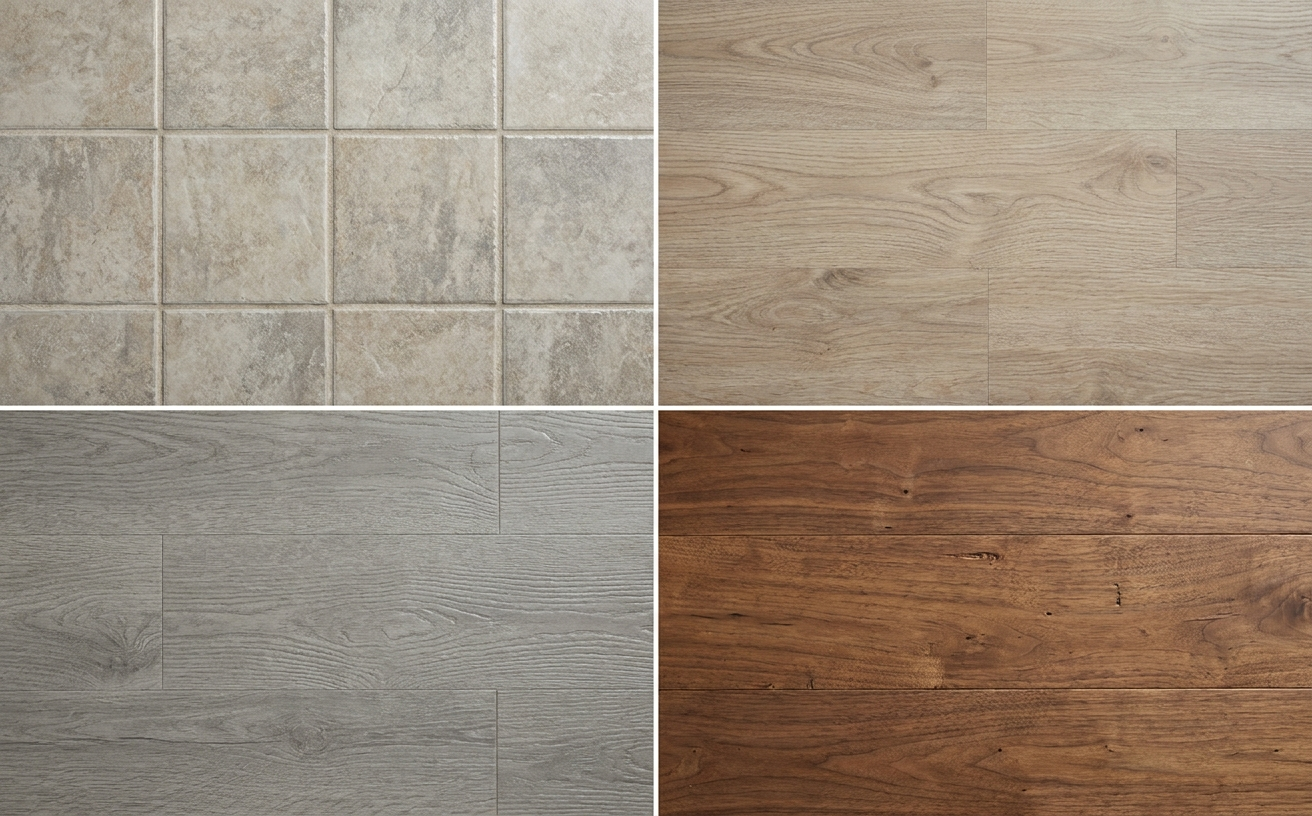
Each floor type has its own residue triggers and cleaner rules
Why tile floors get sticky after mopping
Tile is sealed and tolerates more water, so detergent residue is the usual cause. Grout traps soap and grease, especially in kitchens. Use a pH-neutral cleaner or neutral degreaser, rinse with warm water, and avoid all-purpose sprays. A steam mop is fine on sealed ceramic and porcelain. For full tile-care steps, see how to wash tile floors.
Why laminate floors get sticky after mopping
Laminate is sensitive to water. Too much liquid sits on the surface and dries into a sticky film. Use a damp — not wet — microfiber mop, a pH-neutral cleaner made for laminate, and dry the floor right after. Skip vinegar, wax-based products, and any cleaner promising a shine coating.
Why vinyl floors get sticky after mopping
Vinyl's smooth, low-porosity surface shows residue fast. Soap film, oil-based cleaners, and hard water minerals are the usual culprits. Use a pH-neutral cleaner at the labeled dilution, rinse with warm water, and dry. Switch to distilled water if your area has hard water.
Why hardwood floors get sticky after mopping
Hardwood is the most sensitive of the four. Stickiness usually comes from overwetting, vinegar on a sealed or waxed finish, or an all-purpose cleaner that leaves an oily layer. Use a barely damp microfiber mop and a cleaner labeled for hardwood. Avoid vinegar, steam mops, and any product not approved by the floor manufacturer. For a broader wood-care routine, see how to clean wooden floors and mopping hardwood floors.
How to Prevent Sticky Floors After Mopping
Most residue comes from too much cleaner, no final rinse, or dirty tools. The habits below address all three.
Use the right cleaner
Choose a pH-neutral or manufacturer-approved cleaner for your floor. Wrong formulas leave a film.
Rinse after mopping
A final pass with clean water removes the detergent layer before it dries.
Clean spills right away
Wipe juice, grease, and food before they dry — hardened spills are far harder to remove.
Keep mats at entrances
Mats stop tracked-in dirt, oils, and moisture from reaching the floor. Wash them regularly.
Follow a regular cleaning schedule
Frequent light cleaning beats occasional heavy scrubbing for preventing buildup.
Start with clean tools
Wash mop pads and rinse buckets after every use.
FAQ
Why is my floor sticky after mopping with vinegar?
Vinegar that's too strong or not rinsed off leaves streaks or reacts with some finishes. Dilute it correctly (1 cup : 1 gallon warm water) and avoid using it on stone, marble, or unsealed wood.
What is the best cleaning solution for sticky floors?
A pH-neutral or residue-free cleaner suited to your floor type is the safest choice. Vinegar works on some sealed floors but is not right for every material.
How do I clean sticky hardwood floors?
Use a slightly damp microfiber mop and a cleaner designed for hardwood. Avoid soaking the floor, and keep vinegar and excess water away from wood finishes.
How long should I wait before walking on a freshly mopped floor?
Wait 15 to 30 minutes for most sealed floors, or until the surface is completely dry. Walking on damp floors traps dust and detergent — a main cause of sticky residue.
Why is my kitchen floor sticky after mopping?
Kitchens collect grease and cooking oil that regular cleaners can't break down. Use a neutral degreaser, rinse with warm water, and dry. Avoid all-purpose sprays, which leave a tacky film.
What's the best enzyme cleaner for sticky floor residue?
Enzyme cleaners work best on organic residue from food spills, pet messes, or sugary drinks. Choose a pH-neutral, floor-safe enzyme product, let it sit briefly, then wipe and rinse. Don't mix with acidic or alkaline cleaners.
Conclusion
Use the right cleaner, rinse when needed, keep tools clean, and maintain a regular routine. Traditional mopping handles light residue; a robot vacuum and mop reduces buildup between deeper cleans. The Narwal Flow combines real-time mop washing with warm water, on-board dirt sensing, and controlled water flow to keep floors residue-free with less effort.


