
Tile floors can look spotless for years, or permanently dingy after a few bad cleans. The difference usually comes down to two things: the right cleaner and the right technique. Whether you're dealing with porcelain, ceramic, or natural stone, washing tile floors the wrong way leaves residue, damages grout, or simply spreads the dirt around rather than removing it.
The Right Cleaner for Tile Floors
The most common mistake people make when washing tile floors is reaching for whatever cleaner is under the sink. Vinegar is popular, and it does dissolve mineral deposits and light grease, but it can strip grout sealant over time and should never be used on natural stone like marble, travertine, or limestone, where the acidity etches the surface permanently.
For most tile types, a pH-neutral tile cleaner is the safest and most effective choice. These are widely available at hardware stores and supermarkets, and they clean without leaving a residue or damaging sealants. A few drops of dish soap in warm water also works well for routine cleans. It cuts grease, rinses cleanly, and is safe around kids and pets.
What to avoid:
- Acidic cleaners (vinegar, lemon juice) on natural stone or sealed grout
- Bleach for regular cleaning. It's a disinfectant, not a daily floor cleaner, and fumes require ventilation
- Products labelled as "multi-surface" that aren't specifically floor-safe. Many leave a sticky film
- Using too much of any product, which creates residue that attracts more dirt
If your floors look dull or feel sticky after cleaning, the cause is almost always product residue. Either too much cleaner was used, or the floor wasn't rinsed with plain water afterwards.
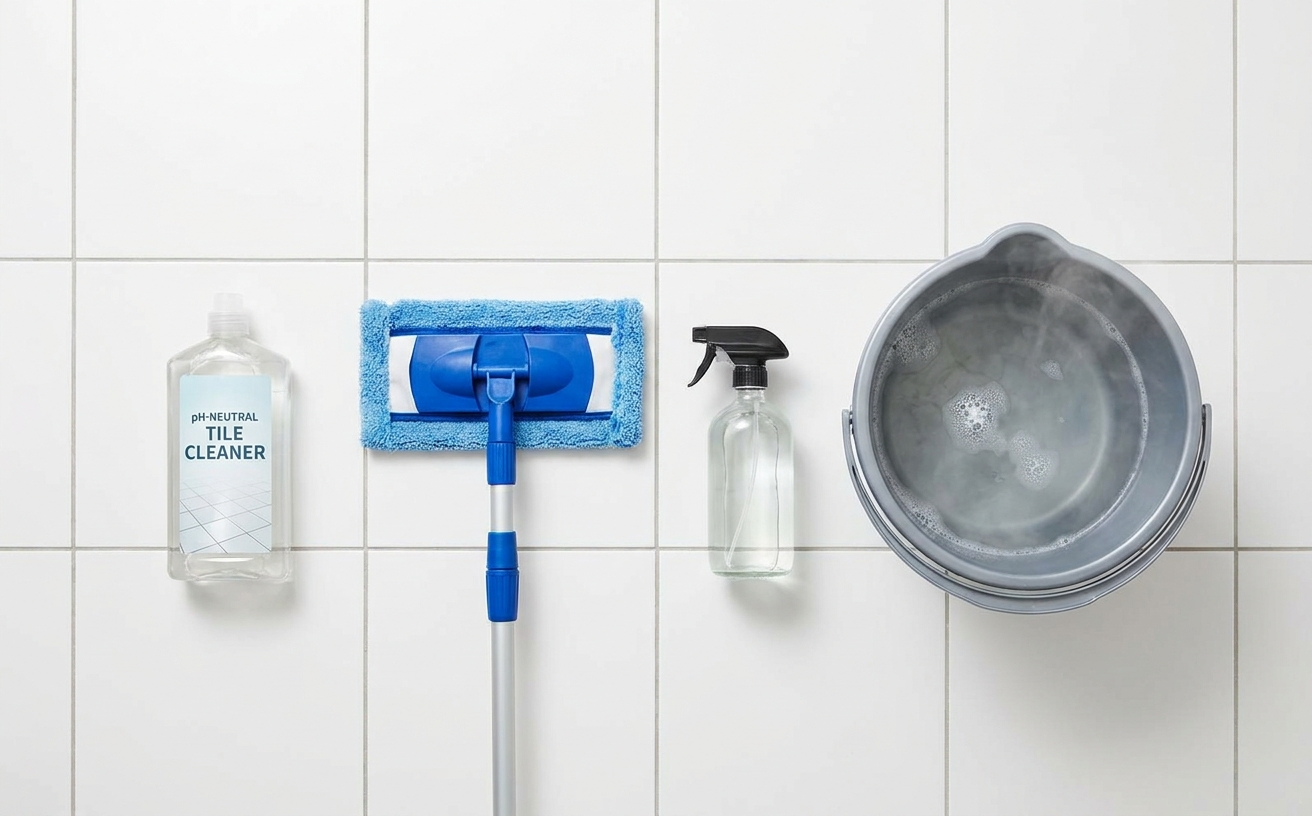
The right cleaning kit makes a noticeable difference on tile floors
How to Wash Tile Floors Step by Step
Step 1: Remove dry debris first
Before any water touches the floor, sweep or vacuum thoroughly. Grit, crumbs, and dust become abrasive mud the moment they're wet, and mopping over them scratches tile and pushes debris into grout lines. Use a vacuum on the hard floor setting if you have pets, since roller brushes can scatter pet hair rather than pick it up.
Step 2: Mop with the right solution
Fill your bucket with warm (not hot) water and add a small amount of pH-neutral cleaner or dish soap. Work in sections, mopping in an S-pattern to avoid redepositing dirt. The mop should be damp, not saturated. Excess water sits in grout lines and encourages mildew over time.
Step 3: Change your water
Once the water turns grey or cloudy, you're no longer cleaning. You're spreading diluted grime across the floor. For an average kitchen or bathroom, that can happen after just one or two passes. Change it and keep going.
Step 4: Rinse, then dry
After mopping with your cleaning solution, go over the floor once more with plain water to lift any remaining residue. Then either let it air dry with windows open, or wipe it dry with a clean microfibre cloth to prevent water spots, especially on darker tiles or in hard water areas.
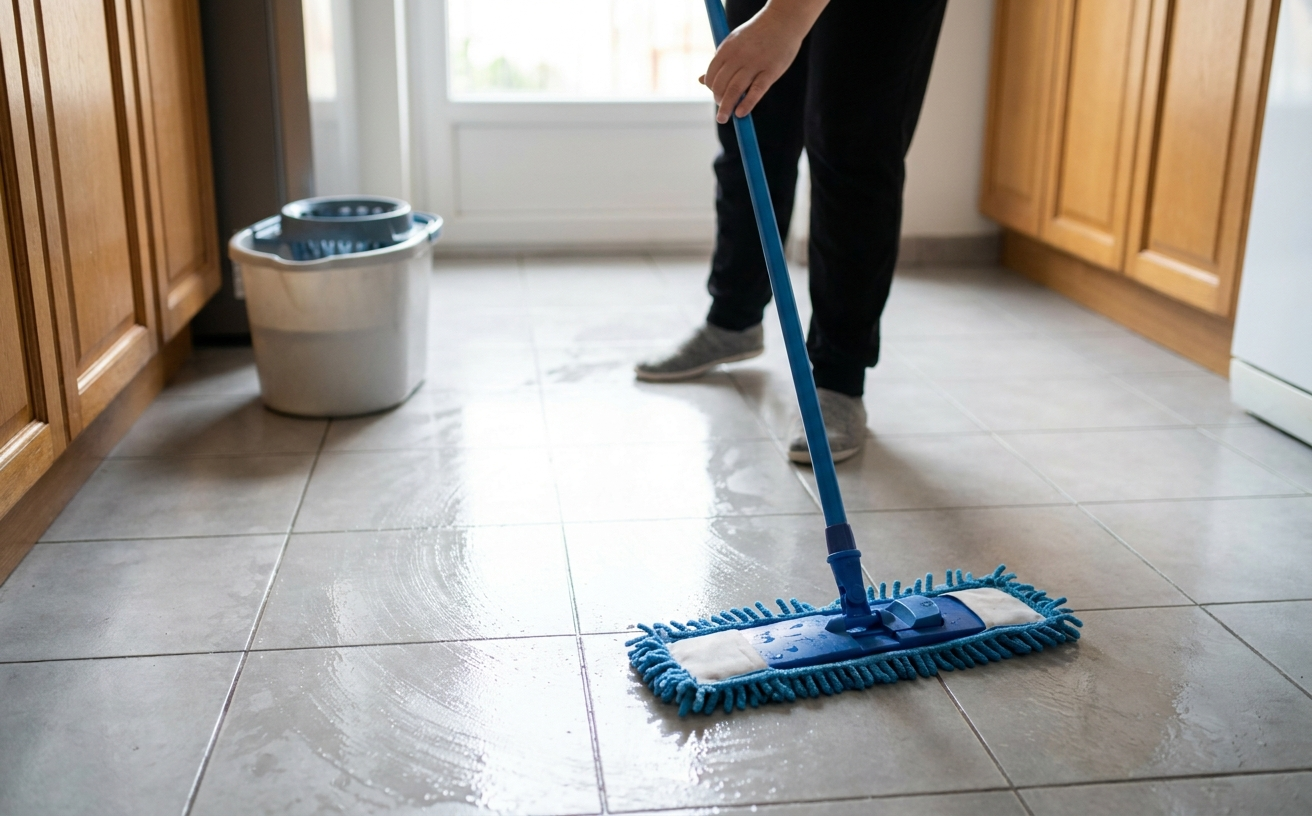
Mopping in an S-pattern prevents spreading dirt across cleaned areas
How Often Should You Wash Tile Floors?
A practical routine for most households looks like this:
- Sweep or vacuum 2 to 3 times a week to keep grit off the surface
- Damp mop high-traffic areas (kitchens, entryways, bathrooms) 2 to 3 times a week
- Full clean with solution and rinse once a week
- Scrub grout every 1 to 2 months, depending on build-up
- Reseal grout once a year to keep future cleaning easier
If you have young children or pets, frequent light cleaning beats infrequent deep cleans, both for hygiene and for the long-term condition of the tile and grout.
How to Clean Tile Grout
Grout is porous, which means it absorbs dirt, oil, and moisture. Once it's stained, regular mopping won't fix it.
For light discolouration, a paste of baking soda and water applied with an old toothbrush works well. Let it sit for five to ten minutes before scrubbing and rinsing. Baking soda is mildly alkaline, which helps lift embedded grime without the risk that acidic cleaners carry.
For heavier build-up or mould in wet areas, oxygen bleach (like Napisan or similar sodium percarbonate products) is effective and less aggressive than chlorine bleach. Mix into a thick paste, apply along the grout lines, leave for 15 to 30 minutes, then scrub and rinse thoroughly.
Vinegar is often suggested for grout, but regular use breaks down the grout sealant and gradually erodes the grout itself, which is calcium-based. For routine grout cleaning, baking soda or oxygen bleach is the safer choice.
To protect grout long-term:
- Seal grout lines once a year. This dramatically reduces how much grime penetrates the surface and makes routine cleaning much easier
- Dry wet areas after showering or bathing. A squeegee on the tiles takes 30 seconds and prevents soap scum and mould from forming
- Avoid hard-bristle brushes on grout, which gradually wear it away. Soft or medium bristles are enough for regular maintenance
A steam mop uses high-temperature water vapour to lift grime and kill bacteria without any chemicals, making it useful in bathrooms and wherever you want to avoid cleaning product residue. It works well on grout lines with the right narrow attachment.
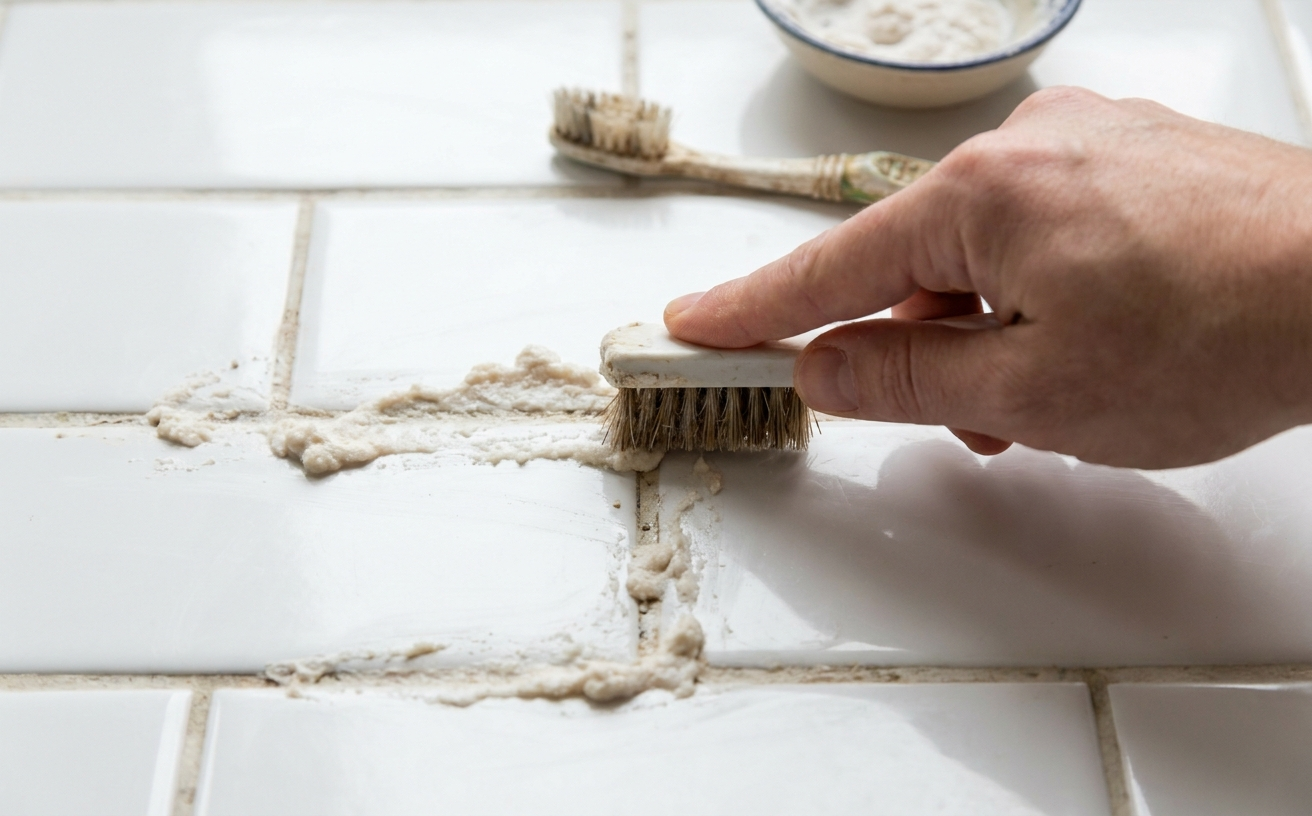
Letting a baking soda paste sit before scrubbing makes grout cleaning much easier
Cleaning Natural Stone Tile Floors
Before choosing a cleaner, work out what type of tile you have. Ceramic and porcelain look similar, but porcelain is denser, heavier, and more uniform in colour through the body of the tile. Natural stone has irregular veining or speckling and feels cooler to the touch. If you can see uneven texture or natural patterns, treat it as stone. For a closer look at what to expect when working with ceramic floors specifically, see our guide on first cleaning of ceramic floors.
Marble, limestone, travertine, and slate need a different approach to ceramic or porcelain. They're porous and acid-sensitive, which means any cleaner with a low pH, including vinegar, citrus-based products, and many bathroom sprays, will etch the surface and leave dull marks that no amount of cleaning will fix.
For natural stone floors, use only cleaners specifically formulated as pH-neutral and stone-safe. Warm water alone works fine for day-to-day cleaning. Dry the floors thoroughly after washing, since standing water causes staining and can work its way into unsealed surfaces.
Vinyl tiles need their own approach. Use warm water with a few drops of dish soap and a damp (not wet) mop. Avoid soaking the surface, steam mops, and abrasive pads, which can lift edges and damage the wear layer over time.
Automating Daily Tile Floor Cleaning
Using a dirty mop is one of the most common tile cleaning mistakes: once the mop is saturated with grime (as covered in Step 3 of the washing steps above), it redistributes soil across the floor rather than removing it. The same problem applies to any robot mop that drags one wet pad around the whole floor. The solution is a system that keeps the mop clean while it works.
The Narwal Freo X10 Pro robot vacuum and mop addresses this directly. Its base station automatically washes and dries the mop heads between cleaning runs, so the robot starts every job with clean mops rather than the dirty ones from last time. Inside the home, dual rotating mops apply 8N of downward pressure (close to the force of pressing down firmly with a hand) to scrub everyday grime off tile, while 11,000Pa of suction lifts hair, dust, and debris before the mops touch the floor.
For households that want continuous mop cleaning during the run itself, the Narwal Flow uses a track mop system that rinses and scrapes the mop in real time, so it stays clean from the first pass to the last.
Both work as routine maintenance between proper deep cleans, particularly in homes with pets or open-plan tile areas. If you're comparing options, see our roundup of the best robot vacuums for tile floors, or the robot vacuum cleaner mopping guide for a closer look at how different cleaning modes work.
FAQs
What's the best way to clean tile floors if I have young kids or pets?
A pH-neutral cleaner or a few drops of dish soap in warm water is the safest option, since both rinse cleanly and leave no chemical residue once dry. Steam cleaning is another good choice, as the heat sanitises without any cleaning product at all.
Should I use a wet mop or a spray mop for tile floors?
Both work. The key is controlling moisture. The mop should be damp, not soaking wet. Excess water sitting on tiles and in grout lines is one of the main causes of mildew and long-term grout deterioration. Spray mops make it easier to control the amount of water you're applying.
Can you use Swiffer wet pads on tile floors?
Swiffer wet pads work for quick touch-ups on sealed ceramic and porcelain, but they often leave a sticky residue because the cleaning solution is not rinsed off afterwards. If you use them, follow with a damp microfibre mop and plain water to lift the residue. For natural stone, avoid them entirely as the solution is not pH-neutral.
How do professionals clean tile floors?
Professional tile cleaners typically use a high-pressure rinse system with a pH-neutral or mildly alkaline solution, then extract the dirty water with a wet vacuum. The combination removes grime from grout lines and surface pores that mopping alone cannot reach. For heavily soiled or stained grout, professionals also use rotary scrubbers and apply a fresh sealant after cleaning.
Does vinegar damage grout?
Yes, with regular use. Vinegar is acidic enough to break down grout sealant and gradually erode the grout itself, which is calcium-based. Occasional diluted use is unlikely to cause noticeable damage, but it should not be a routine cleaner for grouted floors.


