
Damp mopping wooden floors the right way keeps timber looking its best
Wooden floors look great and last for decades — but only if you clean them the right way. The core process is straightforward: remove loose dust and grit first, then damp-mop with a wood-safe cleaner, and dry the surface straight away. The details matter, though, because excess moisture and the wrong products are the two most common causes of timber floor damage in Australian homes.
This guide covers everything you need to know, from daily maintenance to deeper cleaning, with specific guidance on hardwood floors and what to avoid.
What You Need to Clean Wooden Floors
Cleaning tools
- A soft-bristle broom or dust mop for dry sweeping
- A vacuum cleaner with a hard-floor attachment (no beater bar — this can scratch the finish)
- A microfibre flat mop for damp mopping
- A second dry microfibre cloth or mop head for drying
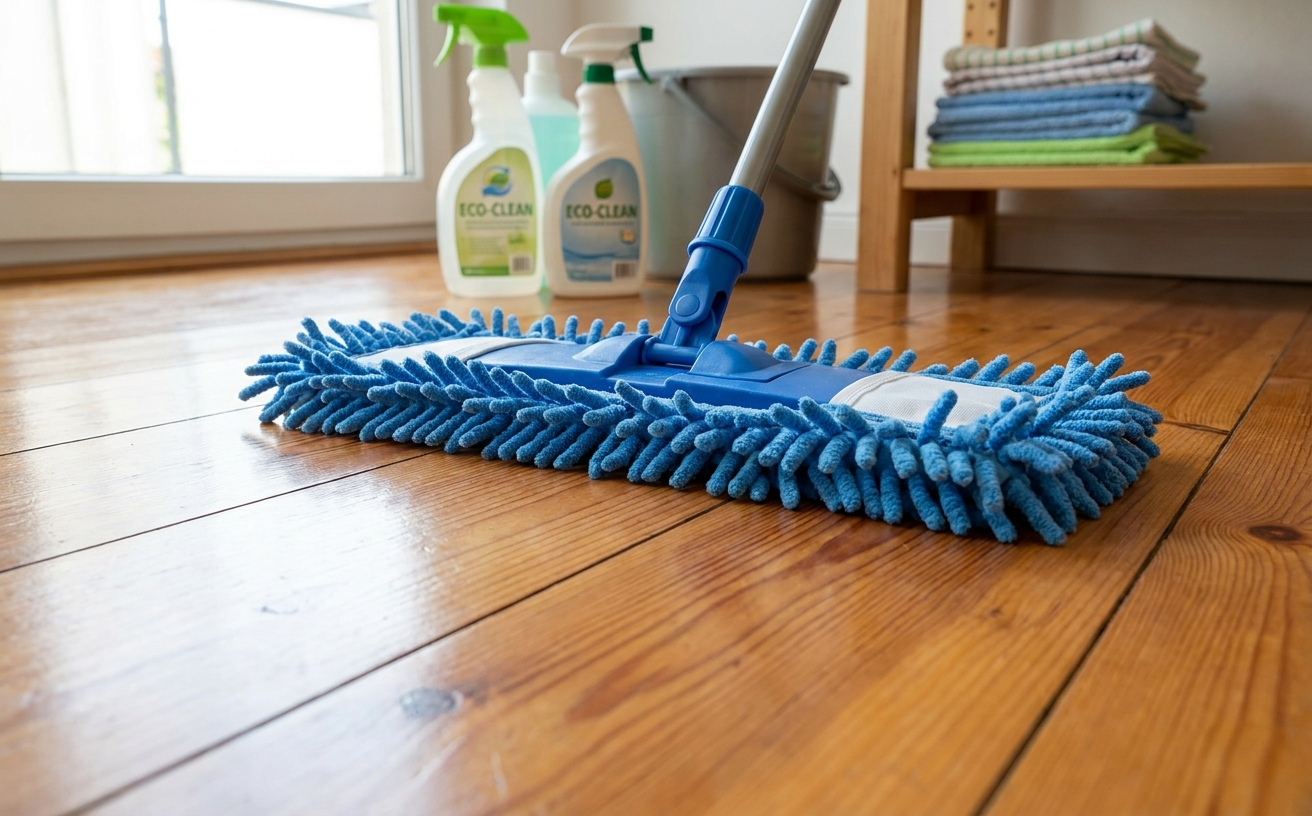
A microfibre mop is the safest tool for damp-mopping wooden floors
Wooden floors are damaged faster by leftover moisture than by dirt itself, which makes the tool that handles both pickup and water control the one that matters most. The Narwal S30 Pro is a cordless wet and dry vacuum that vacuums grit and damp-mops in one pass, then routes dirty water into a separate tank so it never recirculates back onto the floor. Its 18,000Pa suction lifts grit and standing moisture in the same stroke, and the floor sensor adjusts water output based on how dirty the surface is, so you are not soaking timber that only needs a light wipe.
If you are weighing up options, see our guide to the best hardwood floor vacuum mop.
The right cleaner
Use a pH-neutral cleaner made specifically for timber or hardwood floors. Avoid anything containing ammonia, bleach, or oil soap — these can dull the finish or leave residue that builds up over time. A few drops of mild dish soap in warm water also works for light cleaning, but use it sparingly.
If you are unsure, check your floor manufacturer's recommendations first. Some finishes, particularly oiled timber, require specific products.
How to Clean Wooden Floors Step by Step
Skipping the dry-sweep phase and going straight to mopping is one of the most common mistakes — grit left on the surface will scratch the finish when the mop pushes it around.
- Remove dust and debris first. Sweep with a soft-bristle broom or use a vacuum on its hard-floor setting. Work from one end of the room to the other, paying attention to skirting boards and corners where dust collects. Do not use a vacuum with a rotating beater bar — it can scratch timber finishes.
- Prepare your mop and cleaner. Fill a bucket with warm water and add the recommended amount of wood-floor cleaner. If you are using a spray mop, load it with the appropriate solution. Wring the mop out until it feels almost dry to the touch — a wet mop causes swelling, cupping, and staining over time.
- Mop in the direction of the wood grain. Work backwards towards the door so you do not step on the wet floor.
- Dry immediately. Go over the floor with a dry microfibre cloth or mop head as soon as you finish each section. In rooms with poor airflow, open a window or use a fan.
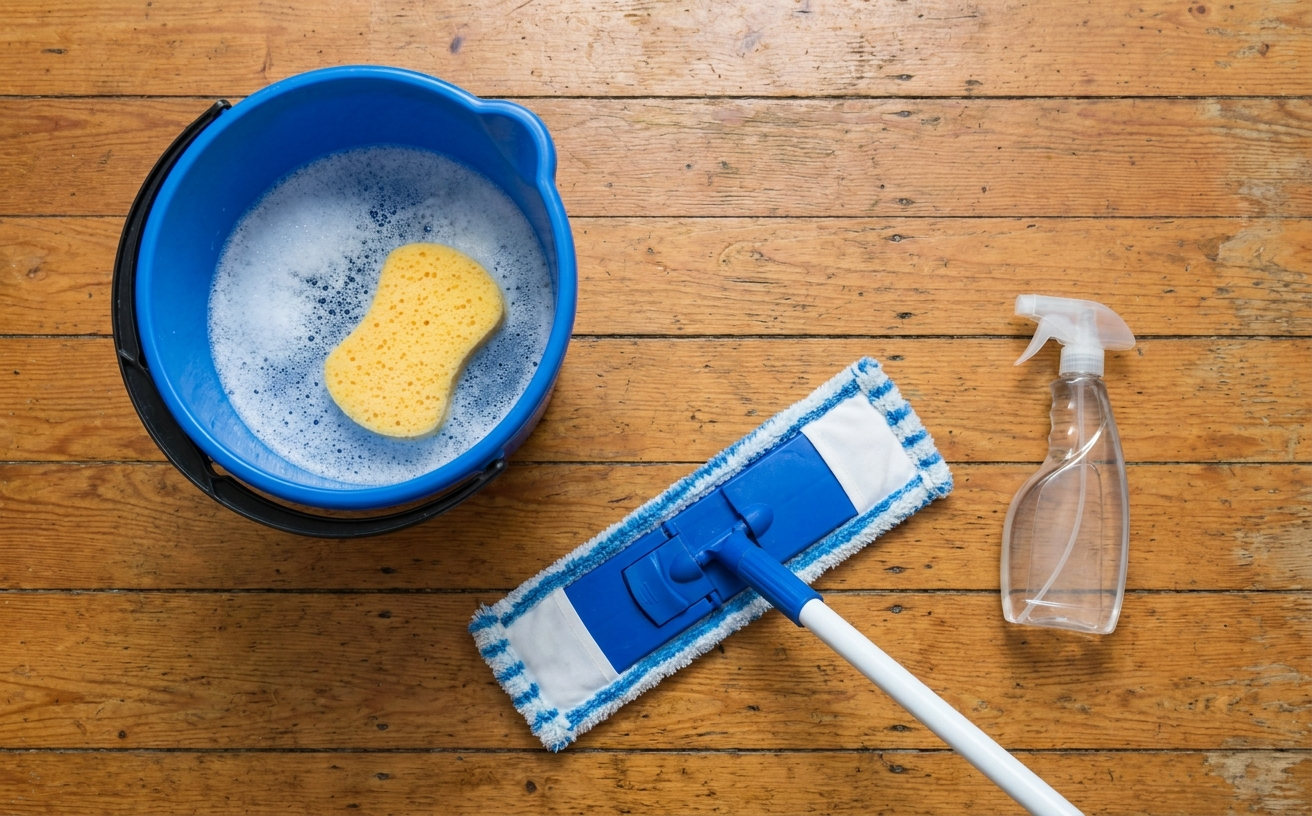
Use the right cleaner and wring the mop well before each pass
What to Avoid When Cleaning Wooden Floors
- Excess water: A soaking wet mop is the single biggest risk to timber floors. Water seeps into joins between boards, causes swelling, and can lead to permanent cupping or warping.
- Steam mops: Many flooring manufacturers specifically advise against steam mops on timber. The combination of heat and moisture drives water into the timber and the adhesive beneath it. Check your floor warranty before using one.
- Ammonia and bleach-based cleaners: These strip the finish from polyurethane floors and can discolour the timber underneath.
- Vinegar in large quantities: Diluted vinegar is sometimes suggested as a natural cleaner, but regular use on timber can dull the finish over time. If you use it, keep it very dilute and do not use it frequently.
- Abrasive tools: Steel wool, abrasive pads, and stiff-bristle brushes will scratch the surface. Always use soft microfibre.
- Letting spills sit: Liquid spills should be wiped up immediately. Even sealed timber floors can absorb moisture through joins and scratches.
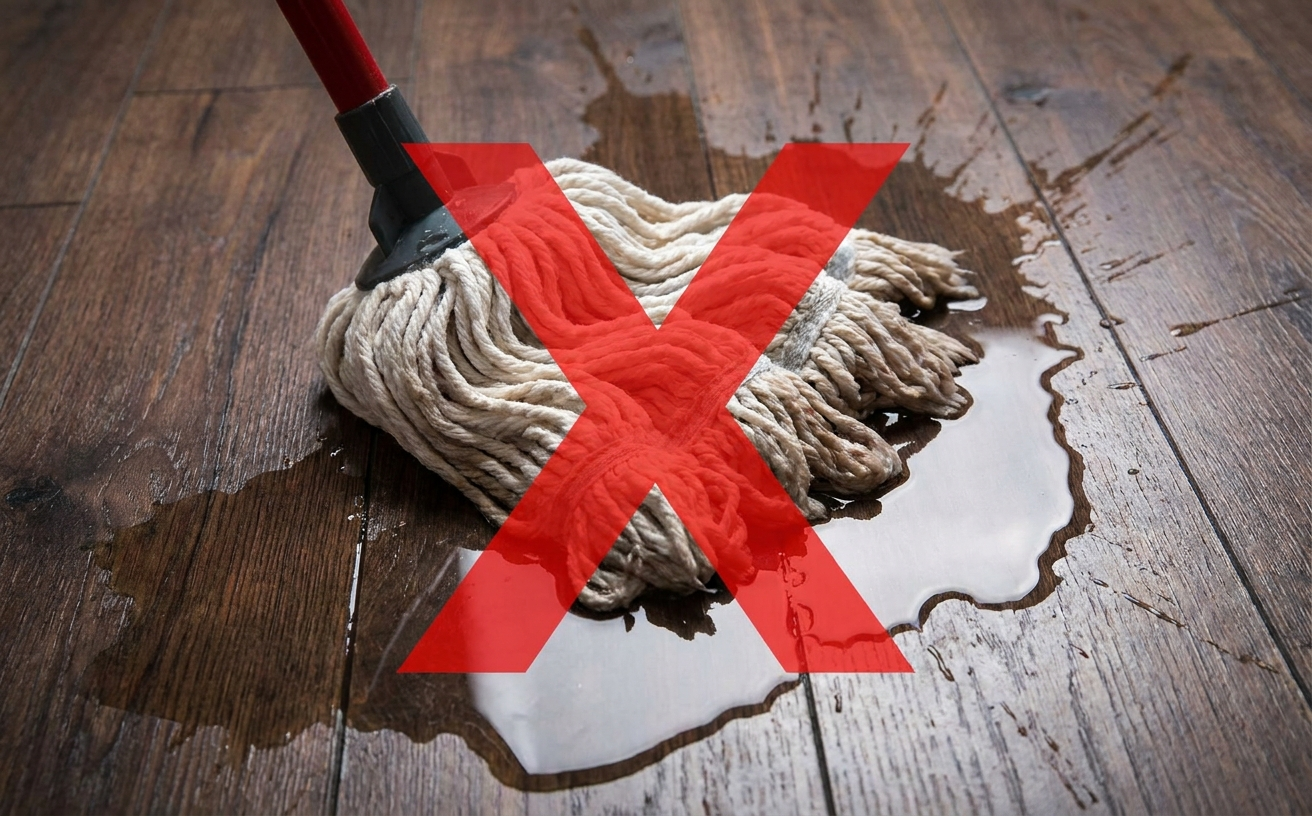
Excess water is the most common cause of timber floor damage
How to Clean Hardwood Floors and Other Timber Finishes
Hardwood floors — solid or engineered timber — are cleaned the same way as other wooden floors, but the finish type changes what products you can safely use.
Polyurethane-finished floors
Most modern hardwood floors in Australian homes have a polyurethane surface coating. These are the most durable and water-resistant timber finishes. Clean with a pH-neutral wood-floor cleaner and avoid wax-based polishes — wax on polyurethane creates a sticky build-up that dulls the surface over time.
Oiled or penetrating-finish floors
Oiled hardwood floors absorb the finish into the timber rather than sitting on top of it. These require specific oil-based cleaners and periodic re-oiling to maintain the surface. Using a water-based cleaner too frequently can dry out the oil and cause the timber to look patchy.
Waxed floors
Waxed timber floors are less common in modern Australian homes but do appear in older properties. Clean these with a dedicated wax-floor cleaner. Never use steam or excess water on waxed timber — it strips the wax and leaves white marks.
If you are unsure of your floor's finish, apply a small amount of water to an inconspicuous area. If the water beads up, it is likely polyurethane-coated. If it absorbs quickly and darkens the timber, the floor is probably oiled or waxed.
If your floors are bamboo rather than hardwood, the cleaning process has some key differences. See our guide on how to clean bamboo floors.
How to Deep Clean Hardwood Floors
Deep cleaning is for floors that have built up grime over time — dull patches, sticky residue near kitchens, or visible film along high-traffic paths. It is a separate process from weekly mopping and should not be done more than two or three times a year, since each deep clean puts more moisture on the timber than routine cleaning.
- Vacuum thoroughly first. Cover the entire floor including under furniture, along skirting boards, and around floor vents. Any grit left behind will be ground into the finish during the next steps.
- Mix a deep-cleaning solution. Use a hardwood floor cleaner concentrate at the strength recommended on the label, or a small amount of pH-neutral cleaner in warm water. Do not increase the concentration to compensate for a dirty floor — work in smaller sections instead.
- Work in sections of around two square metres. Apply the solution with a microfibre mop or cloth, scrub gently with the grain, and do not let the solution sit on the surface for more than 30 seconds before wiping.
- Wipe each section with a clean, damp microfibre cloth to remove cleaner residue, then dry with a separate dry cloth. Residue left on the surface attracts dirt and dulls the finish.
- For sticky or greasy patches near kitchen entrances, repeat the section once with a fresh cloth rather than scrubbing harder. Pressure damages the finish faster than a second pass does.
If the floor still looks dull after a deep clean, the issue is likely finish wear rather than dirt, and the floor may need re-coating by a professional.
How Often Should You Clean Wooden Floors?
The right cleaning frequency depends on foot traffic, pets, and how close your home is to outdoor areas.
- Daily or every two days: Sweep or dry-vacuum high-traffic areas such as hallways, kitchens, and living rooms. This removes grit before it has a chance to scratch the finish.
- Weekly: Damp-mop the whole floor using the steps above. This is enough for most households.
- Monthly: Check for scuff marks, sticky patches, or areas where the finish looks dull. Spot-treat these with a small amount of floor cleaner on a damp cloth.
- Seasonally: In Australian homes, humidity shifts between summer and winter can affect timber. Keep indoor humidity between 40% and 60% where possible — very dry air causes timber to contract and crack, while excess moisture causes it to expand.
Homes with pets or children may need daily sweeping and more frequent damp mopping.
Tips to Keep Wooden Floors in Good Condition
- Use entry mats: Place mats at all exterior doors. This stops grit, sand, and moisture from being tracked across the floor. In coastal or sandy areas of Australia, this step alone makes a noticeable difference.
- Add felt pads to furniture: Chair legs, table legs, and heavy furniture feet scratch timber surfaces when dragged. Felt pads are cheap and easy to replace.
- Avoid stiletto heels and cleats indoors: These concentrate weight into a small point and dent even hard timber finishes.
- Trim pet nails regularly: Long nails act like sandpaper on timber surfaces over time.
- Use rugs in high-traffic areas: A rug in the hallway or under the dining table protects the most-used sections of the floor.
- Control humidity: As noted above, keeping indoor humidity stable reduces the natural expansion and contraction of timber. A dehumidifier in summer and a humidifier in dry winter climates helps.
Daily sweeping is the single biggest predictor of how a wooden floor looks five years in, and it is also the step most households skip. A robot vacuum and mop fills that gap. The Narwal Flow runs a closed-loop mop system: warm water rinses the track mop in real time during cleaning, a scraper removes residue, and dirty water is collected separately, so the mop touches the floor with a clean surface on every pass instead of pushing the same grime back across the timber. When the robot detects a hard floor, it adjusts mop pressure and water output for that surface; on rugs and carpets in transition zones, it lifts the mop 12mm to keep them dry. The result is daily upkeep that holds the floor between weekly damp mops, without you having to commit to it.
For other floor types, see our guides on how to clean tile floors and how to clean concrete floors.
FAQs
Can I use a steam mop on wooden floors?
It is generally not recommended. Steam mops push heat and moisture into the timber and the joins between boards. Many flooring manufacturers void warranties if steam mops have been used. If you want the sanitising effect, use a damp mop with a timber-safe cleaner instead.
What is the best cleaner for wooden floors in Australia?
A pH-neutral timber floor cleaner is the safest choice. Look for products specifically labelled for hardwood or timber floors. Popular options available in Australia include Bona Hardwood Floor Cleaner and Method Squirt + Mop. Avoid anything containing ammonia, bleach, or wax unless your floor specifically requires it.
What is the best homemade cleaner for wooden floors?
The simplest and safest homemade option is a few drops of mild dish soap in a bucket of warm water. Use it sparingly and wring the mop out thoroughly. Avoid homemade recipes that rely on heavy doses of vinegar, lemon juice, or essential oils — vinegar dulls the finish over time, citric acid can etch into oiled timber, and oils leave a slippery residue. Homemade cleaners work for occasional use, but for regular cleaning, a dedicated wood-floor cleaner protects the finish better.
Can I mop wooden floors with just water?
Plain warm water works for light cleaning, but a dedicated wood-floor cleaner does a better job of removing grease and residue without harming the finish. Keep the mop barely damp regardless.
Is Murphy's Oil Soap good for wood floors?
Murphy's Oil Soap is safe for unfinished or wax-finished timber, but it is not the right choice for the polyurethane-coated floors found in most Australian homes. Over time it leaves an oily residue that dulls the finish and can interfere with future re-coating. Bona Hardwood Floor Cleaner is the more common recommendation for polyurethane finishes — it is pH-neutral, water-based, and leaves no residue. Choose Murphy's only if you have confirmed your floor has a wax or oil finish.
Can I use Dawn dish soap on hardwood floors?
A few drops of Dawn (or any mild dish soap) in a bucket of warm water is fine for occasional cleaning of polyurethane-finished hardwood. Use it sparingly — too much soap leaves a sticky film, and the mop should still be wrung out until barely damp. For routine cleaning, a dedicated wood-floor cleaner does a better job and rinses cleaner.
How do I clean hardwood floors without streaks?
Streaks usually come from too much cleaner or a mop that is too wet. Use a small amount of cleaner, wring the mop out thoroughly, and dry the floor with a clean microfibre cloth immediately after mopping. Mopping in the direction of the grain also reduces streaking.
Are robot mops safe to use on wooden floors?
They can be, provided the robot is designed to control moisture output. The key risk with any mop — robotic or manual — is excess water on timber. Look for models that have adjustable water flow and that automatically lift their mop pad on hard floors. For a breakdown of the top options, see our guide to the best robot vacuum for hardwood floors.


