
Blotting a fresh spill on a wool rug correctly
Wool is naturally resilient and soil-resistant, but it reacts badly to heat, harsh chemicals, and excessive moisture. The right approach — low suction vacuuming, cold water, pH-neutral detergent, and slow air drying — keeps the fibres intact and the rug looking its best.
What Makes Wool Different
Wool fibres have a natural scaly surface that locks in dirt but also makes them susceptible to damage if treated like synthetic rugs. Felting — the irreversible matting of fibres into a dense, shrunken mass — is triggered by two things independently: heat and agitation. Hot water alone can cause it, as can vigorous rubbing or machine tumbling even in cool water. This is why both the temperature and the handling method matter. Strong alkaline or bleach-based cleaners strip the natural oils that give wool its softness and sheen. Vigorous rubbing also distorts the pile and pushes stains deeper.
Wool also absorbs water readily. If a rug is left damp for too long, particularly underneath, it can develop mould, mildew, or an unpleasant smell. Thorough drying after any wet treatment is as important as the cleaning itself.
What Not to Use on a Wool Rug
- Hot water: Causes wool fibres to felt and shrink. Always use cold or cool water.
- Steam cleaners: Heat and moisture combined are particularly harmful to wool.
- Bleach and harsh chemical cleaners: Strip the natural oils from wool fibres and cause irreversible colour damage.
- Strong alkaline detergents: Wool requires a pH-neutral or mildly acidic cleaner. Standard laundry detergents, including Woolite, can be too alkaline for repeated use.
- Vigorous rubbing or machine agitation: Both trigger felting even in cool water, distort the pile, and spread stains.
- Soaking the rug: Excessive moisture risks mould growth in the foundation.
- Machine washing (unless the label explicitly permits it): Most wool rugs are hand-wash only.
How to Vacuum a Wool Rug
Wool traps dust and fine particles in its pile, and if those particles are allowed to build up, they work their way down to the rug’s foundation and begin to wear the fibres from within. Vacuuming one to two times per week prevents this.
Use low suction and turn off the beater bar or rotating brush — beater bars are designed for synthetic carpet and are too aggressive for wool, pulling fibres loose and causing pilling. Use a plain suction head instead. If you use a robot vacuum, see our guide on using a robot vacuum on rugs for what settings apply.
Vacuum in the direction of the pile, not against it. Run your hand across the rug to find the direction — it will feel smooth one way and slightly resistant the other.
For smaller rugs, take them outside periodically and shake or beat them gently to dislodge embedded dust. Do this on a calm day so the dust disperses rather than settling back on the rug.
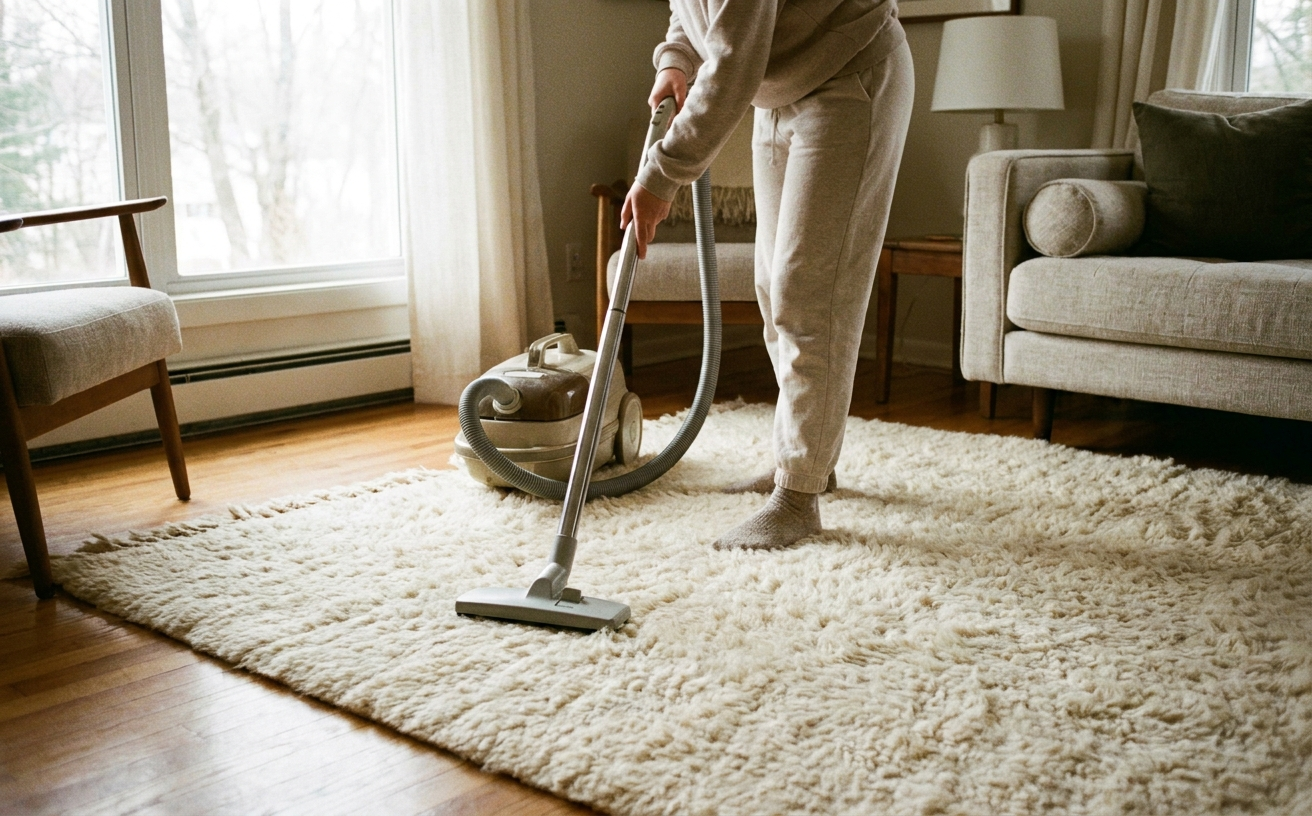
Vacuuming a wool rug with low suction and no beater bar
How to Spot Clean a Wool Rug
- Act immediately. Blot the spill with a clean white cloth or paper towel, working from the outside of the stain inward. Never rub — it drives the stain deeper and distorts the pile.
- Test for dye bleed before applying any liquid. Dampen a white cloth with your cleaning solution and press it firmly on a hidden corner for 30 seconds. If colour transfers to the cloth, the rug is a bleeder — stop and contact a professional rather than risking dye run across the whole rug.
- Prepare a cleaning solution: a small amount of wool-safe, pH-neutral detergent in cold water, or one part white vinegar to two parts cold water. The vinegar solution works well for most food and beverage stains.
- Apply sparingly with a dampened cloth, working it gently into the stained area. Avoid saturating the rug. Place a dry towel underneath the affected area to draw moisture from below.
- Rinse by blotting with a cloth dampened in plain cold water, then blot dry with a clean towel. Repeat until no cleaning solution remains.
Stain-specific tips
- Dried or set stains: Scrape off any residue with a blunt knife or spoon before applying any liquid, then follow the steps above. For hardened candle residue, follow this guide to get wax out of carpet.
- Grease and oil: Apply a small amount of bicarbonate of soda to absorb the oil. Leave for 15 to 20 minutes, brush off gently, then treat with the vinegar-water solution.
- Pet accidents: Rinse first with cold water to dilute before spot treating. Enzyme-based cleaners formulated for wool are particularly effective here.
- Wine and coffee: Blot as much as possible immediately, then apply the vinegar-water solution. These tannin-based stains respond well to vinegar if treated quickly but can set permanently if left to dry.
- Ink: Dampen a cloth with isopropyl alcohol and blot gently without rubbing. Follow with a cold water rinse. If the stain persists after one attempt, consult a professional before trying again.
How to Deep Clean a Wool Rug at Home
Most wool rugs need a thorough clean once or twice a year depending on foot traffic. The method below works for rugs that can be moved outside or fit in a large bathtub. Very large or antique rugs are better sent to a professional.
- Vacuum both sides thoroughly to remove loose debris.
- Lay the rug flat on a clean outdoor surface (a concrete patio or driveway works well) or place it in a clean bathtub.
- Mix a small amount of wool-safe, pH-neutral shampoo with cold water. Test for dye bleed on a corner before proceeding.
- Using a soft-bristled brush or sponge, work the solution gently into the rug in the direction of the pile using light, even strokes. Do not scrub.
- Rinse thoroughly with cold water until the water runs clear. Incomplete rinsing leaves residue that attracts dirt quickly.
- Use a squeegee or roll the rug loosely to press out excess water. Do not wring or twist it.
- Hang or lay flat to dry — see drying instructions below.
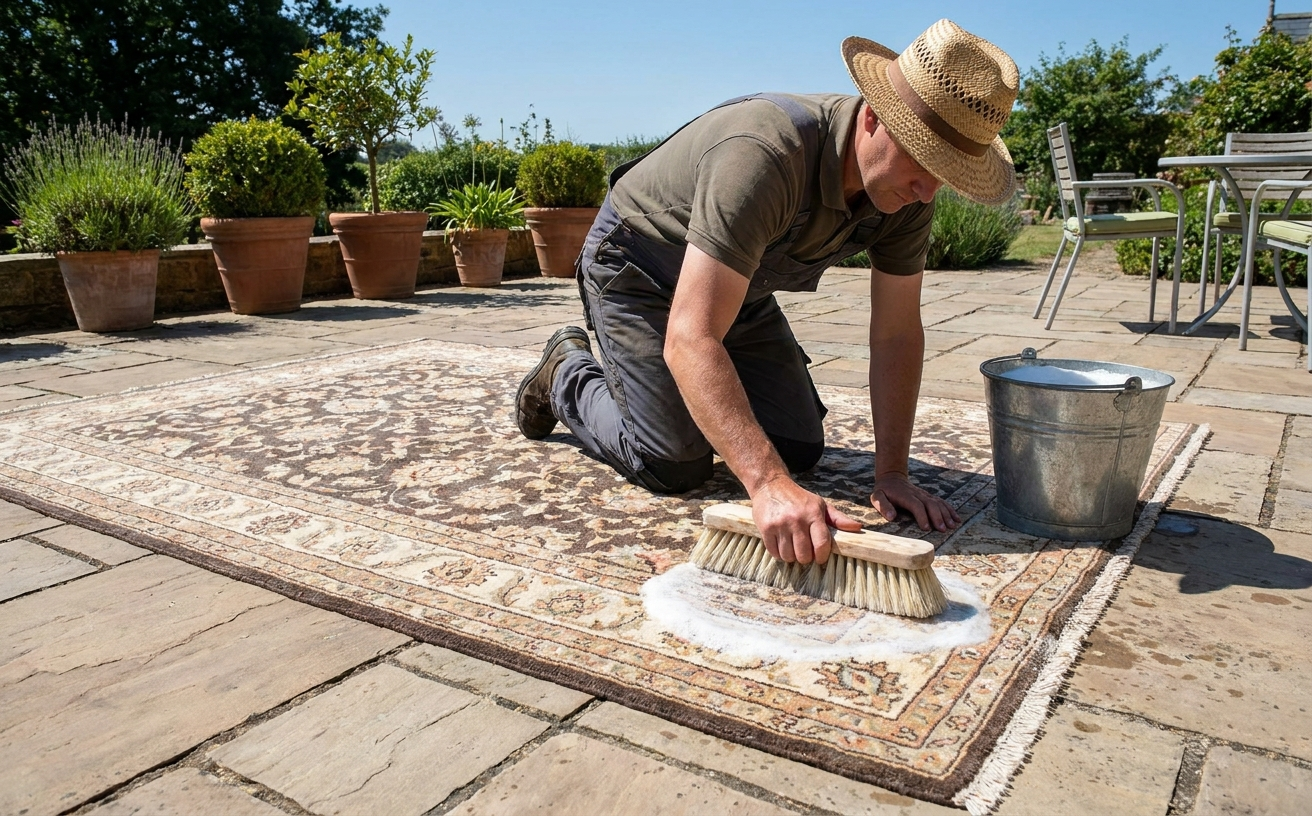
Deep cleaning a wool rug outdoors using a soft brush and cold soapy water
Cleaning a large or heavy rug outdoors
For rugs too big for a bathtub, lay the rug pile-side down on clean concrete or a raised slatted surface where water can drain through. Work in sections using a soft brush and cold soapy water. To remove water after rinsing, thread a length of PVC pipe or a broomstick through a rope and use it as a roller to press water out lengthwise. Do not drag the rug while it is wet and heavy, as this stresses the foundation. Recruit help to move it.
Snow washing
In cold climates with fresh, dry snow, snow washing is an effective way to clean a dusty wool rug without wetting the fibres. Lay the rug pile-side down on clean, firm snow. Beat the back firmly with a broom or stick to drive the snow into the pile and dislodge embedded dust. Lift the rug — there should be a dirty rectangle in the snow beneath. Move to a fresh patch and repeat on the other side if needed. This works best when the temperature is well below freezing and the snow is dry and powdery, not wet or slushy. It will not remove liquid stains, but for a dusty rug with no active stains it is highly effective and leaves the fibres completely dry.
How to Dry a Wool Rug Properly
A rug left even slightly damp underneath can develop mould or a persistent musty smell within a day or two.
Lay the rug flat in a well-ventilated area away from direct sunlight and heat sources, including heaters, clothes dryers, and sunny patches on a hot day. If you can hang the rug, do so — air circulating on both sides speeds up drying considerably. Use a thick dowel or a heavy-duty clothesline, and support the rug along its full width to avoid stretching.
In Australian conditions, a rug dried outdoors in the shade on a breezy day may be dry within a few hours. In humid or cooler conditions, allow considerably longer. Before returning the rug to its position, press a dry cloth firmly into the underside to check for remaining dampness. If you are laying it back onto hardwood or timber flooring, ensure the underside is completely dry — even slight residual moisture trapped between a rug and timber can cause warping or staining of the floor over time.
When to Get a Wool Rug Professionally Cleaned
Most wool rugs benefit from professional cleaning every one to three years. Professional cleaners extract deeply embedded dirt without stressing the fibres.
Seek professional attention for: large or persistent stains that have not responded to spot cleaning, significant pet odour that has reached the rug’s foundation, visible colour loss or dye bleed, and antique or high-value rugs. Home treatment in these cases risks making the problem worse.
Professional wool rug cleaning typically involves a full submersion hand-wash or a controlled wet-extraction process, followed by tension drying on a frame to hold the rug’s shape. Some cleaners also apply a fibre-conditioning treatment after washing to restore suppleness. When choosing a cleaner, look for one with specific wool rug experience. Ask how they dry the rugs — flat drying with controlled airflow is preferable to machine tumble drying.
Keeping Hard Floors Clean After Washing the Rug
After moving a wool rug to wash it, the timber, tile, or hybrid flooring underneath tends to show weeks of accumulated dust and grime. A wet dry vacuum handles both dry debris and wet residue in a single pass, without switching between a vacuum and a mop.
The Narwal S30 Pro cordless wet dry vacuum is built for this. Its 20,000 Pa suction picks up fine dust and particles, while the mop clears any damp marks left on the floor. After each session, the self-cleaning system uses 194°F hot water to rinse the mop head automatically, so the machine is ready for next time without any manual rinsing.
FAQs
Can I use a regular carpet cleaner on a wool rug?
No. Most carpet cleaners are too alkaline and will damage wool fibres. Use a cleaner labelled wool-safe or pH-neutral. White vinegar diluted in cold water is a reliable alternative for most stains.
How do I get a smell out of a wool rug?
Sprinkle bicarbonate of soda generously over the rug and leave it overnight. Vacuum off with low suction and no beater bar. For pet odours, use an enzyme-based cleaner formulated for wool. Airing outdoors in the shade also helps.
How do I know if my wool rug can be washed at home?
Check the care label. Test a hidden corner for dye bleed — press a damp white cloth against it for 30 seconds. If colour transfers, send the rug to a professional. Antique and hand-knotted rugs are generally better left to specialists.
How often should I deep clean a wool rug?
Once or twice a year for most households. Rugs in high-traffic areas or homes with pets and children may need more frequent attention.
Will water ruin a wool rug?
No, if used correctly. Cold water in small amounts is safe for spot cleaning and hand-washing. Hot water and excessive soaking cause felting and mould. Use cold water sparingly and dry the rug thoroughly.
What is the best cleaner for a wool rug?
A pH-neutral, wool-safe detergent or shampoo — look for Woolmark-certified products. For spot cleaning, a 1:2 white vinegar and cold water solution works on most stains. Avoid enzyme cleaners for routine use as they can weaken wool fibres over time.
Can I use hydrogen peroxide or dish soap on a wool rug?
No to both. Hydrogen peroxide bleaches wool fibres and strips colour, especially on darker rugs. Dish soap is alkaline and leaves residue that dulls the pile. Use only pH-neutral, wool-safe cleaners.
Is it normal for a wool rug to shed fibres?
Yes. New wool rugs shed for the first six to twelve months as short manufacturing fibres work their way out. Vacuum regularly with a suction-only head in the direction of the pile. Persistent shedding beyond a year warrants a professional inspection.


