
Different robot floor cleaners are designed for different surfaces and mess types
A robot floor cleaner is an autonomous device that vacuums, mops, or does both across your home’s floors with minimal input from you. The category now includes three distinct types: robot vacuums for dry debris pickup, robot mops for wet cleaning on hard surfaces, and hybrid vacuum-mop combos that handle both tasks in a single pass. Homes with mostly carpet need a strong vacuum, while tile-heavy layouts benefit from a dedicated or hybrid mop. The mopping technology inside a robot matters just as much as the type itself, and the base station can be the difference between a hands-free experience and a weekly maintenance chore.
What Is a Robot Vacuum?
A robotic automatic vacuum is a dry-cleaning machine built to pick up dust, hair, crumbs, and fine particles from hard floors, low-pile carpet, and rugs. It relies on suction power, a main roller brush, and side brushes to sweep debris into an onboard dustbin. This is the oldest type of robot floor cleaner and still the right choice for homes where dry debris is the main problem.
Modern robot vacuums use LiDAR or camera-based navigation to map rooms and follow efficient cleaning paths. Suction power has climbed steadily, with many 2026 models offering between 8,000Pa and 22,000Pa. Higher suction helps on carpet, where embedded hair and dust sit below the fibre line. Models with anti-tangle brush designs reduce manual maintenance, which matters in homes with long-haired family members or shedding pets.
The limitation is that a vacuum-only robot cannot handle wet messes or dried-on stains. Running a standard robot vacuum over a wet floor will not damage most models (they are designed to cross damp surfaces), but the machine will not clean up the liquid. For homes with mostly hard floors where spills are common, a vacuum-only model needs to be paired with a mop of some kind.
Best for: homes with wall-to-wall carpet, large rug areas, or households that mainly deal with dry messes like pet hair, sand, and dust.
What Is a Robot Mop?
A robot mop is a dedicated wet-cleaning machine for hard floors such as tile, vinyl, timber, and laminate. It uses water, cleaning solution, and mechanical scrubbing action to dissolve and lift grime, food residue, and dried spills. Because it focuses entirely on mopping, a dedicated robot mop often delivers stronger wet-cleaning performance than the mopping function on cheaper hybrid models.
Most owners pair a robot mop with a separate vacuum or manual broom for dry debris. The other trade-off is coverage: a mop-only robot cannot cross onto carpet without wetting it, which limits its usefulness in open-plan homes with mixed flooring.
Best for: apartments or homes with entirely hard flooring, where wet cleaning is the top priority and a separate vacuum handles dry debris.
What Is a Hybrid Robot Vacuum and Mop?
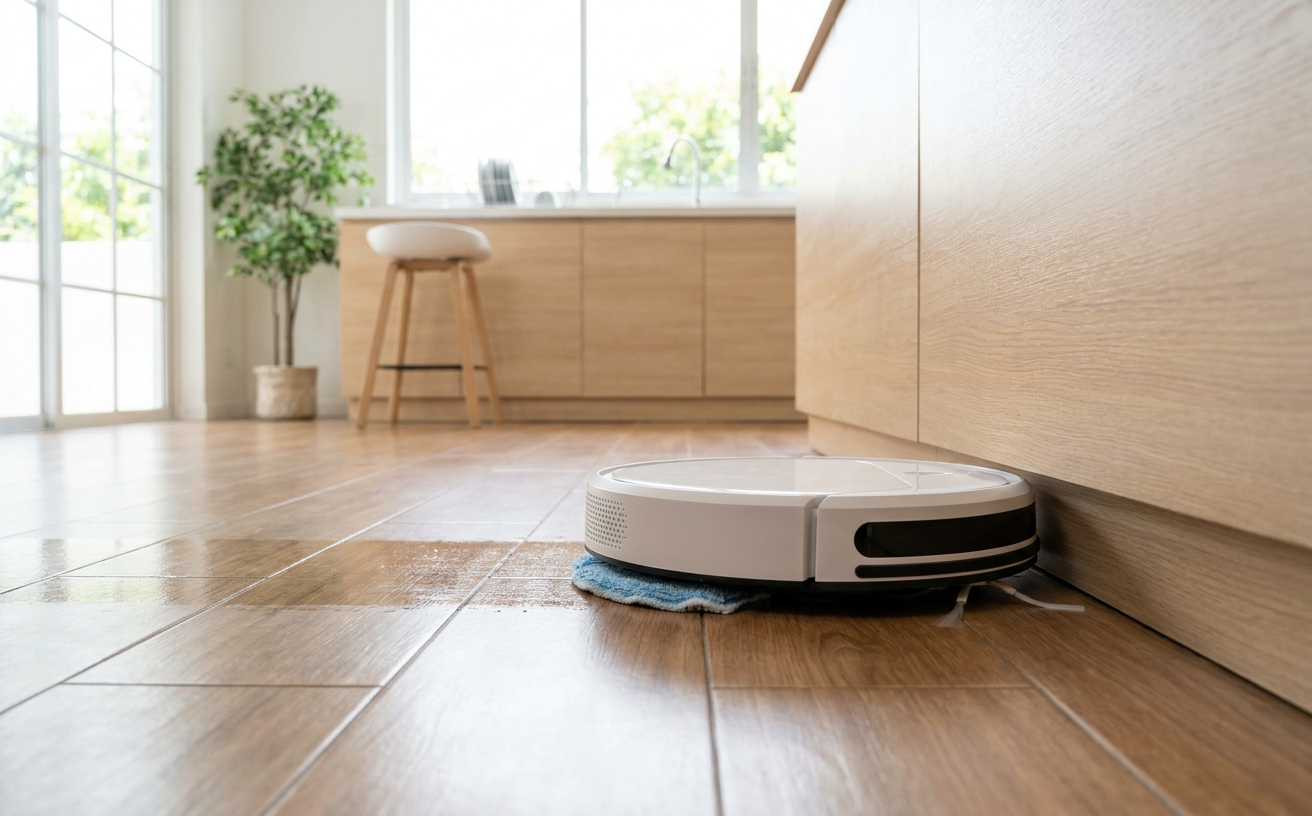
Hybrid robot cleaners vacuum dry debris and mop hard floors in a single pass
A hybrid robot vacuum and mop combines suction-based dry cleaning with a mopping system in a single unit. This auto vacuum and mop format is the most popular type of robot floor cleaner sold in Australia in 2026, because most homes have a mix of carpet, tile, and timber that benefits from both functions.
The defining feature of a good hybrid is automatic mop lifting. When the robot detects carpet, it raises the mop pads (typically 9mm to 12mm) so the wet surface does not touch the rug. Models with reliable carpet detection and mop lift, such as those using ultrasonic floor sensors, make the vacuum-mop cycle genuinely hands-free.
Hybrid models with self-cleaning base stations take convenience further. After a cleaning run, the robot returns to its dock, where the station washes the mop pads (sometimes with heated water), dries them with warm air, empties the dustbin into a sealed bag, and refills the water tank. The Narwal Flow robot vacuum and mop uses a real-time self-cleaning track mop system that rinses the mop with 45°C warm water during the clean itself, so the mop stays fresh throughout each pass rather than spreading dirty water.
Best for: mixed-floor homes with both carpet and hard surfaces, pet owners, families with children, and anyone who wants a single robot to manage daily vacuuming and mopping.
Robot Floor Cleaner Types Compared
| Feature | Robot Vacuum | Robot Mop | Hybrid Combo |
|---|---|---|---|
| Cleaning Method | Dry suction | Wet mopping | Suction + mopping |
| Ideal Floor Type | Carpet, hard floors | Hard floors only | All floor types |
| Handles Wet Spills | No | Yes | Yes |
| Handles Dry Debris | Yes | No | Yes |
| Carpet Safe | Yes | No | Yes (with mop lift) |
| Typical Price Range (AU) | $400–$1,500 | $300–$900 | $800–$3,000+ |
If your home has carpet in any room, a vacuum-only or hybrid model is the safer choice. For entirely hard-surface homes, a dedicated mop or a hybrid with a strong mopping system will give the deepest wet clean.
Robot Mop Types: Spinning, Vibrating, Roller and Passive
The mopping mechanism determines how effectively a robot removes dried stains, handles liquid spills, and keeps the mop clean during use. There are four main technologies across hybrid and mop-only robots.
Spinning Pad Mops
Spinning pad mops use two rotating pads (or sometimes triangular pads) that press against the floor and spin at 150 to 200 RPM. The rotation creates mechanical scrubbing force that breaks up dried food, coffee rings, and light grease. Many spinning-pad models also extend or swing their mops outward to reach edges and skirting boards. The Narwal Freo X10 Pro robot vacuum and mop uses this approach with its MopExtend system, which swings the mop outward to clean toe kicks and wall edges that standard round mops miss.
The weakness is saturation. The pads absorb dirty water as they clean and lose effectiveness until the robot returns to the base station for a wash cycle. Large open-floor areas may see diminishing results toward the end of a mopping run if the pads are not washed mid-cycle.
Vibrating or Oscillating Mops
Vibrating mops use high-frequency oscillation rather than rotation. The pad vibrates rapidly against the floor, loosening light dried-on marks and distributing water evenly. This approach is quieter than spinning pads and tends to leave less streaking, making it suited to sealed timber and polished concrete. The trade-off is less mechanical force, so vibrating pads are less effective on heavy or old stains. They share the same saturation limitation as spinning pads.
Roller Mops (Self-Cleaning)
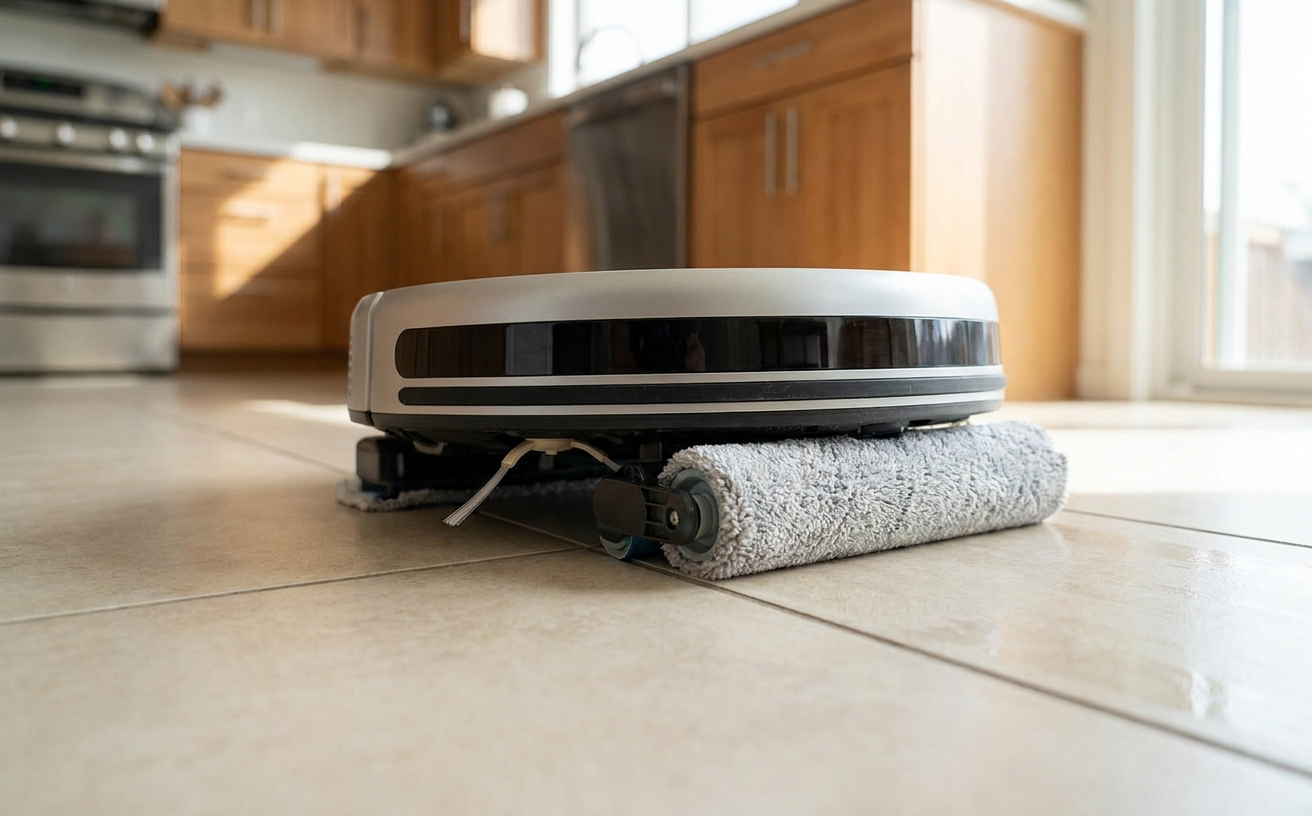
Roller mop systems rinse themselves continuously, keeping the mop fresh throughout a cleaning run
Roller mops use a cylindrical roller that spins against the floor while the robot simultaneously wets it with clean water and scrapes dirty water off into an internal tank. This self-rinsing cycle means the roller stays clean throughout the run, unlike pads that gradually saturate.
Roller mops handle liquid spills and heavy wet messes better than pad-based systems because they actively absorb and extract dirty water. The Narwal Flow robot vacuum and mop takes this further with its FlowWash real-time self-cleaning track mop, which uses 16 nozzles to spray warm water onto the mop and a scraper to remove residue continuously, so the mop surface contacting the floor stays clean from the first room to the last.
The trade-off is complexity: larger base stations, higher price points, and more internal components that need occasional cleaning. Roller mops also have a smaller contact area with the floor at any moment compared to dual spinning pads.
Passive or Drag-Pad Mops
The simplest approach is a microfibre pad dragged across the floor with water dripping from a gravity-fed or electronically controlled tank. Found on budget and older models, passive pads handle light dust mopping on already-clean floors but lack the mechanical action for dried stains or sticky residue.
Key Features to Look for in a Floor Cleaning Robot
Navigation and Obstacle Avoidance
Navigation quality directly affects cleaning coverage and efficiency. LiDAR-based navigation maps rooms with millimetre precision, while camera-based systems identify objects using RGB images and AI processing. The best 2026 models combine both: LiDAR for room mapping and path planning, cameras for detecting smaller obstacles like cables, shoes, and pet toys. Models with dual cameras and AI chips, such as the Narwal Flow and the Narwal Freo Z10 Ultra robot vacuum and mop, can identify over 200 object types and adjust their path in real time.
Self-Cleaning Base Stations
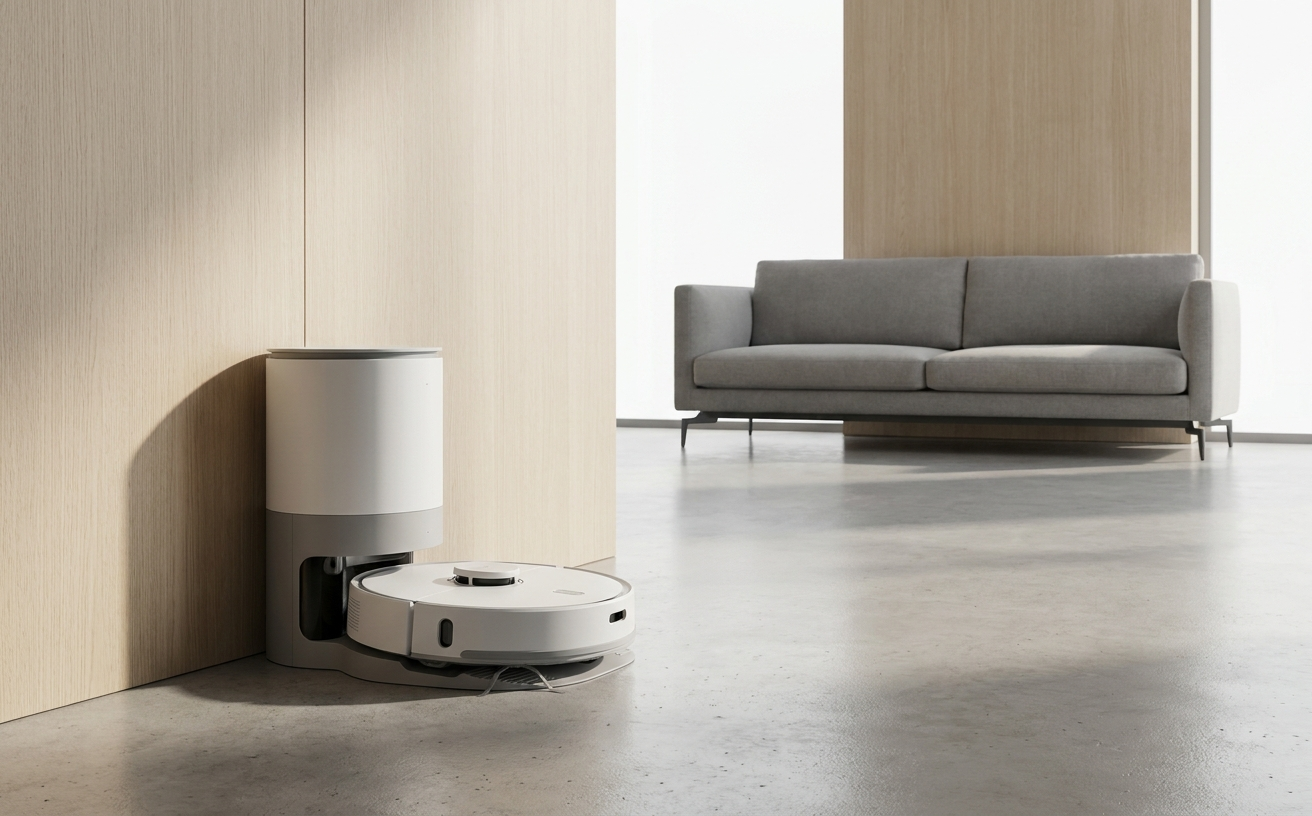
Self-cleaning docks wash mops, empty dustbins, and dry components automatically
Dock quality varies significantly between price tiers. Budget docks simply empty the dustbin. Mid-range docks add mop washing. The most advanced docks, like the one included with the Narwal Flow, use AI-adaptive hot-water washing that adjusts temperature between 45°C and 80°C based on the type of dirt detected, then finishes with 40°C warm air drying. With a 2.5L dust bag that lasts up to 120 days, the only regular tasks are refilling water and swapping the bag every few months.
Anti-Tangle Brush Systems
Hair tangling is one of the most common complaints about robot vacuums, particularly in homes with long-haired people or shedding pets. Conventional roller brushes wrap hair until performance degrades and the owner has to cut it free.
The most effective designs use a conical floating roller brush and dynamic side brushes that adjust their angle to guide hair into the suction path. Narwal’s DualFlow Tangle-Free System uses a single-arm floating roller brush with a 50-degree bristle angle that aerodynamically directs hair into the dustbin. SGS-certified at a 0% hair tangling rate, the brush stays functional run after run without manual cleaning.
Carpet Detection and Mop Lifting
Most premium hybrids lift their mop pads between 9mm and 12mm when carpet is detected. The Narwal Flow lifts its track mop by 12mm and simultaneously activates CarpetFocus Technology, which drops the brush cover to seal airflow and boost suction by up to 182% for deeper carpet cleaning.
Edge and Corner Cleaning
Edges and corners are weak spots for round robot cleaners. Two design approaches address this: extending a side brush outward to sweep debris, or extending the mop pad itself to reach the wall. The Narwal Flow’s EdgeReach track mop extends to within 5mm of walls, while its reversing side brush sweeps into corners with a claimed 99% dirt removal rate. On the Narwal Freo X10 Pro, the MopExtend system swings the triangular mop outward to cover toe kicks and furniture legs.
Which Robot Floor Cleaner Type Suits Your Home?
If your home is mostly carpeted with minimal hard floor area, a robot vacuum with strong suction (11,000Pa or above) and reliable carpet cleaning is the practical choice. A traditional mop handles occasional hard-floor touch-ups.
If your home is entirely hard floor (tile, vinyl, timber, or laminate), a dedicated robot mop or a hybrid with a strong mopping system gives the best results. Look for spinning pads or a roller mop rather than a passive drag pad, and check whether the base station washes and dries the mop pads automatically.
If your home has mixed flooring, which is common in Australian houses with tiled living areas and carpeted bedrooms, a hybrid vacuum-mop combo is the most practical single-device solution. Reliable carpet detection and a mop lift of at least 9mm are non-negotiable to keep rugs dry. For a deeper look at how robot mopping works across different floor types, see our robot vacuum mopping guide.
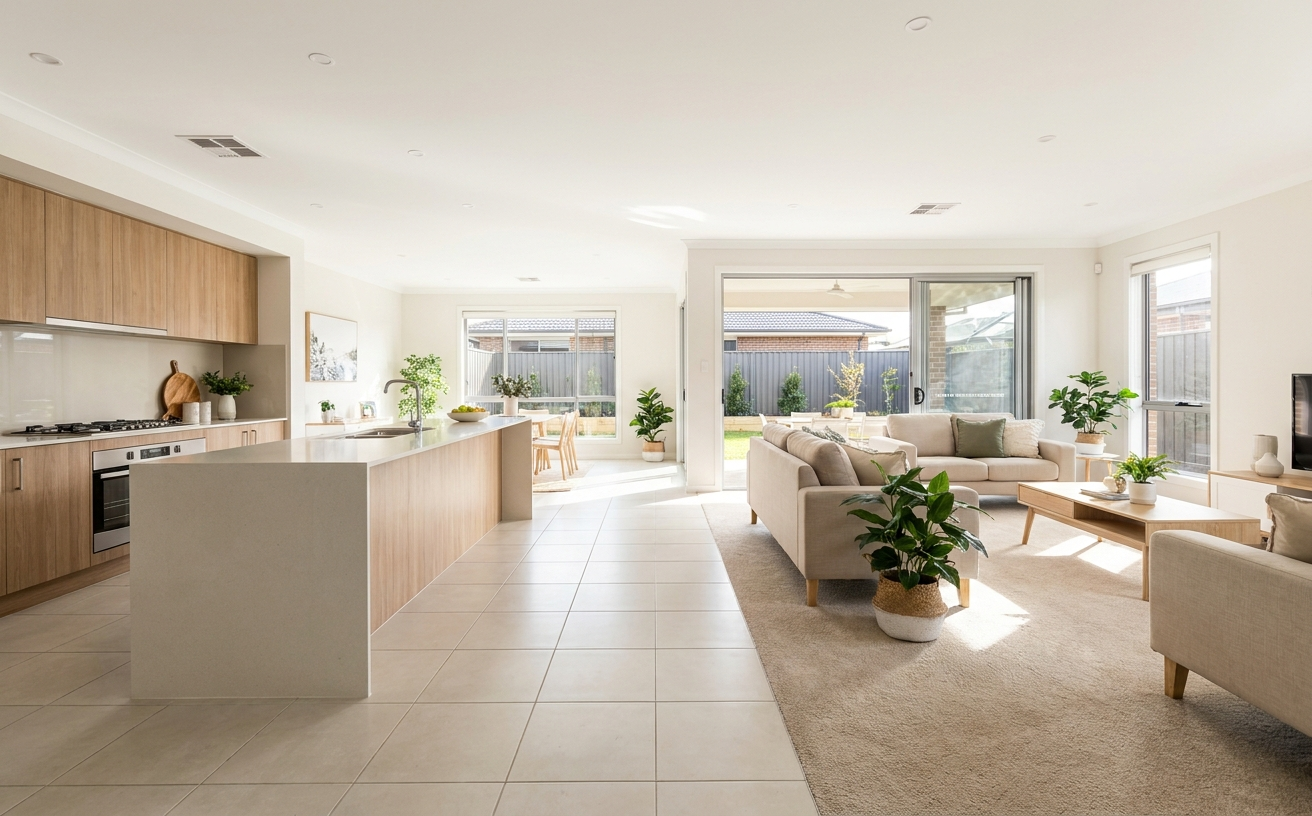
Mixed-floor Australian homes benefit most from hybrid vacuum-mop robots with automatic mop lifting
For families with pets, anti-tangle brush systems and a self-emptying dock with a sealed dust bag reduce allergen exposure and maintenance. For households with children, AI obstacle avoidance means you do not need to clear the floor of toys before every run.
Pairing a Robot Cleaner with a Cordless Wet Dry Vacuum
A robot handles daily scheduled passes across large areas, but it cannot respond to sudden messes, clean stairs, or reach tight spots behind furniture. A cordless wet dry vacuum fills that gap: it vacuums dry debris and mops wet messes in one pass under your direct control, and it is better suited to spot cleaning a spill the moment it happens.
The Narwal S30 Pro cordless wet and dry vacuum delivers 20,000Pa suction with a built-in scissors system to cut through tangled hair, 194°F hot-water self-cleaning, and a 60-minute runtime covering up to 4,300 sq ft. Used alongside a Narwal robot vacuum, it creates a complete floor-care system where the robot handles the daily passes and the cordless vacuum handles spot jobs, stairs, and kitchen cleanups.
FAQs
Can a robot floor cleaner replace my regular vacuum entirely?
For daily hard-floor maintenance and low-to-medium pile carpet, yes. For deep carpet cleaning, stairs, upholstery, or hard-to-reach areas, a manual vacuum or cordless stick vacuum is still useful for occasional use.
Do robot floor cleaners actually work?
On hard floors, most mid-range and premium robots remove 95% or more of surface debris in a single pass. On carpet, results depend on suction power and brush design. Robot mops clean dried coffee and food residue effectively with spinning or roller systems, though they are not a replacement for a deep manual scrub on heavily soiled floors. The biggest gains come from running them daily on a schedule, which keeps mess from building up.
Do hybrid robot vacuum mops leave floors too wet?
Most modern hybrids use electronically controlled water flow and adjustable moisture settings. Models with real-time self-cleaning mops, like the Narwal Flow, actively manage water throughout the run, which reduces excess moisture compared to models that rely on a single damp pad.
Do robot vacuums scratch tile floors?
Rubber wheels and soft bristle brushes on modern robots are designed to avoid scratching tile, porcelain, and sealed stone. The risk increases if sand or grit gets trapped under the robot and is dragged across the surface. Running the robot on a daily schedule reduces this risk because less grit accumulates between cleans.
What cleaning solution should I use with a robot mop?
Use the cleaning solution recommended by the robot’s manufacturer. Most brands, including Narwal, sell formulas designed for low foam and compatibility with internal pumps and sensors. Avoid vinegar, bleach, pine-based cleaners, and essential oils, as these can damage seals, clog water lines, or void the warranty.
How often do robot floor cleaners need maintenance?
With a self-cleaning base station, the main tasks are refilling the clean water tank weekly, replacing the dust bag every 2 to 4 months, and occasionally wiping down sensors. Models without a self-emptying dock need their dustbin emptied after every run or two.
What suction power do I need for carpet?
For low-pile carpet and hard floors, 8,000Pa is sufficient. For medium-pile carpet or moderate pet shedding, aim for 11,000Pa or higher. For deep carpet cleaning and heavy pet hair, 15,000Pa and above. The Narwal Flow offers 22,000Pa, among the strongest available in its class.
Are robot floor cleaners safe for timber floors?
Yes, on sealed timber, laminate, and engineered hardwood with adjustable mopping pressure and water output. Avoid robot mopping on unsealed or waxed timber, as excess water can cause swelling and discolouration.


