
A quiet home where low-noise cleaning matters most
The quietest robot vacuum you can buy in Australia in 2026 reaches as low as 53 dB in mopping mode. That is the Narwal Freo Z10 Ultra robot vacuum and mop, and it sets the benchmark for low-noise cleaning on the Australian market.
A single dB spec does not tell the full story, though. The dock can be louder than the robot itself during auto-emptying. Hard floors reflect more sound than carpet. And higher suction generally means a louder motor. The comparison below accounts for all three factors across seven models sold in Australia.
Quietest Robot Vacuums in Australia for 2026
Noise figures reflect manufacturer-stated values for the quietest operating mode unless noted otherwise. Dock noise is included because it affects total noise exposure as much as the robot itself.
| Model | Quietest Mode | Max Suction | Mop Lift | Dock Noise | Best For |
|---|---|---|---|---|---|
| Narwal Freo Z10 Ultra | ≤53 dB (mop) | 18,000 Pa | 12 mm | ~70 dB | Quietest overall, apartments, night cleaning |
| Narwal Flow | ≤57 dB (vac) | 22,000 Pa | 12 mm | ~72 dB (empty), 39 dB+ (dry) | High suction with low noise, deep mopping |
| Narwal Freo Z10 | ≤56 dB (mop) | 15,000 Pa | 12 mm | Quiet | Quiet mopping, families, balanced value |
| Narwal Freo X10 Pro | ≤59 dB | 11,000 Pa | 12 mm | Moderate | Mid-range quiet, tangle-free cleaning |
| Dreame L50 Ultra | ~55 dB (quiet) | 19,500 Pa | 10.5 mm | Loud | High suction with quiet mode, large homes |
| Roborock Qrevo Master | ~67 dB | 10,000 Pa | Yes | Loud | All-round performance, hot water mop wash |
| Ecovacs Deebot X5 Pro Omni | ~65 dB | 12,800 Pa | 15 mm | ~63 dB (empty) | D-shape edge cleaning, pet households |
Narwal Freo Z10 Ultra
[cta:narwal-freo-z10-ultra-robot-vacuum-mop]
The Narwal Freo Z10 Ultra is the quietest robot vacuum in Australia for apartments, night cleaning, and pet households. Mopping noise drops as low as 53 dB, vacuuming stays under 59 dB, and its base station empties at roughly 70 dB, well below the 80+ dB typical of competing docks. A 2.5-litre onboard dust bag stores up to 120 days of debris, so the station only needs to empty a few times per year.
18,000 Pa suction handles hard floors and carpets. The DualFlow tangle-free brush system (SGS-certified, 0% hair tangle rate) prevents the rattling noise that builds up when hair wraps around a conventional roller. Warm-air mop drying runs quietly at 40°C. At $2,499 it is the most expensive quiet option from Narwal, but it is the only model in Australia where both the robot and dock stay consistently below disruptive noise levels across every cycle.
Narwal Flow
[cta:narwal-flow-robot-vacuum-mop]
The Narwal Flow is the quietest high-suction robot vacuum in Australia. It produces 22,000 Pa while keeping vacuum-only noise at or below 57 dB and combined vacuum-and-mop at 60 dB. Most robots at this suction level run significantly louder because their internal airflow paths create more turbulence. The Flow’s track-mop system self-cleans with warm water and 12 N pressure in real time, so the mop stays fresh without a noisy wash cycle at the dock.
Its CarpetFocus technology auto-lowers the brush cover on carpet to boost pickup, then returns to quieter standard mode on hard floors. The dock empties at roughly 72 dB and dries mop pads at just 39 dB+, making the drying cycle one of the quietest on the market. A 120-day dust storage bag means infrequent emptying events. At $2,999 the Flow sits at the top of the range, best suited to buyers who need deep cleaning power across mixed flooring without the noise penalty.
Narwal Freo Z10
[cta:narwal-freo-z10-robot-vacuum-mop]
The Narwal Freo Z10 delivers near-flagship quiet performance at a mid-range price. Both vacuuming and mopping stay at or below 56 dB, and it shares the same 2.5-litre onboard dust bag and 120-day capacity as the Z10 Ultra. Its tangle-free brush and triangular extending mop are the same design. The dock uses the same quiet architecture as the Z10 Ultra.
The main differences from the Z10 Ultra are suction (15,000 Pa vs 18,000 Pa) and obstacle avoidance (forward 3D structured light vs dual RGB cameras with AI chip). For homes where carpet deep-cleaning and advanced obstacle detection are less critical, the Z10 at $1,999 offers nearly identical quiet performance for $500 less.
Narwal Freo X10 Pro
[cta:narwal-freo-x10-pro-robot-vacuum-mop]
The Narwal Freo X10 Pro is a quiet mid-range robot vacuum with a full all-in-one dock. It operates at or below 59 dB with 11,000 Pa suction and a certified zero-tangle roller brush (SGS, 0% tangle rate). The extending triangular mop swings for edge coverage. The dock includes a 120-day self-empty system, hot-air drying, and station self-cleaning.
At $1,499, the X10 Pro suits mid-sized homes with mostly hard floors where 11,000 Pa is more than sufficient for daily cleaning and noise needs to stay below conversation level.
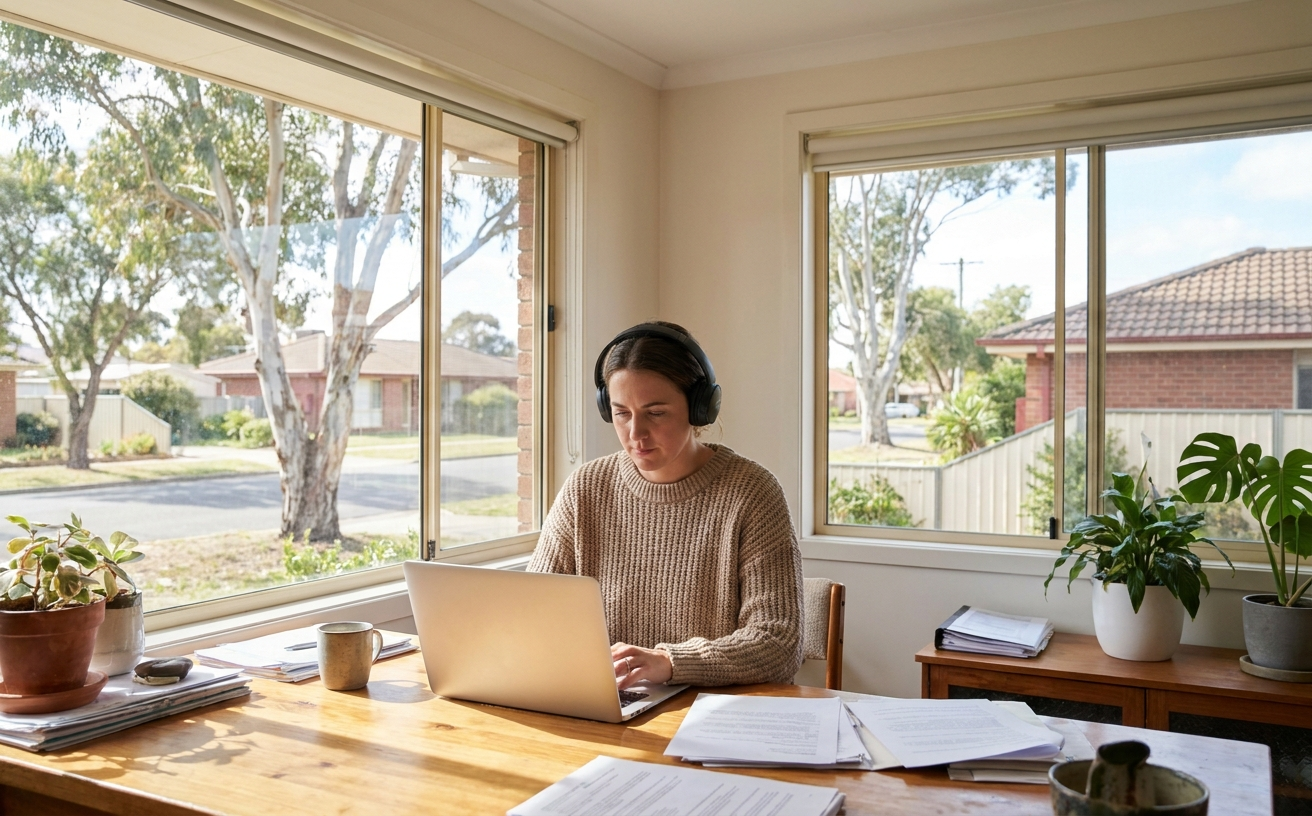
Working from home while a robot vacuum runs in the background
Dreame L50 Ultra
The Dreame L50 Ultra is the closest non-Narwal option on quiet-mode noise, at roughly 55 dB, paired with strong 19,500 Pa suction, a ProLeap leg system that climbs thresholds up to 2.36 inches, and a 75°C hot-water mop wash.
The catch is consistency. Noise climbs to about 75 dB at full power — a far wider quiet-to-max swing than comparable Narwal models — and its dock is loud during auto-emptying, in the usual 75–85 dB range. In quiet mode it is genuinely close to Narwal, but across a full clean-and-empty cycle the Freo Z10 Ultra stays quieter more of the time.
Roborock Qrevo Master
The Roborock Qrevo Master brings 10,000 Pa suction, hot-water mop washing, automatic carpet mop-lifting, and strong navigation. But at around 67 dB it is the loudest robot in this comparison — audible in the same room and best scheduled for unoccupied hours — and its dock is loud during auto-emptying too. It is a capable all-rounder, but on the noise axis this guide ranks by, it sits well behind the Narwal and Dreame options.
Ecovacs Deebot X5 Pro Omni
The Ecovacs Deebot X5 Pro Omni has one genuine noise advantage: its dock empties at a relatively quiet 63 dB, below the ~70 dB of Narwal's dock. It also brings a D-shaped body with TrueEdge mopping to within 1 mm of edges, 12,800 Pa suction, and 15 mm mop lift.
But the quieter event is the rarer one. The robot itself runs at about 65 dB while cleaning — louder than the Narwal and Dreame options during the noise you actually hear most — and its mop drying runs for hours, noticeable in open-plan spaces. Narwal's 120-day onboard storage also means the dock empties only a few times a year, so the dock-volume gap rarely comes into play.
What Makes a Robot Vacuum Quiet or Loud
Not all robot vacuums are noisy. Models from 2026 range from 53 to 67 dB in their quietest modes, which is softer than a normal conversation. But noise comes from more than just the motor, and the total experience depends on three factors.
Motor and Airflow Design
The suction motor is the dominant noise source. Brushless digital motors run quieter than older brushed designs. Internal airflow path design matters just as much: wide, smooth ducting reduces the turbulent whine that makes some robots sound harsher than their dB number implies. This is why the Narwal Flow stays under 57 dB at 22,000 Pa while some competitors run louder at half that suction.
Floor Type and Contact Noise
Hard tiles and timber reflect sound; carpet absorbs it. The same robot can register 58 dB on carpet and 63 dB on polished concrete. The decibel scale is logarithmic: a 10 dB increase sounds roughly twice as loud, so a 5 dB gap between two models is clearly noticeable. Softer bristle materials and rubber drive wheels help dampen contact noise on hard surfaces.
Base Station Noise
Most auto-empty docks hit 75 to 85 dB for 10 to 15 seconds per cycle. Models that store dust onboard, like the Narwal Freo Z10 Ultra with its 120-day capacity, reduce the frequency of these loud bursts to a few times per year. Mop-drying volume varies too: the Narwal Flow’s dock dries at 39 dB+, while competing docks in the same tier typically sit at 50 to 55 dB.
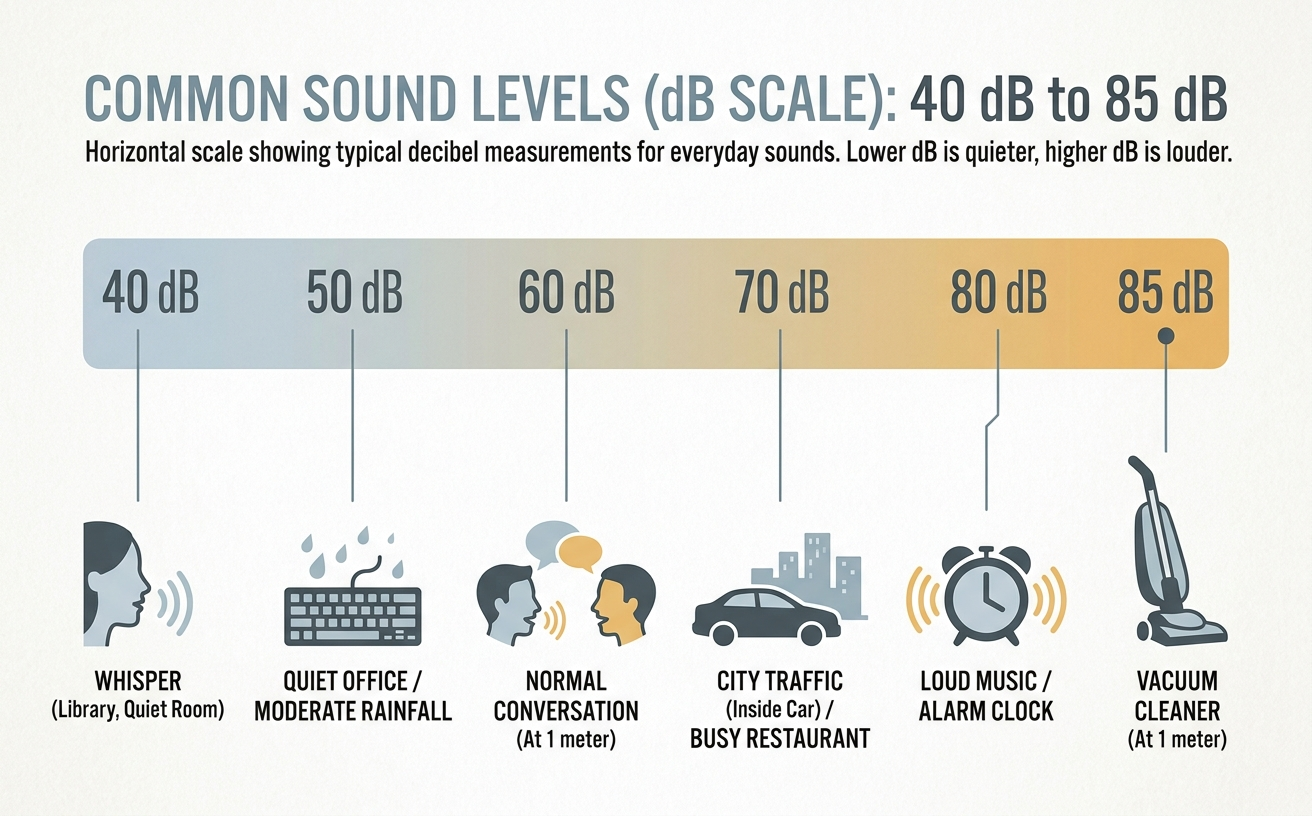
Decibel scale: where quiet robot vacuums sit compared to everyday sounds
How to Choose a Quiet Robot Vacuum
The right quiet robot vacuum depends on your floor type, when you plan to run the robot, and how sensitive your household is to dock noise.
Apartments and Hard Floors
Hard floors amplify noise by 3 to 5 dB over carpet. For overnight runs or cleaning during calls, aim for a robot under 57 dB in quiet mode. The Narwal Freo Z10 Ultra (as low as 53 dB mopping) and Narwal Flow (57 dB vacuum-only) both pair low robot noise with quiet dock cycles.
Mixed Flooring
Automatic suction adjustment keeps noise low on hard floors and ramps up only on carpet. The Narwal Flow handles this well with its CarpetFocus system. The Dreame L50 Ultra works similarly, though its dock runs louder during emptying.
Pet Households
More hair means faster dustbin fill and more frequent dock emptying. Onboard dust storage with 120-day capacity, available on the Narwal Freo Z10 Ultra and Freo Z10, reduces emptying events. Zero-tangle brushes prevent the rattling that wrapped hair produces on conventional rollers over time.
Night Cleaning
Dock noise matters more than robot noise for unattended overnight runs. Place the dock at least 30 cm from walls to reduce echo. Schedule mop-wash and drying cycles to finish before your wake-up time. The Narwal Freo Z10 Ultra and Narwal Flow both complete their full dock cycles at levels unlikely to wake a light sleeper in the next room.
If you are deciding between Narwal models, the table below shows how noise, suction, and price compare across the Australian range.
| Model | Vacuum Noise | Mop Noise | Max Suction | Price (AUD) |
|---|---|---|---|---|
| Narwal Freo Z10 Ultra | ≤59 dB | As low as 53 dB | 18,000 Pa | $2,499 |
| Narwal Flow | ≤57 dB | ≤60 dB | 22,000 Pa | $2,999 |
| Narwal Freo Z10 | ≤56 dB | ≤56 dB | 15,000 Pa | $1,999 |
| Narwal Freo X10 Pro | ≤59 dB | N/A (integrated) | 11,000 Pa | $1,499 |
| Narwal Freo S | ≤62 dB | ≤60 dB | 8,000 Pa | $999 |
The Freo Z10 Ultra is the quietest across both modes. The Flow trades slightly higher mop noise for the strongest suction in the range. The Freo Z10 at $1,999 delivers near-flagship quiet performance at a mid-tier price. The Freo S at $999 stays under 62 dB and includes a 180-day auto-empty dock, making it the most accessible entry point for noise-conscious buyers.
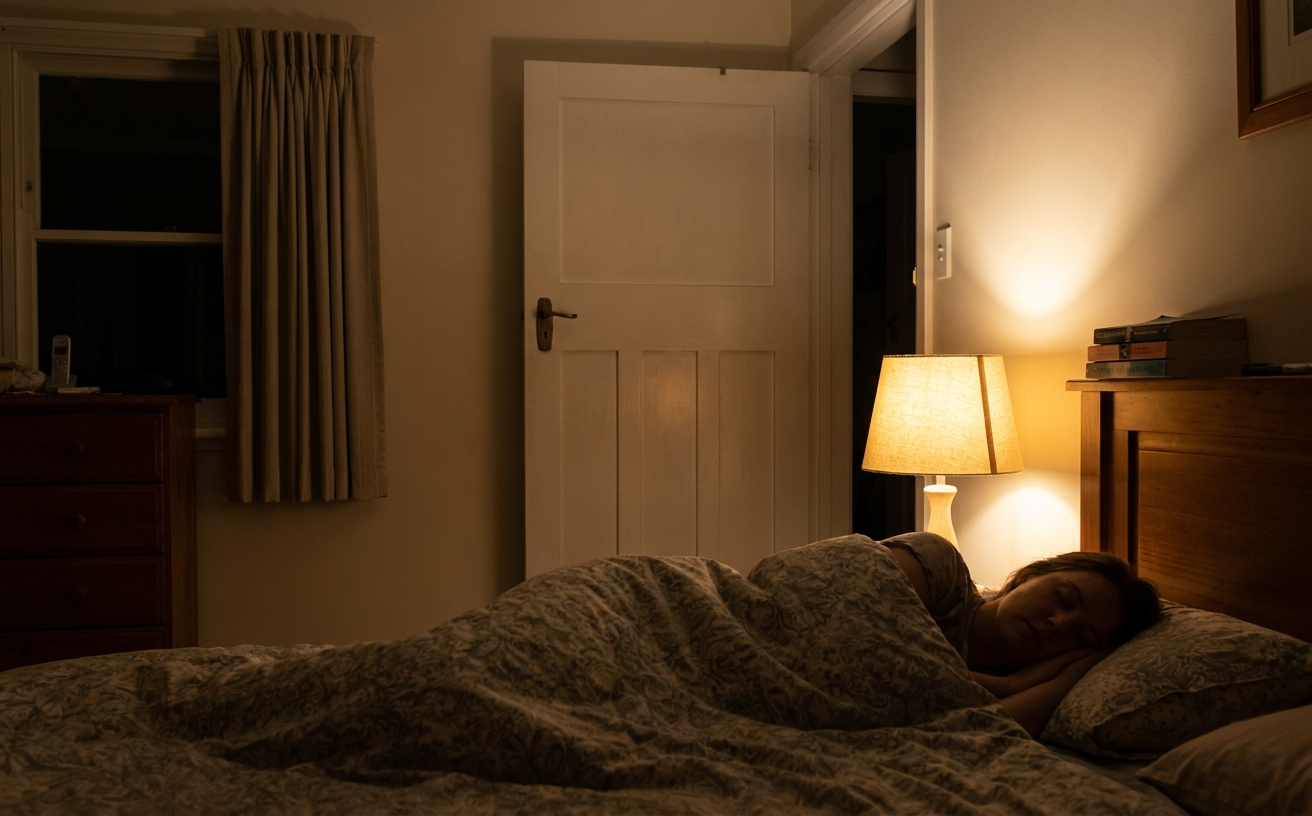
Night cleaning works best with robots and docks that stay below 60 dB
FAQs
What dB is considered quiet for a robot vacuum?
Below 55 dB is very quiet and suitable for running near sleeping people. Between 55 and 65 dB is a comfortable range for daytime cleaning in the same room. Above 65 dB becomes noticeable enough that most people prefer to be in a different room or schedule the clean for when the house is empty.
Is 60 dB too loud for a baby’s room?
A steady 60 dB is about the volume of a calm conversation. It may be fine for an infant used to ambient noise, but running the robot with the nursery door closed or during awake hours is safer. Models under 55 dB, like the Narwal Freo Z10 Ultra in mop mode, are the strongest option near sleeping children.
Can you get a completely silent robot vacuum?
No. Any motor that generates suction produces some noise. The quietest models currently reach as low as 53 dB, which is roughly the volume of a running refrigerator. From the next room with the door closed, that level is barely audible.
How much does a quiet robot vacuum cost in Australia?
Models under 57 dB start at $1,999 (Narwal Freo Z10). The quietest option, the Narwal Freo Z10 Ultra at as low as 53 dB, is $2,499. The Narwal Freo S at $999 stays under 62 dB, which is still softer than most competing robots at similar price points.

