
A robot vacuum and mop has to handle Australian mixed flooring without supervision.
A robot cleaner with mop vacuums and mops in one run. In Australia, where most homes mix tile, timber and rugs, these 2-in-1 robots have become the default over vacuum-only models. But the designs vary widely, and what works in a hard-floor apartment will not suit a four-bedroom home with two dogs. The mopping system, carpet handling and dock capability are what separate a good one from a frustrating one.
What a robot cleaner with mop is for
The job is everyday maintenance, not deep cleaning. It keeps dust, hair and light spills from settling into hardwood seams, tile grout and rug fibres between bigger manual cleans. If you have shedding pets or kids tracking dirt through the back door, the buildup between cleans is exactly what a 2-in-1 robot handles.
Most models vacuum and mop on the same mapped run, then return to a base station for charging, dust emptying and (on better models) mop washing.
How robot vacuum mop systems clean your floors
Three mopping designs exist in the Australian market right now.
Static pads
Flat microfibre cloths that drag across the floor with light vibration. Fine for dust on already-clean tile, but anything dried, sticky or oily gets pushed around rather than lifted. This is the most basic of the robot floor cleaner types available in Australia.
Spinning mop pads
Circular pads that rotate at 150 to 200 RPM and apply 8 to 12 newtons of downward pressure, giving them genuine scrubbing action against dried coffee, sauce and footprints. Most current 2-in-1 robots sold in Australia use this design. The Narwal Freo X10 Pro robot vacuum and mop is one example, applying 8N pressure through dual mops spinning at 180 RPM.
Track mops
A fabric belt that rolls continuously while a built-in scraper and warm water rinse it in real time, so the mop never re-touches the floor with the same dirty surface. The Narwal Flow robot vacuum and mop uses this approach, feeding 45°C warm water onto the track and applying 12N pressure while the belt refreshes 110 times a minute.
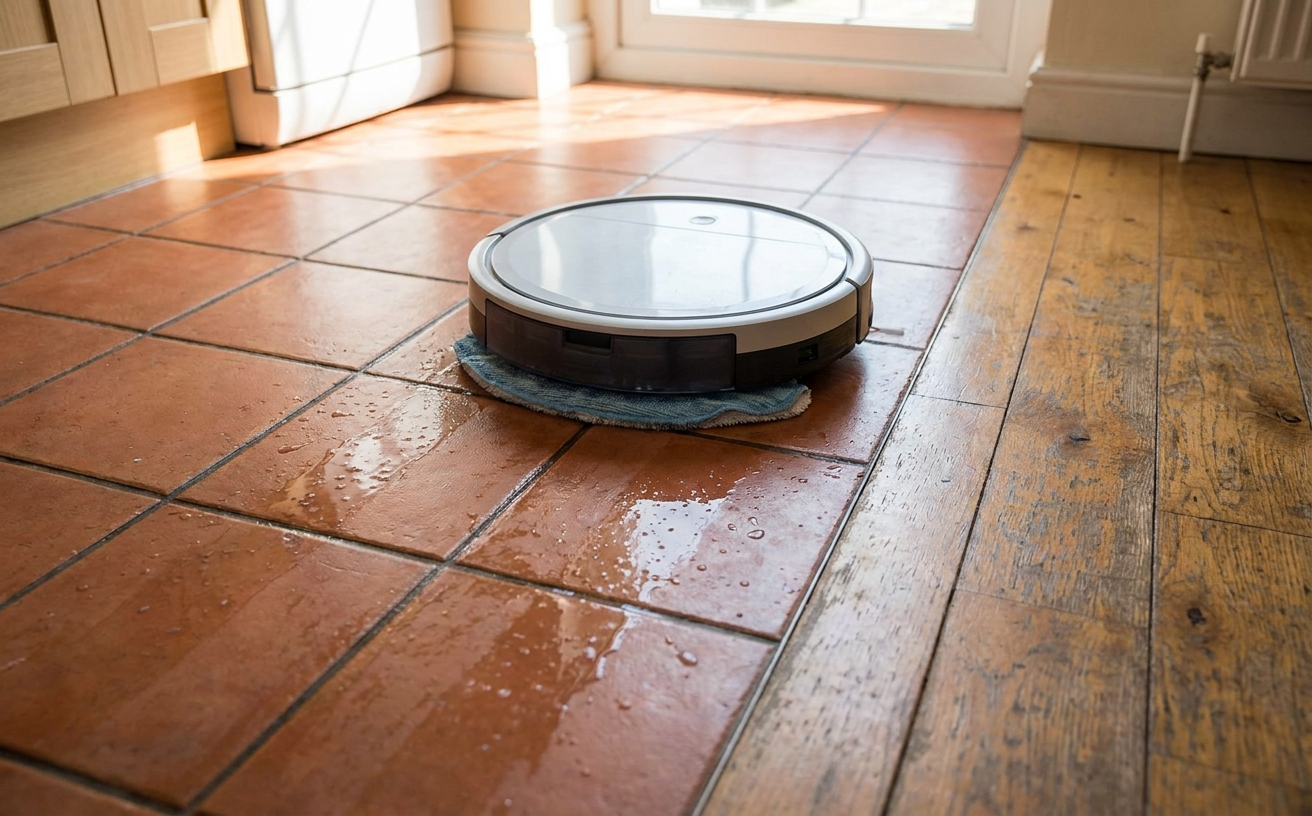
The mopping system, more than suction, decides how the floor actually finishes.
How much suction a robot cleaner with mop needs
Australian models span roughly 6,000Pa to 22,000Pa. Above 6,000Pa handles dust, crumbs and short hair on hard floors. The figure starts to matter with carpet and pet hair, where 10,000Pa and up with auto-boost on detected carpet is the practical threshold.
The Narwal Freo Z10 Ultra robot vacuum and mop runs 18,000Pa with 160% suction boost on carpet. The Narwal Flow pushes to 22,000Pa and adds CarpetFocus, which automatically lowers a brush cover onto the rug to create a sealed high-pressure airflow zone that pulls embedded debris out of carpet fibres.
What the dock does and why it matters
The dock determines how often you touch the robot. Three levels exist in Australia.
Self-empty only
Transfers dust into a sealed bag in the base, typically lasting 60 to 120 days before replacement.
Self-empty plus mop washing
Rinses mop pads after each cycle. Better models use warm water with detergent and dry the mop with hot air to prevent mould. The Narwal Freo X10 Pro dries at 40°C. The Narwal Freo Z10 Ultra runs adaptive hot-water washing between 45°C and 75°C, adjusting temperature to the type of dirt its sensors detect on the mop.
Real-time self-cleaning
Washes the mop continuously during the run rather than only at the dock. The Narwal Flow uses this approach through its track mop and built-in scraper, so the cleaning surface stays fresh across an entire home.
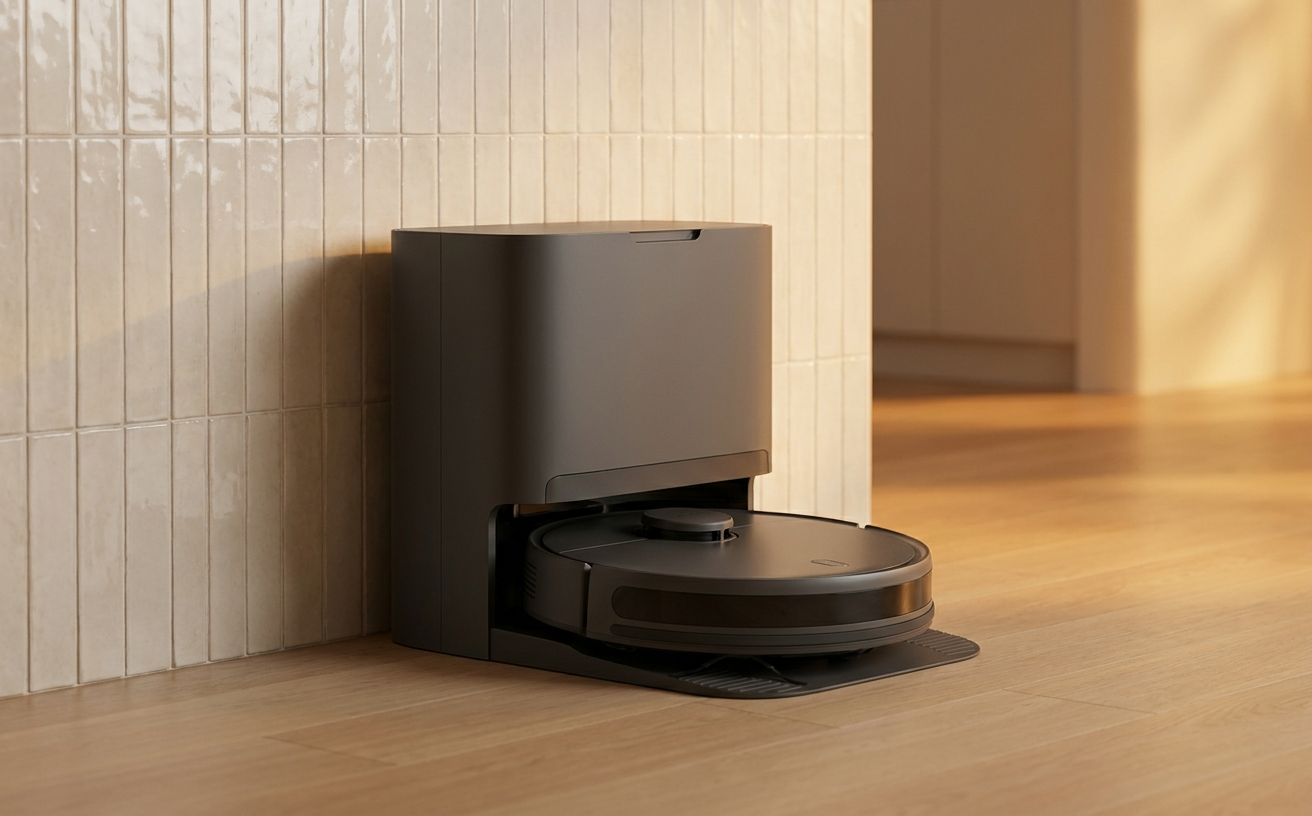
A capable dock, with mop washing and sealed dust storage, is what makes the maintenance gap last weeks instead of days.
How to choose a robot vacuum and mop for Australian homes
For mostly hard floors (tile, timber, vinyl), edge reach and mopping pressure matter more than suction. Look for models with extending mop arms that clean within 5mm of skirting boards.
For mixed flooring with rugs and carpet runners, carpet detection is non-negotiable. Without it the mop drags wet across the rug. Look for 12mm automatic mop lift, suction boost on carpet, and a tangle-free roller brush.
For homes with pets, prioritise brush design over suction. A floating single-arm roller guides hair into the dustbin instead of wrapping around the shaft, and side brushes that switch from V-shape to parallel shape release tangled strands automatically. The Narwal Freo Z10 Ultra uses this DualFlow system, which is SGS-certified at 0% hair tangle rate.
For Australian climate, sealed self-empty bags stop fine particles escaping back into the home when the bin is emptied, which matters during dust haze and pollen season. Hot-water mop washing at the dock handles bacterial buildup that warm summers accelerate.
In Australia, robot vacuum and mop models with self-empty docks and spinning or track mops typically sit between $999 and $3,000. Models under $1,000 generally include self-empty but require manual mop rinsing. Above $1,500, expect automatic mop washing and drying.
What a robot cleaner with mop will not do
It will not deep-clean carpet. Even at 22,000Pa, a robot cannot match the agitation of a roller-driven upright on plush or high-pile carpet.
It will not handle stairs, sofas or car interiors. Many Australian households pair a robot with a cordless wet/dry vacuum like the Narwal S30 Pro for off-floor cleaning.
It will not deal with large debris. Socks, toy parts and anything bigger than a sultana will jam the brush or trigger an obstacle alert.
It will not reach every corner perfectly. Even with extending mop arms, deep concave corners and tight gaps between furniture remain manual.
Runtime, water tank and scheduling
Most current models cover 80 to 120 square metres on one charge in vacuum-and-mop mode, then auto-resume after recharging. A 130ml to 300ml onboard tank handles a typical apartment in one fill. Larger homes benefit from a dock reservoir or an auto-refill plumbing kit. The Narwal Flow offers an optional auto refill and drainage system that connects to household plumbing.
Run the robot daily on a light mode rather than weekly on deep. That schedule produces consistently clean floors.
Robot vacuum and mop models worth knowing in Australia
For whole-home cleaning with the most advanced mopping, the Narwal Flow robot vacuum and mop is the only model in Australia using a real-time self-cleaning track mop. It pairs 22,000Pa suction with CarpetFocus carpet handling, dual RGB camera obstacle avoidance, and a 120-day self-empty dock. Best suited to larger homes with mixed flooring.
For most Australian homes, the Narwal Freo X10 Pro robot vacuum and mop pairs 11,000Pa suction with dual spinning mops, the DualFlow tangle-free brush system, and a self-empty dock with auto mop wash and warm-air drying. Its MopExtend arm swings outward to reach under toe-kicks and along edges that the main body cannot contact.
For homes with multiple pets and complex layouts, the Narwal Freo Z10 Ultra robot vacuum and mop adds dual RGB cameras on top of structured-light sensors. The cameras classify objects so the robot responds differently to each, leaving clearance around pet accidents and avoiding cables. The structured-light sensors measure proximity to surfaces, allowing the robot to clean within millimetres of furniture without contact. It also runs AI-adaptive hot-water mop washing up to 75°C.
For hard-floor apartments, the Narwal Freo S robot vacuum and mop runs 8,000Pa suction with 8N mop pressure, LDS laser navigation, and 180-day self-empty storage. No automatic mop washing, so pads are rinsed manually, but for a mostly-tiled or timber apartment that is a fair trade-off.
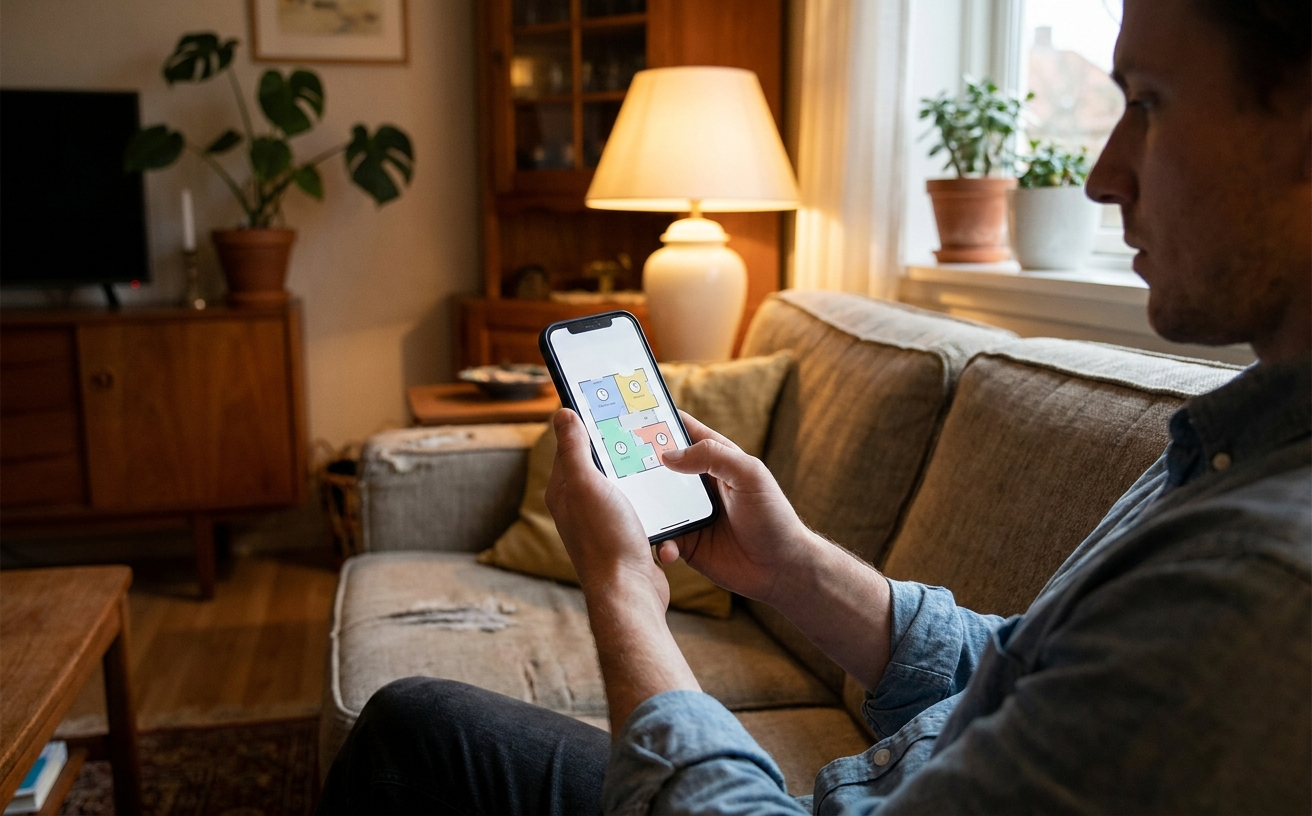
App control and accurate mapping decide how often the robot actually runs once the novelty wears off.
FAQs
Do robot mops leave the floor wet?
Spinning-mop models leave a thin film that dries within a few minutes on tile and vinyl. Track-mop designs extract dirty water during the pass and leave less residue. On sealed timber, moisture evaporates within about five minutes in a ventilated room.
How long do robot vacuum and mop combos usually last?
The robot itself typically lasts three to five years. Mop pads need replacing every two to three months, side brushes every three to six months, and the main roller brush roughly once a year. Dust bags last 60 to 120 days per bag.
What floors are not suitable for robotic mopping?
Untreated timber, raw cork and unsealed natural stone like travertine should not be wet-mopped. Set up no-go zones in the app and let the robot vacuum-only across them.
Do robot vacuums scratch hardwood floors?
On sealed hardwood and engineered timber, no. Scratching happens when grit gets trapped under a worn mop pad or damaged wheel, so replacing consumables on schedule prevents it.
What are common problems with robot vacuum mops?
The most frequent issues are mop pads developing odour from insufficient drying, the robot getting stuck under low furniture, navigation missing narrow strips between rooms, and edge brushes getting louder as hair builds up. Regular consumable replacement and correct dock placement solve most of these.


