
A typical Australian home with mixed flooring needs different cleaning approaches for carpet and hard surfaces
Automatic carpet cleaning uses robot vacuums, cordless wet dry vacuums, or scheduled cleaning routines to remove dirt, dust, and allergens from carpet fibres without manual vacuuming. In Australian homes, where carpeted bedrooms, hallways, and living areas collect pet hair, pollen, and fine dust year round, these systems handle daily maintenance with almost no hands-on effort.
Research from the Carpet and Rug Institute has shown that dirt acts like tiny blades inside carpet pile, cutting fibres and dulling the surface over time. Australian conditions like pollen season and inland dust storms accelerate this wear. Carpet also traps allergens: dust mite waste, pollen grains, and pet dander settle deep into the pile and become airborne again each time someone walks across the room. Regular automated vacuuming with HEPA-grade filtration reduces this cycle. A 2021 study published in the Journal of Allergy and Clinical Immunology found that homes with daily vacuuming schedules had measurably lower airborne allergen concentrations than homes vacuumed weekly or less.
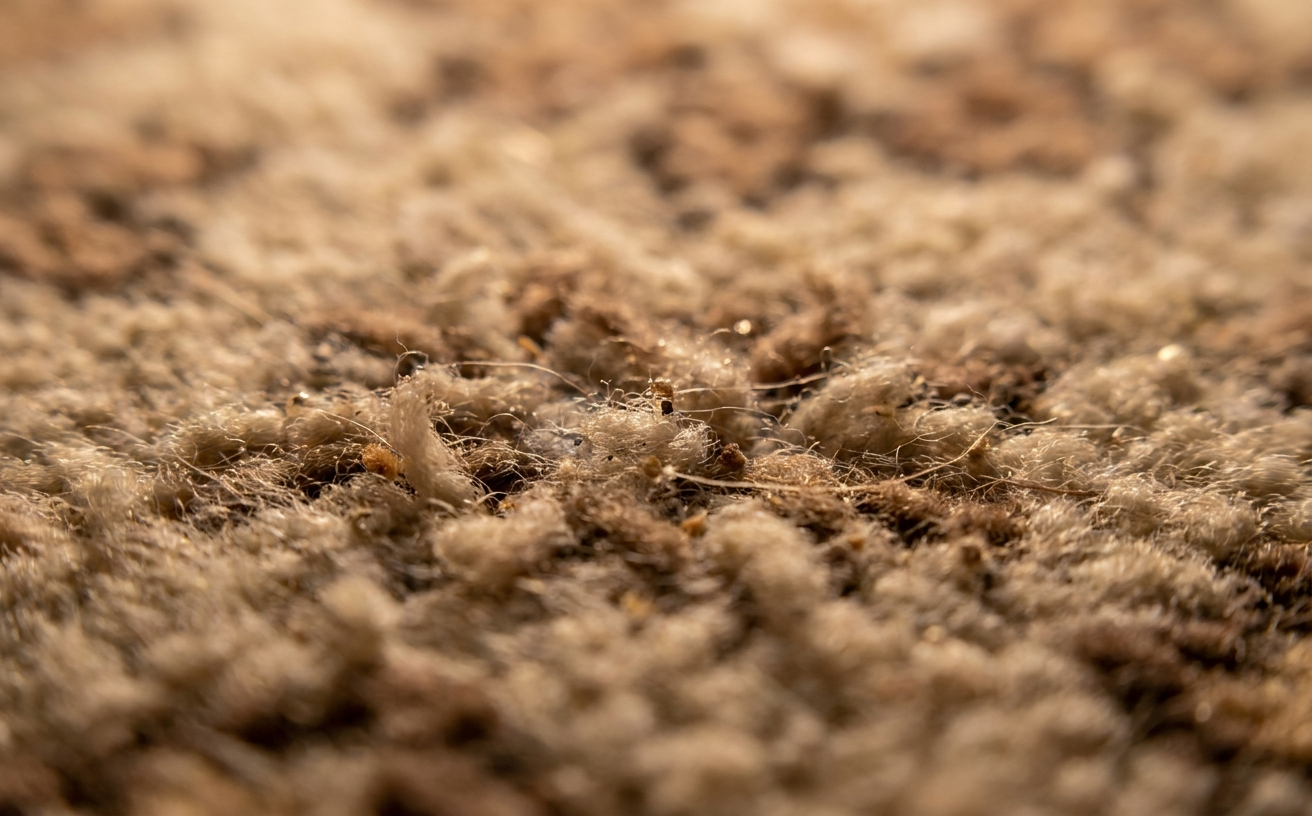
Dust and fine particles embed deep into carpet fibres where surface cleaning cannot reach
Features That Matter for Automatic Carpet Cleaning
Five features separate an effective automatic carpet cleaner from one that leaves dirt behind or damages carpet.
Automatic carpet detection is the most important feature for mixed-flooring homes. The unit identifies when it moves from hard floor to carpet and adjusts behaviour: boosting suction, lifting the mop to keep carpet dry in robot models, and adjusting water flow in wet dry vacuums. Without it, you either sacrifice carpet performance or risk wetting carpet with a mopping function.
Suction power determines how effectively a cleaner removes embedded dirt. For light maintenance on low-pile carpet, 5,000 Pa is adequate. For medium or high-pile carpet, look for 10,000 Pa or above. Homes with shedding pets benefit from higher suction paired with a well-designed brush system.
Tangle-free brush design prevents hair from wrapping around the roller, which reduces suction over time. SGS-certified zero-tangle systems make a noticeable difference in households with long-haired occupants or pets.
Mop lifting keeps carpet dry when a robot vacuum switches from hard floor to carpet. Models that lift the mop pad 12 mm or more provide enough clearance for most low and medium-pile carpets.
Scheduling and app control let you set cleaning cycles that run while you are out. Skipping days allows dirt to compact into fibres, so daily consistency matters more than occasional deep passes.
Robot Vacuums for Automatic Carpet Cleaning
A robot vacuum cleaner for carpet runs on a schedule, returns to its dock for charging and self-emptying, and switches cleaning modes based on floor type. Three Narwal models cover different carpet cleaning needs and price points.
The Narwal Flow robot vacuum and mop delivers 22,000 Pa of suction, among the highest currently available for a consumer robot. Its CarpetFocus Technology automatically lowers the brush cover when carpet is detected, creating a sealed high-pressure airflow zone that the company reports increases pickup rate by 2x compared to the industry average. The track mop lifts 12 mm to keep carpet dry, and the unit crosses obstacles up to 40 mm, which helps with raised carpet edges and door thresholds.
The Narwal Freo X10 Pro robot vacuum and mop offers 11,000 Pa suction with a 99%+ particle removal rate on hardwood floors, a patented Reuleaux triangular mop that extends and swings for edge cleaning, and a 12 mm auto mop lift for carpet. Its DualFlow tangle-free system is SGS certified at 0% hair tangling rate, making it a strong option for pet owners at a mid-range price.
The Narwal Freo S robot vacuum and mop provides 8,000 Pa suction with automatic carpet boost, LDS laser navigation, and an 8 N mopping pressure system. Its 180-day self-emptying base station with a 3.5 L dust bag keeps maintenance to roughly twice a year. For homes with mostly low-pile carpet and hard floors, it handles daily cleaning without intervention.
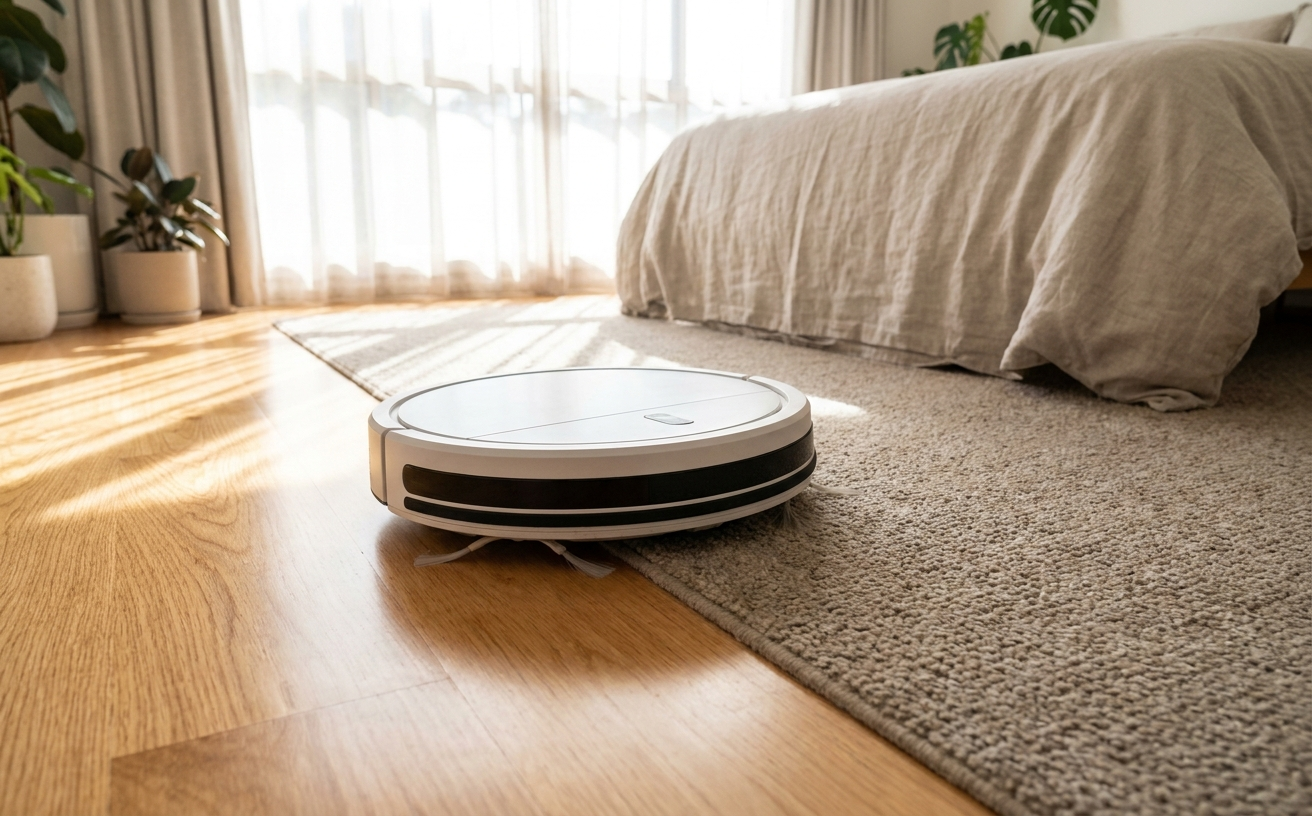
A robot vacuum with automatic carpet detection boosts suction as it transitions from hard floor to carpet
Can Cordless Wet Dry Vacuums Clean Carpet Automatically?
Cordless wet dry vacuums are not autonomous, but models with AI-powered dirt sensing adjust suction and scrubbing intensity in real time without manual mode switching. They fill a different role from robot vacuums: targeted deep cleaning of spills, embedded stains, and high-traffic patches.
The Narwal S30 Pro cordless wet dry vacuum uses 20,000 Pa suction with 20 N downward force, and its AI DirtSense technology adjusts power based on detected dirt levels. A built-in scissor system cuts through tangled hair on the roller (SGS and TÜV verified at 0% tangle rate). The 194°F self-cleaning cycle and iron-drying system keep the brush fresh. With 60 minutes of runtime covering up to 4,300 sq ft, it handles large carpeted areas in one session.
The Narwal S30 cordless wet dry vacuum delivers the same 20,000 Pa suction and 20 N downward force as the Pro, with 55 minutes of runtime covering up to 3,700 sq ft. The main differences are a 176°F wash temperature instead of 194°F and manual detergent dispensing instead of automatic.
Robot Vacuum vs. Wet Dry Vacuum for Carpet
Robot vacuums handle daily dust and hair on autopilot. Wet dry vacuums tackle spills and embedded stains that need focused pressure. Most carpeted Australian homes benefit from both.
| Task | Robot Vacuum | Cordless Wet Dry Vacuum |
|---|---|---|
| Daily dust and hair removal | Fully automatic on schedule | Manual, 10-15 min per room |
| Spot cleaning spills | Limited, single pass | Strong, targeted suction and scrub |
| Deep embedded dirt | Moderate with high suction | Strong with downward pressure |
| Edge and corner cleaning | Good with extending mop/brush | Excellent with manual reach |
| Carpet and hard floor switching | Automatic detection and mop lift | Manual mode switching |
| Hands-free operation | Yes, fully scheduled | No, requires user operation |
Tips for Keeping Carpet Clean in Australian Homes
Australian conditions that affect carpet
Dust storms in inland and western regions deposit fine particles that settle deep into carpet fibres. Coastal humidity encourages mould growth in damp carpet. Pet ownership rates in Australia are among the highest globally, and pet hair is one of the most common carpet complaints on Whirlpool and OzBargain.
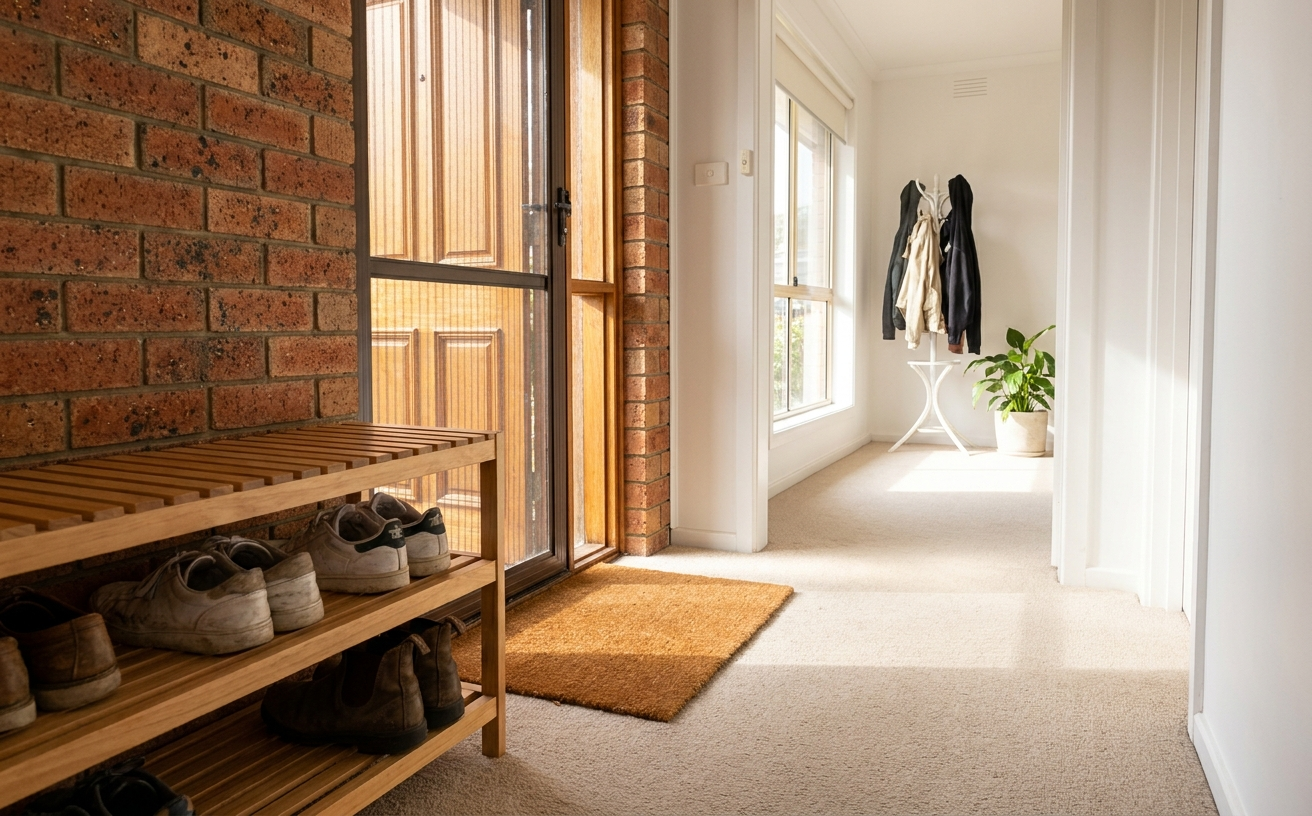
Using doormats and removing shoes at the entry reduces the amount of dirt tracked onto carpeted areas
Daily habits that protect carpet
Run your robot vacuum daily, even on quiet mode (most operate below 60 dB). Schedule it for when you leave the house.
Address spills immediately by blotting, not rubbing. A wet dry vacuum with strong suction can extract liquid before it sets. Rubbing pushes liquid deeper and spreads it outward For hardened candle residue, follow this guide to get wax out of carpet.
Use doormats at every entry point and consider a no-shoes policy. Research from the National Institutes of Health has found that shoes track in bacteria, pesticides, and heavy metals that accumulate in carpet fibres.
For homes with pets, schedule a second daily cleaning pass in the rooms where pets spend the most time. Most robot vacuum apps allow room-specific scheduling.
Mistakes that damage carpet over time
Using too much water on carpet is the most common error. Excess moisture seeps into the underlay and backing, creating conditions for mould and delamination. Wet dry vacuums with controlled water flow avoid this, but traditional mops and over-saturated carpet shampooers cause more harm than good.
Walking on carpet before it has fully dried after a deep clean grinds dirt back into damp fibres. Allow at least four to six hours of drying time with ventilation or air conditioning running.
Professional hot water extraction every 12 to 18 months remains necessary. Consumer devices remove surface and near-surface debris, but professional extraction reaches contamination at the carpet backing that no robot or cordless vacuum can address.
Narwal Carpet Cleaning Products Compared
Choosing the best robot vacuum for carpet depends on suction needs, carpet type, and whether you need autonomous daily cleaning or targeted deep cleaning. The table below maps each model to its strongest use case.
| Model | Type | Suction | Carpet Feature | Best For |
|---|---|---|---|---|
| Narwal Flow | Robot vacuum and mop | 22,000 Pa | CarpetFocus, 12 mm mop lift | Large homes, mixed floors, deep carpet cleaning |
| Narwal Freo X10 Pro | Robot vacuum and mop | 11,000 Pa | 12 mm mop lift, matrix cleaning | Mid-size homes, pets, edge cleaning |
| Narwal S30 Pro | Cordless wet dry vacuum | 20,000 Pa | AI DirtSense, scissor detangle | Deep stains, spills, targeted carpet cleaning |
| Narwal Freo S | Robot vacuum and mop | 8,000 Pa | Carpet boost, 180-day self-empty | Budget-friendly daily maintenance |
| Narwal S30 | Cordless wet dry vacuum | 20,000 Pa | AI DirtSense, dual-layer comb | Smaller homes, value wet dry cleaning |
The Narwal Flow has the strongest suction and most advanced carpet detection in the range. The Freo X10 Pro and Freo S cover daily carpet maintenance at lower price points. For deep-cleaning stubborn carpet stains, the S30 Pro delivers the most cleaning power in a handheld format.
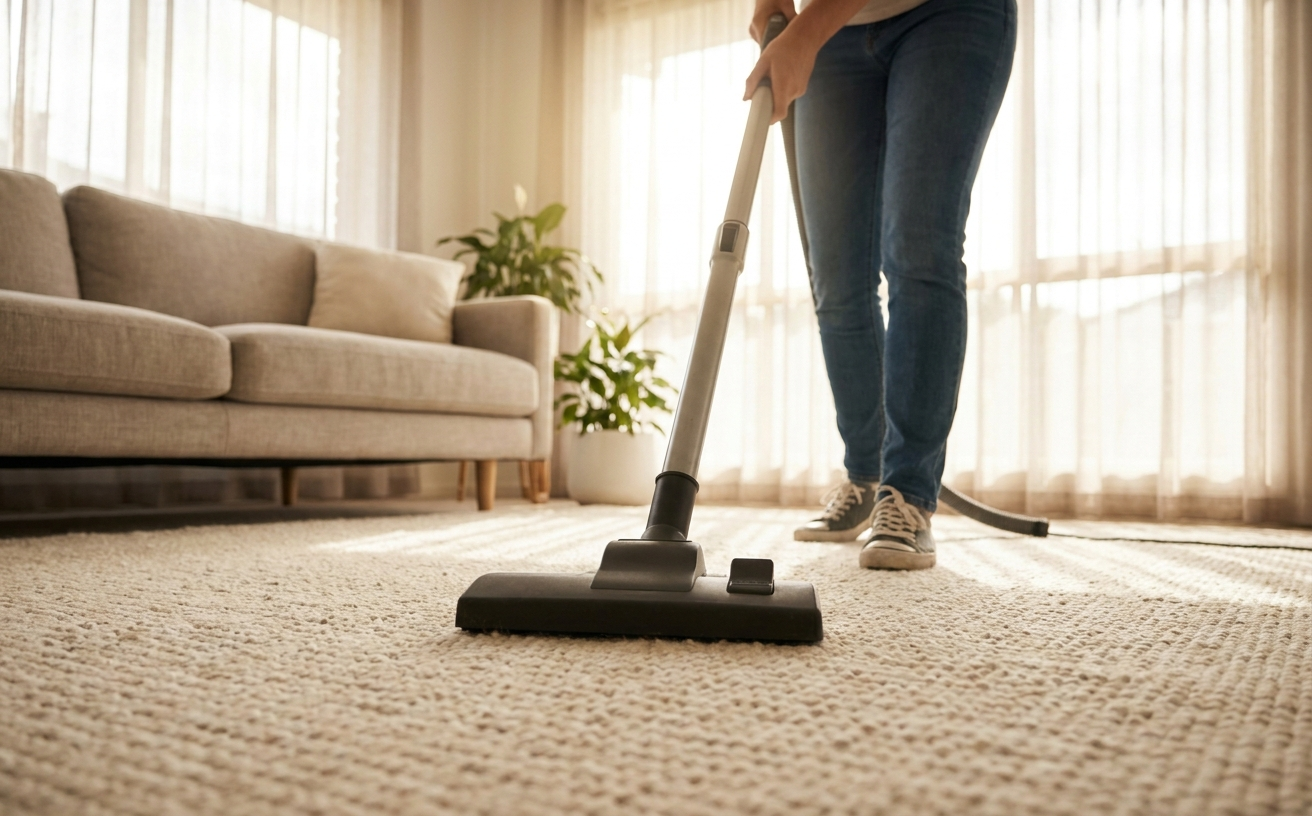
Combining automated daily cleaning with periodic manual deep cleaning keeps carpet in the best condition
FAQs
Do robot vacuums work on thick or high-pile carpet?
Low and medium-pile carpet works well. High-pile above 12 mm can reduce suction efficiency and cause navigation issues. Check that the model offers carpet boost mode and enough climbing clearance for the rug edge. The Narwal Flow crosses obstacles up to 40 mm For setup tips on rugs, see our guide to using a robot vacuum on rugs.
Is automatic carpet cleaning safe for wool carpet?
Robot vacuums are safe for wool because they use suction without chemicals or excessive moisture. Avoid models that spray water onto carpet without mop lifting. For wet dry vacuums on wool, use a low water setting and avoid high-temperature cleaning, as heat can damage wool fibres. For fibre-safe care, follow this wool rug cleaning guide.
What are the downsides of using a robot vacuum on carpet?
Robot vacuums cannot match the deep extraction power of a full-size upright or professional cleaner. They handle surface and near-surface debris well, but heavily soiled or matted carpet needs manual intervention. Thick or high-pile rugs can cause navigation problems, and most models cannot clean carpet stains that have already set. They work best as a daily maintenance layer, not as a sole cleaning method.


