
Dust particles floating in a sunlit Australian living room
Dust is a mixture of tiny organic and inorganic particles that settle on every surface in your home: dead skin cells, pet dander, fabric fibres, pollen, soil, hair, mould spores, and dust mites. No matter how often you clean, it comes back, because the sources never stop. This guide covers what dust is actually made of, the health reasons it matters, and what genuinely reduces how quickly it accumulates.
What Is Dust Made of?
Household dust is a constantly changing mixture of whatever exists in and around your home:
- Dead skin cells from people and pets, though far less than the popular '80% skin cells' claim; bathing removes most before it reaches the floor
- Pet dander, the microscopic skin flakes shed continuously by dogs, cats, and other animals
- Fabric fibres from clothing, carpet, upholstery, and bedding that break apart gradually with use
- Pollen, soil, and outdoor particles tracked in on shoes, or blown through open windows and doors
- Dust mites, microscopic arachnids that feed on shed skin cells and thrive in warm, humid environments
- Mould spores, bacteria, and fungal particles
- Microplastics from synthetic textiles and packaging
- Insect debris: droppings, body fragments, shed skins
- Combustion particles from cooking, candles, and outdoor pollution
Roughly 30 to 50 per cent of household dust originates outside, tracked in through entry points or blown through gaps and ventilation. The rest comes from daily life inside: skin shedding, cooking, foot traffic disturbing settled particles, and the gradual breakdown of soft furnishings.
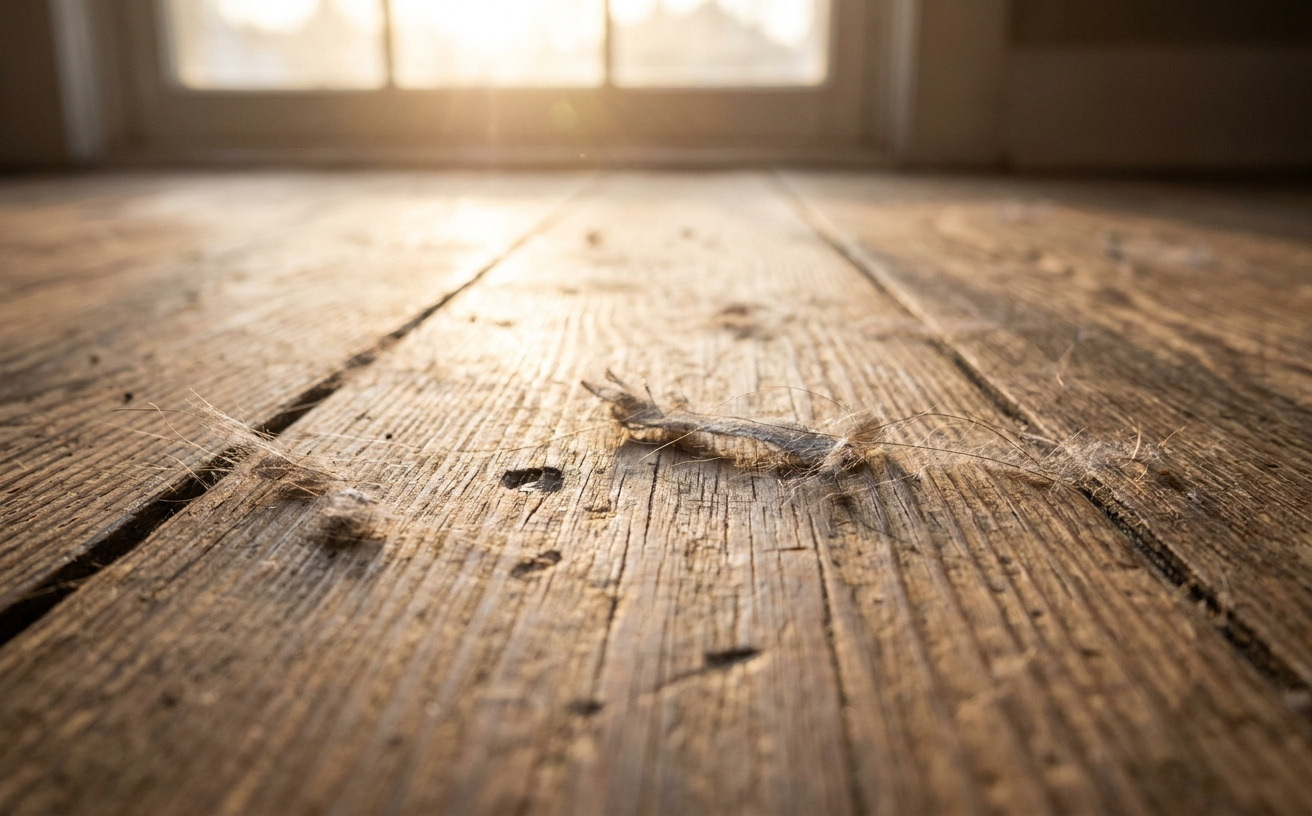
Household dust contains a complex mix of organic and inorganic particles
Why Does Dust Keep Coming Back?
Your skin sheds roughly 30,000 to 40,000 dead cells per hour. Pets shed constantly. Outdoor particles enter continuously. Even a freshly cleaned room starts accumulating again within hours. Several factors make it worse:
- Static electricity bonds particles to surfaces, electronics, and textiles
- Air movement from fans, HVAC, open windows, and foot traffic keeps fine particles circulating before they resettle
- High humidity causes particles to clump and stick, which is why bathrooms and kitchens accumulate differently from dry rooms
- HVAC systems without clean filters recirculate the same particles through the home
- Soft furnishings and clutter trap dust and release it back into the air with every disturbance
Health Effects of Household Dust
The significant health risks come not from dust itself, but from what lives within it: primarily dust mites, mould spores, and fine particulate matter.
Dust Mites and Allergies
Dust mites are the primary allergen source in most Australian homes. They thrive at 20 to 30 degrees Celsius with relative humidity above 50 per cent, conditions that match much of coastal Australia for much of the year. Their waste products contain enzymes that trigger immune responses when inhaled, causing sneezing, runny nose, itchy eyes, skin rashes, and in people with asthma, worsening symptoms. Mite particles cling to fabric and bedding and become airborne when disturbed.
Fine Particulate Matter
Dust contains PM10 (under 10 microns) and PM2.5 (under 2.5 microns) particles, small enough to be inhaled deep into the respiratory tract. At normal household levels the risk to healthy adults is low. During renovations, heavy outdoor pollution, or bushfire smoke, indoor concentrations rise significantly and can cause irritation in anyone. Children, older adults, and people with existing respiratory conditions are more vulnerable.
Mould Spores
In humid Australian climates, mould spores are a consistent component of household dust, especially in bathrooms, laundries, and poorly ventilated rooms. Exposure triggers similar symptoms to dust mite allergy; persistent exposure is linked to more serious respiratory effects in sensitive individuals.
Signs Your Home Has Too Much Dust
Air quality and surface buildup give clear signals before any health symptoms appear. Most homes with a dust problem show several of these at once:
- Visible dust on flat surfaces within 24 to 48 hours of cleaning
- Dust bunnies forming under beds, sofas, or in corners
- A musty or stale smell that returns even after airing the room out
- Frequent sneezing, congestion, or itchy eyes that ease when you leave the house and return on entering
- Worsening asthma or eczema symptoms with no obvious external trigger
- Visible film on electronics, ceiling fan blades, or air vents
- Pet allergy symptoms that persist long after the pet has left a room
If three or more apply, the home likely has elevated dust levels and the cleaning routine probably needs adjusting.
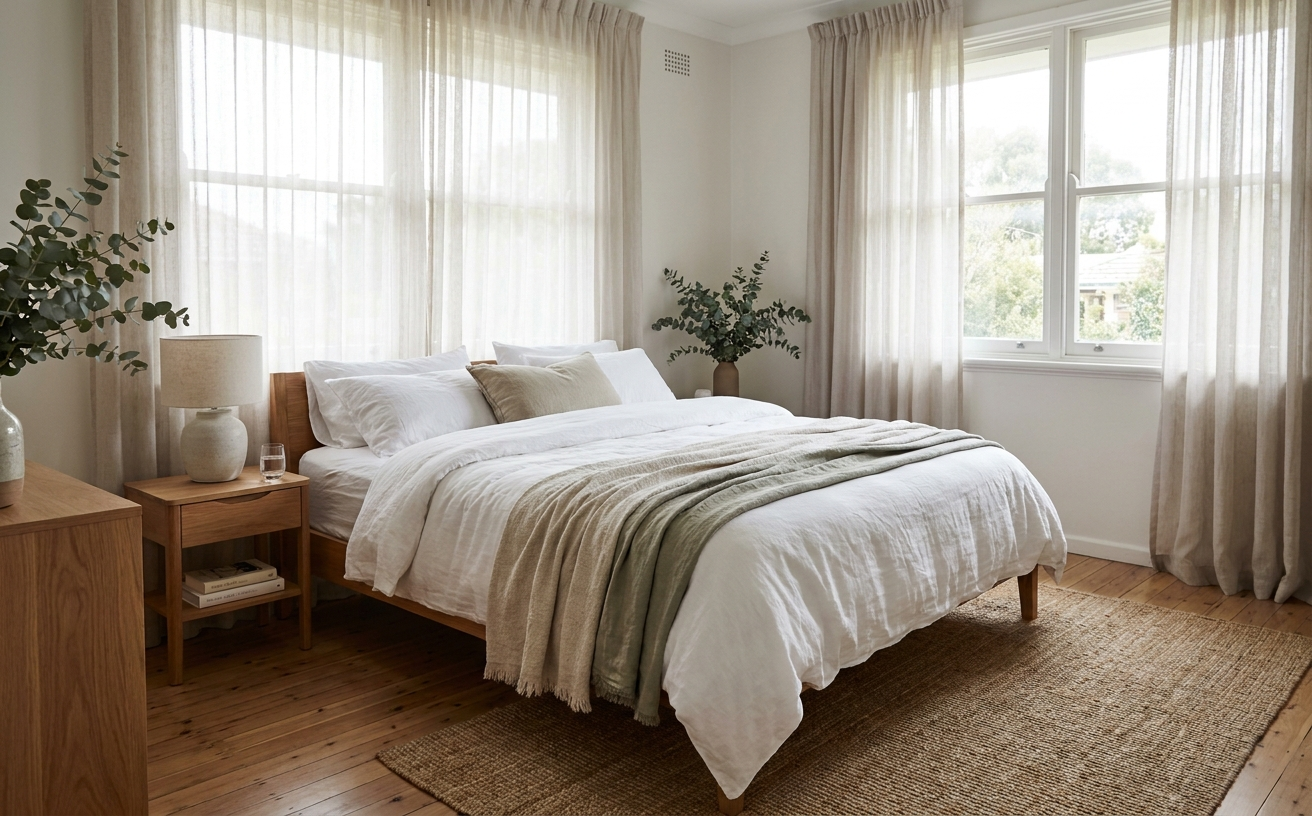
Mattresses and bedding are primary habitats for dust mites
How to Reduce Dust at Home
Dust settles in predictable patterns, heavier in bedrooms and on carpets, on ceiling fans and vents, behind appliances, and around windows. The strategies below address both where it lands and how it gets in. Australian climate adds variation worth noting: inland and agricultural areas carry higher soil loads, coastal homes deal with more pollen and salt, and bushfire seasons in Victoria, NSW, and Queensland push fine smoke particles indoors through gaps and HVAC intakes even with windows closed.
Remove Shoes at the Door
Shoes carry the largest single load of outdoor particles into a home. A doormat at each entry plus removing shoes indoors cuts this dramatically. Sealing gaps around windows and doors reduces ongoing particle entry through the building envelope.
Manage Indoor Humidity
Keeping indoor relative humidity below 50 per cent significantly slows dust mite growth in humid coastal climates. A bedroom dehumidifier and proper bathroom ventilation make a measurable difference. In dry inland regions, low humidity keeps fine particles airborne longer, which calls for more frequent cleaning rather than dehumidification.
Wash Bedding in Hot Water
Sheets and pillowcases washed weekly at 60 degrees Celsius or above kill dust mites. Mattress and pillow protectors with zip closures prevent mite colonisation of the core. Line drying in direct sunlight adds UV exposure that further reduces mite survival, a genuine advantage of the Australian climate.
What Kills Dust Mites
Mites can be killed several ways, all worth combining since none catches every mite in the home:
- Hot water washing at 60 degrees Celsius or above for bedding, pillowcases, and washable cushion covers
- Tumble drying on a hot cycle for at least 15 minutes for items that cannot be hot washed
- Direct sunlight exposure on rugs, bedding, and soft toys for 3 hours or more, which dehydrates mites
- Freezing for 24 hours for small items that cannot be washed, such as soft toys
- Vacuuming with a HEPA-filtered vacuum, which removes mite bodies and waste from carpet and upholstery; models built specifically for dust mite control pair high suction with sealed filtration to keep captured allergens contained
- Reducing humidity below 50 per cent, which prevents new mite populations from establishing
Dust mite sprays and powders sold for carpets are generally less effective than physical methods and often only kill mites on the surface.
Clean Top to Bottom
Dust falls. Starting with ceiling fans and vents, then shelves and furniture, then floors means particles dislodged from higher surfaces are captured on the way down. A damp microfibre cloth traps particles rather than redistributing them.
Vacuum and Mop Floors
Hard floors need regular vacuuming or mopping before foot traffic disturbs settled particles back into the air. Carpet needs more frequent attention as particles sink into the pile over time. Upholstery should be vacuumed on the same schedule.
The challenge is consistency. Dust falls every day, but few people manually vacuum and mop every day. A robot vacuum and mop running on a daily schedule clears particles before they accumulate to visible levels and before foot traffic grinds them into carpet.
The Narwal Flow robot vacuum and mop addresses the core failure point of mopping: a wet mop quickly loads with dirt and starts spreading it across the next floor. Its track mop is rinsed continuously in real time during cleaning, with 45°C warm water sprayed through 16 nozzles and a scraper that wipes residue off the mop with every pass. Dirty water is collected in a separate tank rather than reused. The result is that each pass meets the floor with a freshly rinsed mop instead of a saturated one. Beyond mopping, 22,000Pa suction lifts fine particles from hard floors and the track mop auto-lifts 12 mm when carpet is detected.
The Narwal Freo X10 Pro is a separate model with 11,000Pa suction and self-emptying plus auto mop wash and dry, sized for daily floor maintenance in homes that don't need the FlowWash real-time mop system.
Groom Pets Regularly
Brushing pets outdoors captures loose hair and dander before it settles inside. For high-shedding breeds common in Australian homes, including border collies, labradors, and golden retrievers, daily floor cleaning is effectively the minimum to keep dander levels manageable.
Filter the Air
A HEPA filter captures PM2.5 particles that vacuuming misses, which stay airborne for hours after being disturbed. In a portable air purifier, the bedroom is the highest-value placement given sleep time and bedding density. HVAC filters should be replaced on schedule, typically every three months, to prevent recirculation.
Reduce Clutter and Choose Surfaces Thoughtfully
Every object is another surface that collects dust. Horizontal, textured, or static-prone surfaces accumulate the most. Minimal clutter, smooth furniture finishes, and washable blinds instead of heavy curtains reduce total settling area.

Smooth surfaces and reduced clutter slow dust accumulation considerably
How Often Should You Clean to Control Dust?
Frequency depends on pets, occupancy, flooring, and local climate. As a baseline for most Australian homes:
- Floors: 2 to 3 times per week for homes with pets or carpet; weekly for hard floors without pets
- Bedding: sheets and pillowcases weekly; pillow protectors and duvet covers monthly
- Ceiling fans and vents: monthly
- Upholstered furniture: fortnightly
- Behind and under appliances: every 3 to 6 months
- Air purifier filters: monthly pre-filter; HEPA every 6 to 12 months
For a room-by-room schedule, see how often to vacuum each room.
Frequent, lighter maintenance keeps levels lower overall than infrequent deep cleans, since cleaning disturbed dust releases more particles into the air than leaving it settled.
FAQs
Is dust in Australian homes different from other countries?
The composition is broadly similar worldwide, but Australian homes face specific regional inputs. Bushfire seasons elevate indoor PM2.5 even with windows closed. Inland and agricultural homes carry higher soil particle loads. Coastal homes deal with more pollen and salt particles. The subtropical and tropical north sustains near-ideal dust mite conditions year-round.
What is the grey fluff under furniture?
Dust bunnies, aggregates of fine particles bonded by static electricity into visible clumps. They form in undisturbed low-traffic areas under beds, sofas, and behind appliances, where air carries particles in but cleaning rarely reaches.
What are the first signs of dust mites?
Mites themselves are too small to see, so the signs are usually allergic: sneezing, runny nose, and itchy or watery eyes that worsen in bed or when changing sheets. Skin rashes, eczema flare-ups, and worsening asthma are also common. If symptoms ease when you leave home for several days and return on coming back, dust mites are a likely cause.
How do you remove dust from indoor air?
A HEPA air purifier captures fine particles already airborne, particularly the PM2.5 fraction that settles slowly. Regular HVAC filter changes prevent the system itself from recirculating dust. Keeping humidity moderate, ventilating after vacuuming, and reducing soft furnishings all lower how much dust stays suspended in the first place.
Can you fully eliminate dust?
No. Accumulation is continuous in any occupied home. The goal is keeping levels low enough that they don't affect air quality or health, not permanent elimination.

