
Concrete floors are practical, durable, and increasingly popular in Australian homes — from polished living rooms and contemporary kitchens to garages, driveways, and outdoor patios. But because concrete is porous, it absorbs spills, traps grit, and shows stains. Cleaning it correctly depends on whether the surface is sealed or unsealed, and whether you are working indoors or outside.
What’s the Best Way to Clean Concrete Floors?
For sealed or polished indoor concrete, a pH-neutral cleaner diluted in warm water with a damp microfibre mop is the safest and most effective approach. For outdoor concrete such as driveways and patios, a stiff-bristle brush or pressure washer combined with a concrete-safe detergent handles the heavier grime that builds up from foot traffic, tyre marks, and the weather.
A universal starting point: always remove loose grit before any wet cleaning. Sweeping or vacuuming first prevents you from scratching the surface or pushing debris further into the pores.
What Tools Do You Need to Clean Concrete Floors?
The right tools vary by surface and setting — lighter options for sealed indoor concrete, heavier-duty for outdoor driveways and garage floors.
- A stiff-bristle broom or microfibre dry mop for sweeping indoor floors
- A vacuum cleaner on hard-floor mode for picking up fine dust and allergens before wet mopping
- A flat microfibre mop for damp mopping sealed or polished indoor concrete
- A pH-neutral floor cleaner or mild dish soap for general cleaning
- A stiff-bristle scrubbing brush for spot-treating stains
- A pressure washer for outdoor driveways, patios, and garage floors
- Protective gloves and eyewear when using commercial concrete cleaners or degreasers
For households with large open-plan concrete floors, a robot vacuum and mop handles the routine sweeping and light mopping automatically.
What Not to Use on Concrete Floors
A few common cleaning tools and products do more harm than good on concrete.
Steel wool, scouring pads, and stiff metal brushes. They scratch sealed and polished surfaces and open the pores of unsealed concrete, leading to faster staining.
String mops. They push dirty water around rather than lifting it, leaving streaks and residue.
Vinegar, citrus cleaners, and other acidic products. They degrade sealants over time, leaving sealed and polished concrete dull and discoloured. Reserve diluted vinegar for unsealed outdoor surfaces only.
Bleach on sealed concrete. It strips the protective layer. On unsealed concrete, a diluted solution is acceptable for mould or mildew, but rinse thoroughly afterwards.
Ammonia-based cleaners. They react with sealants and can leave a hazy film.
Excess water on unsealed concrete. It seeps into the pores, weakens the surface over time, and encourages mould.
Maximum pressure on a pressure washer. High PSI settings etch and chip outdoor concrete, especially textured or stamped finishes. A medium setting is enough for residential surfaces.
How to Clean Sealed vs Unsealed Concrete
The surface treatment determines how aggressively you can clean.
Sealed concrete — including polished, epoxy-coated, and coated garage floors — has a protective barrier that resists stains and makes mopping faster. The trade-off is sensitivity: acidic cleaners, abrasive pads, and oversaturation all degrade the sealant. Stick to pH-neutral cleaners and a damp microfibre mop.
Unsealed concrete is porous and absorbs liquid quickly. It tolerates somewhat more aggressive cleaning — stronger detergents, more water, and diluted bleach for mould — but spills must be wiped up promptly to prevent staining. Applying a sealer every two to three years dramatically reduces staining and makes routine cleaning faster.
How to Clean Indoor Concrete Floors Step by Step
The four steps below apply to most sealed and polished indoor concrete. For unsealed concrete, use less water throughout and work in smaller sections.
Step 1: Remove Loose Dust and Debris
Sweep or vacuum the entire floor before any wet cleaning. On concrete, grit dragged along by a mop causes fine scratches that dull sealed or polished finishes over time. A vacuum on hard-floor mode pulls fine particles out of the surface pores more thoroughly than a broom alone. If you’re choosing between models, our best vacuum for concrete floors guide covers the key features to look for.
Step 2: Prepare Your Cleaning Solution
Mix warm water with a pH-neutral cleaner or a small amount of mild dish soap. For raw or unsealed concrete, a slightly stronger detergent is acceptable — test a small inconspicuous area first.
Step 3: Mop in Overlapping Sections
Work across the floor in small, overlapping passes and keep the mop damp rather than saturated. On sealed or polished concrete, oversaturation leaves streaks and water marks. Wring the mop frequently to keep it working with clean solution rather than spreading dirty water back onto the floor.
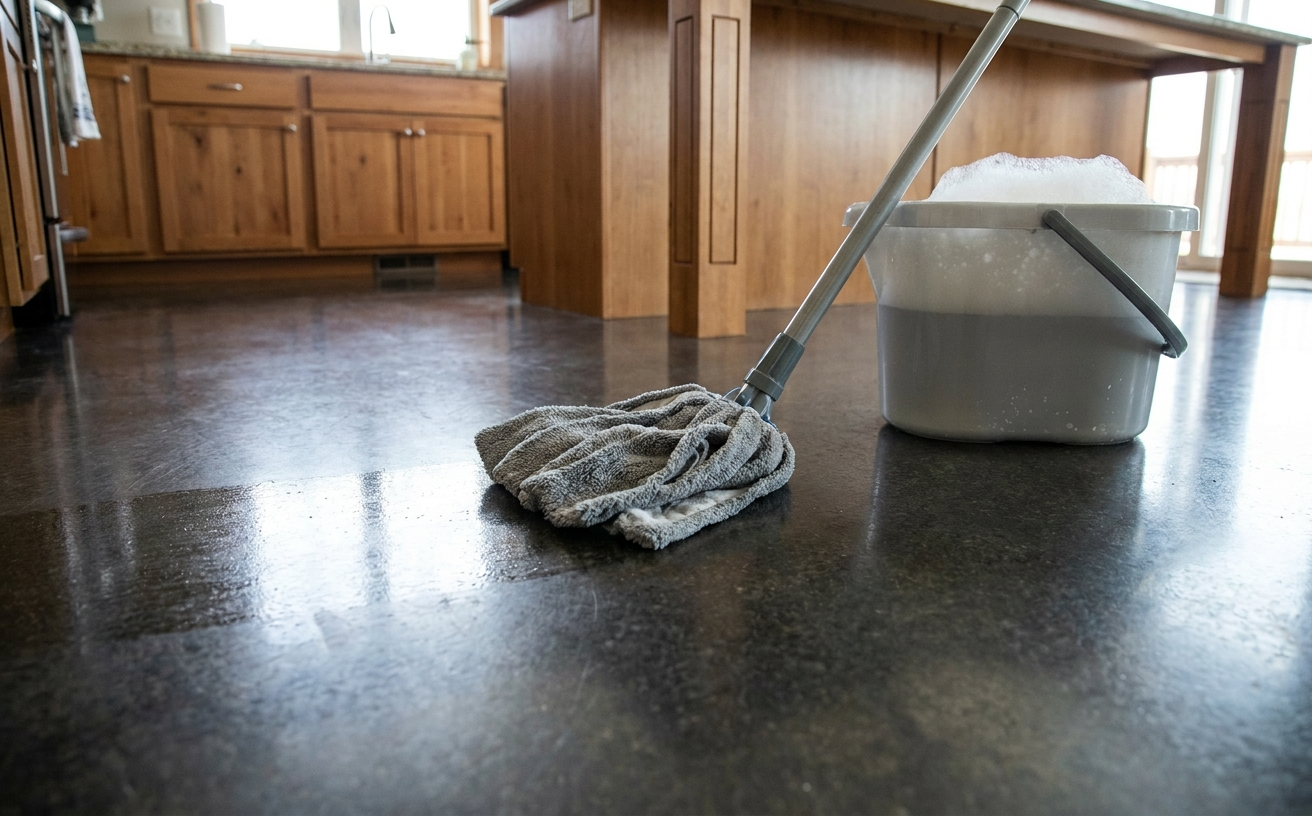
A damp microfibre mop and pH-neutral cleaner is the safest combination for sealed indoor concrete
For households that clean indoor concrete regularly, the Narwal S30 Pro cordless wet and dry vacuum mop addresses this directly: its FloorWash system continuously feeds fresh water to the roller mop while extracting dirty water in the same pass, so the floor is never wiped with the grime just lifted. After cleaning, the unit self-washes the mop with 194°F hot water and dries it automatically, ready for next use.
[cta:narwal-s30-pro-wet-dry-vacuums]
Step 4: Rinse and Dry
After mopping, go over the floor once more with a clean, water-only mop to remove any detergent residue, which can leave a slippery film if allowed to dry on the surface. Open windows or turn on a fan to help the floor air-dry fully before walking on it or replacing furniture. For help fixing tacky residue, see our guide to sticky floors after mopping.
How to Clean Outdoor Concrete: Driveways, Patios and Garages
Outdoor concrete collects heavier grime from traffic, weather, and oil drips. The process starts dry and builds up to a full pressure wash and rinse.
Clear and sweep first. Remove any furniture, plant pots, and loose debris from the area. Sweep or blow off leaves and grit before wetting the surface.
Pre-treat stains. Apply a degreaser or concrete-safe cleaner directly to oil stains, tyre marks, or mildew patches and allow it to sit for 10 to 15 minutes before scrubbing.
Pressure wash. A pressure washer is the most effective tool for outdoor concrete. A medium pressure setting — around 1,500 to 2,000 PSI — is appropriate for most residential surfaces. Keep the nozzle moving at least 30 cm from the surface to avoid etching or chipping. For textured or stamped concrete, reduce the pressure to preserve the finish.
Rinse thoroughly. Flush the entire surface with clean water to remove loosened grime and any remaining detergent.
Allow to dry completely. Avoid driving on a freshly washed driveway until the surface is fully dry.

A medium-pressure setting is safe and highly effective for most residential outdoor concrete
How to Remove Stubborn Stains from Concrete
Oil, rust, and mildew are the three most common stubborn stains on concrete, and each requires a different approach.
Oil and Grease Stains
Act quickly on fresh spills. Sprinkle kitty litter, sawdust, or baking soda directly onto the wet oil to absorb it before it penetrates further into the concrete. Leave it for 15 to 30 minutes, then sweep it away. Follow up with a degreaser or a solution of dish soap and hot water, scrub with a stiff brush, and rinse clean.
For older, set-in oil stains, apply a commercial concrete degreaser and allow it to dwell for the time recommended on the label before scrubbing. Repeat if the stain is deep.
Rust Stains
Rust stains on unsealed outdoor concrete respond well to an oxalic acid-based concrete cleaner or a diluted solution of white vinegar. Apply it to the stain, leave it for several minutes, scrub with a stiff brush, and rinse well. Never use acid-based cleaners on sealed or polished indoor concrete.
Mildew and Mould
In humid parts of Australia, mould and mildew can establish quickly on shaded outdoor concrete or in garages. For unsealed surfaces, a diluted bleach solution — one part bleach to ten parts water — applied with a scrubbing brush and rinsed thoroughly is effective. On sealed concrete, use a mildew-specific concrete cleaner to avoid bleach degrading the sealant.

Baking soda draws out fresh oil from concrete pores before you scrub
How Often Should You Clean Concrete Floors?
For indoor concrete floors in living areas or kitchens, sweeping or vacuuming two to three times a week keeps grit from scratching sealed surfaces. Damp mopping every one to two weeks is sufficient for most households, though homes with pets or heavy foot traffic may need it more frequently.
Outdoor driveways and patios benefit from a thorough clean every three to six months, or after extended wet weather or heavy use such as entertaining. Garage floors that see regular vehicle traffic typically need spot-cleaning for oil drips and tyre marks more often.
How to Maintain Concrete Floors
Routine habits prevent stains from establishing and reduce the frequency of deep cleans.
Reseal regularly. Reapply sealer every two to three years for indoor floors; outdoor surfaces exposed to UV and rain may need it sooner.
Use mats at entry points. A mat at every external door reduces the grit and moisture tracked in from outside. Avoid rubber-backed mats on sealed concrete, as some can cause discolouration over time. Choose non-slip fabric-backed options instead.
Clean up spills immediately. The longer a liquid sits on concrete, the deeper it penetrates. Wiping spills promptly is the single most effective maintenance habit.
Protect from furniture scratches. Attach felt pads to the legs of chairs and tables to prevent scratching polished or sealed surfaces. Avoid dragging heavy furniture across the floor.
FAQs
Is bleach or vinegar better for cleaning concrete?
Neither is suitable for sealed or polished concrete — both damage sealants. On unsealed outdoor concrete, diluted bleach (one part bleach to ten parts water) is more effective for mould, mildew, and bacterial growth, while diluted white vinegar handles light rust and mineral deposits. Always rinse thoroughly afterwards, and never combine the two.
What stains concrete permanently?
Some substances penetrate concrete deep enough that complete removal requires grinding or resurfacing. The most common are rust from prolonged metal contact, deeply absorbed motor oil and transmission fluid, red wine and dark food spills on unsealed concrete, paint and dye, and acid stains from battery leaks. Sealed concrete is far less prone to permanent staining, which is why early sealing is the most effective prevention.
How can you make old concrete look new again?
For surface dullness, a thorough deep clean followed by a fresh coat of sealant or concrete-safe polish restores the finish on most polished and sealed floors. Heavily worn or scratched concrete may need professional grinding and repolishing. Outdoor concrete benefits from pressure washing followed by a penetrating sealer, which deepens the colour and prevents future staining.


