
A well-maintained bamboo floor in an Australian home
To clean bamboo floors, sweep or vacuum daily with a soft-bristle attachment to remove grit, then mop weekly using a microfibre mop that is barely damp and a pH-neutral floor cleaner. Avoid excess water, steam mops, and oil-based soaps — these cause warping, residue build-up, and long-term finish damage. Wipe up spills immediately.
Why Bamboo Floors Need Different Care
Bamboo flooring looks and behaves similarly to hardwood floors, but it responds differently to moisture. The fibres are more compressed and can absorb water quickly if the mop is too wet or if spills are left to sit. This leads to the two most common complaints: swelling along the edges and a dull, streaky finish that shows every footprint under direct sunlight.
Daily Cleaning Routine for Bamboo Floors
Grit and fine particles are the main culprits for scratches — left on the surface, they work against the finish underfoot.
- Use a microfibre dust mop rather than a traditional broom. Standard brooms push fine particles into the joints between boards instead of capturing them.
- Vacuum with a soft-bristle attachment or a hard floor setting. Hard-bristle attachments and beater bars leave fine scratches over time.
- Focus on high-traffic areas like hallways and kitchen entrances — these accumulate grit the fastest.
If you have pets, a daily pass is worth it. Paw prints on bamboo are particularly visible in raking light, and pet hair gathers in the board joints.
How to Mop Bamboo Floors Without Water Damage
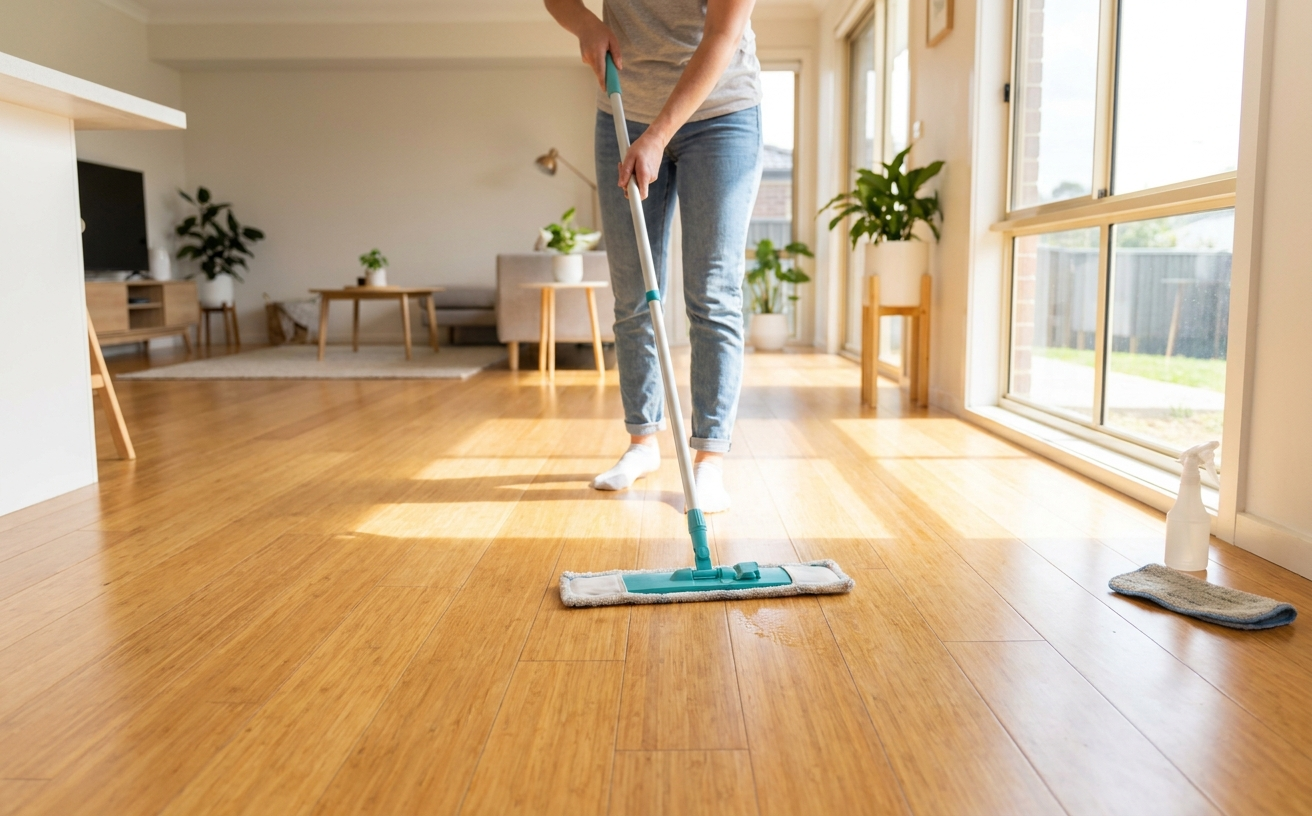
Use a barely damp microfibre mop to avoid moisture damage on bamboo floors
Weekly mopping keeps bamboo clean without moisture damage — as long as the mop is barely damp, not wet.
- Vacuum or sweep first to remove all surface debris. Mopping over grit will scratch the floor.
- Wring out the mop thoroughly. It should feel damp to the touch but not drip. If water pools on the floor as you mop, the mop is too wet.
- Work in sections in the direction of the grain. This reduces streaking and lifts dirt out of the grain lines more effectively.
- If you notice any pooling, dry it immediately with a clean microfibre cloth.
If hand-mopping bamboo feels like guesswork, the Narwal S30 Pro cordless wet and dry vacuum has a Wood Floor Mode designed for this exact problem. The mode reduces water output and softens the roller pressure so the floor stays barely damp during cleaning, with diluted floor cleaner dispensed automatically. The roller is rinsed with fresh water continuously, so dirty water is not pushed back across the bamboo. Suction picks up dry debris in the same pass, which removes the separate vacuum step before mopping.
The Best Cleaners for Bamboo Floors
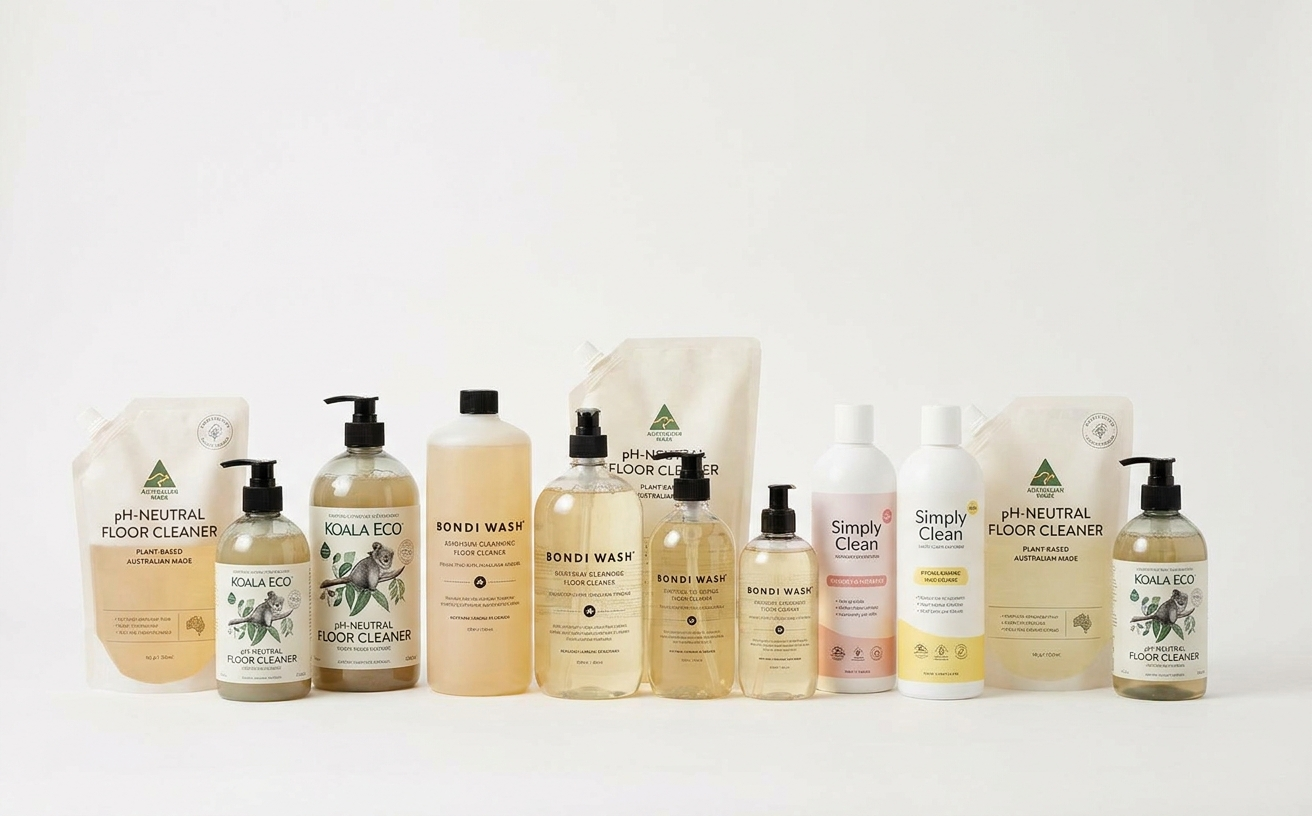
Choose a pH-neutral cleaner to avoid residue and finish damage on bamboo floors
Cleaner choice is where most bamboo floor problems start. Several widely available products — including some marketed specifically for hardwood — leave a residue that shows up as smudging, streaking, or a dull film that worsens over time.
Cleaners that work well
- pH-neutral hardwood floor cleaners: The safest option, leaving no residue when used correctly. Look for formulas labelled pH-neutral or floor-safe.
- Diluted white vinegar: One part white vinegar to four parts water works well as a light cleaner and cuts through grease and paw print oils. Use sparingly — high concentrations can dull the finish over time.
- Plain water: For damp mopping between deeper cleans, a lightly dampened microfibre mop and nothing else is often enough.
Cleaners that cause problems
- Oil soaps (including Murphy's Oil Soap): Leave a build-up that traps dirt and creates a streaky, smudged appearance.
- Products containing wax or polish: Leave a coating that attracts dirt and cannot be removed without stripping the finish.
- Any cleaner that needs rinsing: The residue left during rinsing is typically what causes smudging.
If your bamboo currently looks dull or smudged and you have been using an oil-based or wax-containing cleaner, a light clean with diluted white vinegar will cut through the build-up. Follow with a pH-neutral cleaner going forward.
What to Avoid on Bamboo Floors
- Steam mops: Heat and moisture penetrate bamboo fibres and cause warping, swelling, and finish damage.
- Excessive water: Wet mopping or any method that leaves water standing will eventually cause boards to swell or cup at the edges.
- Harsh or abrasive cleaners: These strip the protective finish and leave the bamboo fibre exposed to moisture and staining.
- Abrasive cleaning pads or brushes: The finish layer scratches relatively easily under abrasive materials.
- Ammonia-based or bleach-based products: These damage the finish and can affect the colour of the bamboo over repeated use.
How to Remove Stubborn Smudges and Footprints
Most smudges on bamboo are caused by oils — from bare feet, paws, or shoe soles — rather than dirt.
- Fresh footprints: A slightly damp microfibre cloth wiped in the direction of the grain removes most of them immediately.
- Stubborn smudges: A small amount of diluted white vinegar on a cloth — not applied directly to the floor — lifts oil-based marks without affecting the finish.
- Scuff marks: A clean, dry microfibre cloth with light circular pressure works for most scuffs.
Why Bamboo Floors Go Dull and How to Restore Them
Dullness on bamboo has two distinct causes, and the fix depends on which one you are dealing with.
Cause 1: Cleaner residue build-up
If the dullness appeared gradually after switching to a new cleaner, residue is the likely cause. Oil soaps, wax-based products, and any cleaner that needs rinsing all leave a film that masks the finish over time. Strip it with a light pass of diluted white vinegar (one part vinegar to four parts water) on a well-wrung mop, then return to a pH-neutral cleaner. The shine usually returns within one or two cleans.
Cause 2: Worn finish
If the dullness is concentrated in high-traffic zones — entryways, hallways, in front of the kitchen sink — the finish itself has worn through. No cleaner will restore this. The options are spot-applying a hardwood floor refresher (a thin liquid coating applied with a microfibre pad) for cosmetic improvement, or professional refinishing if the wear is extensive. Refinishers will assess whether the bamboo can be sanded and recoated, or whether a non-sand recoat is enough.
Long-Term Care for Bamboo Floors
- Place mats or rugs at all entry points, including sliding door tracks. This captures grit and moisture before it reaches the floor surface.
- Use felt pads under furniture legs. Bamboo resists dents better than most hardwoods, but heavy furniture dragged without pads will scratch the finish.
- Maintain consistent indoor humidity. Bamboo responds to humidity changes — very dry or very humid conditions cause boards to shrink or swell. In most Australian climates, running air conditioning or a dehumidifier during summer keeps humidity in a stable range.
- Avoid extended direct sunlight exposure. UV light fades bamboo over time. Rugs and blinds help where this is a concern.
- Refinish when needed. If the finish is visibly worn in high-traffic areas and cleaning no longer restores the appearance, professional refinishing is more cost-effective than replacement.
FAQs
How often should you mop bamboo floors?
Once a week is sufficient for most households. High-traffic households with pets may benefit from two light mops per week.
Why do my bamboo floors look smudgy after mopping?
Residue from the cleaner is the most common cause. Oil soaps, wax-based cleaners, and products that require rinsing all leave a film that shows up as smudging — especially in direct light. Switch to a pH-neutral cleaner and a barely damp mop. If the build-up is significant, a diluted white vinegar clean first will help clear it.
Is white vinegar safe for bamboo floors?
In diluted form — roughly one part vinegar to four parts water — white vinegar is safe for occasional use and effective at cutting through oil-based smudges. Undiluted or frequent use can dull the finish over time, so a pH-neutral floor cleaner is the better everyday choice.
What is the best mop for bamboo floors?
A microfibre flat mop or spin mop with a good wring mechanism works best. The mop head should be damp, not wet. String mops and sponge mops hold too much water and are harder to control on bamboo.
Can you use Bona on bamboo floors?
Bona's hardwood floor cleaner is pH-neutral and generally safe for finished bamboo. Residue issues are usually linked to using too much product or a mop that is too wet. Start with a light application and a well-wrung mop.
Can you use Dawn dish soap on bamboo floors, or mix it with vinegar?
Dish soap is not recommended for regular use on bamboo. It is designed to leave a thin surfactant layer on dishes that gets rinsed off; on a floor, that layer becomes residue that attracts dirt and dulls the finish. The same applies to multi-purpose cleaners like Fabuloso or Mr. Clean — they need rinsing to avoid build-up. A vinegar and dish soap mix has the same problem. Stick with diluted white vinegar on its own or a pH-neutral floor cleaner.
Can I use a Swiffer Wet on bamboo floors?
Swiffer Wet pads are not ideal for bamboo. The cleaning solution is pre-applied and cannot be controlled, which often leaves the floor wetter than it should be, and the formulas can contain fragrances and additives that leave residue on a finished surface. A microfibre flat mop with a pH-neutral cleaner gives the same convenience without those issues.


