
A robotic vacuum and mop navigating a sunlit Australian living space
A robotic vacuum cleaner and mop is a floor-care robot that vacuums debris and washes hard floors in a single cleaning cycle. For Australian households dealing with fine dust, pet hair, pollen, and the spills that come with open-plan indoor-outdoor living, a combined vacuum and mop combo removes two separate chores at once. The difference between models comes down to mopping method, suction power, obstacle avoidance, dock automation, and how well the robot handles the mix of timber, tile, and carpet found in most Australian homes.
How a Robot Vacuum and Mop Works
A robot vacuum cleaner & mop combines a suction motor for dry debris with a mopping system that scrubs hard floors using water and downward pressure. Most models navigate using LiDAR or camera-based mapping, build a digital floor plan, and follow optimised cleaning paths room by room. Once done, the robot returns to its dock, where higher-end automatic vacuum and mop models wash and dry their own mop heads, empty accumulated dust into a bag, and recharge automatically.
Mopping Systems Compared: Spinning Pads, Rollers, and Triangular Mops
Spinning mop pads are the most common design. Two round pads rotate at high speed and press against the floor. They handle light dust and surface grime, but their circular shape leaves small uncleaned gaps near walls and in corners. Track-roller mopping is a newer approach where a continuously moving roller scrubs the floor while rinsing itself with clean water during the pass. This keeps the contact surface cleaner throughout the session and applies more even pressure across the full mopping width. For a deeper look at how each robot vacuum mopping system performs on different floor types, see our mopping guide.
The Narwal Flow robot vacuum and mop uses a FlowWash track-roller system that rinses the mop in real time with 45°C (113°F) warm water and applies 12 N of consistent downward pressure. The roller cleans itself as it works, so it is not spreading dirty water back across the floor. On Australian tile or stone kitchen floors, this handles cooking splashes and sticky residue more thoroughly than a passive mop pad.
The Narwal Freo Z10 Ultra robot vacuum and mop uses a triangular mop pad driven by an independent motor with 8 N of downward pressure and TÜV-certified EdgeReach technology. The mop extends, retracts, and twists dynamically depending on the cleaning context: it pushes outward along straight walls, rotates at furniture corners, and pulls back when crossing obstacles. This adaptive movement means the mop adjusts its reach in real time rather than following a fixed extension pattern.
The Narwal Freo X10 Pro robot vacuum and mop takes a different approach to edge cleaning. Its patented Reuleaux triangular mop swings outward on a MopExtend arm to reach under kitchen toe kicks and along baseboards, areas where standard circular mops leave gaps. The wider triangular cleaning path covers 10 mm more per pass than a circular mop head of similar size.
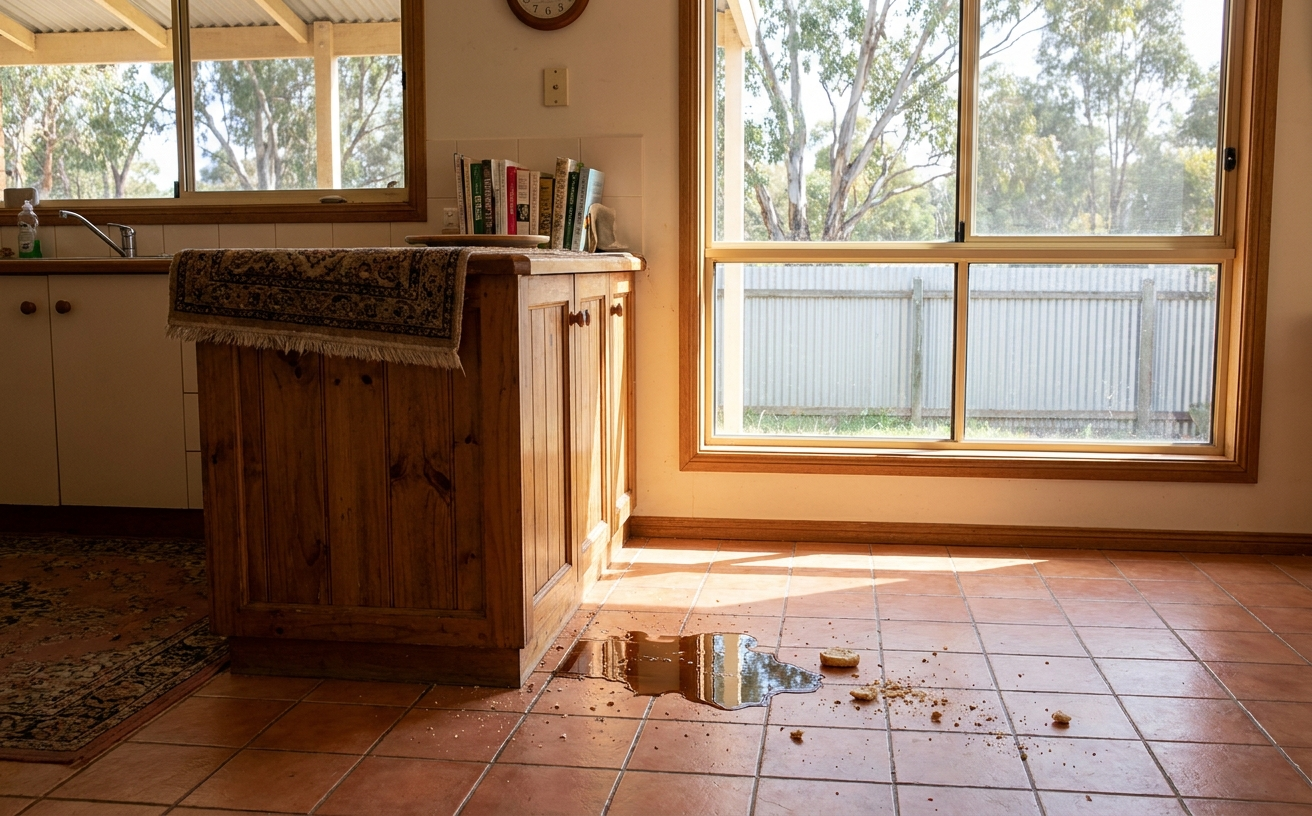
Kitchen spills on tile flooring are a common challenge for Australian households
How Much Suction Does a Robot Vacuum and Mop Need?
A robot with 8,000 Pa handles everyday dust and crumbs on hard floors comfortably. Homes with medium or high-pile carpet, heavy pet shedding, or frequent dust exposure from coastal or rural conditions benefit from 15,000 Pa or above.
The Narwal Flow delivers 22,000 Pa and achieves 100% particle removal on hard floors in lab testing. Its CarpetFocus technology automatically lowers a sealed brush cover when carpet is detected, creating a high-pressure airflow zone that lifts embedded debris. It suits Australian homes that mix hard flooring with area rugs or carpeted bedrooms.
The Narwal Freo Z10 Ultra provides 18,000 Pa with a DualFlow tangle-free roller brush and particle-sensing technology that detects debris in real time. The robot reduces speed and increases suction when it crosses a dirty area, so cleaning intensity matches what each section of floor actually needs. The Narwal Freo X10 Pro sits at 11,000 Pa, well suited for homes that are mostly hard flooring with lighter carpet or rug coverage.
Self-Cleaning Docks and Maintenance Cycles
The Narwal Flow includes a maintenance-free base station that washes the track mop with 80°C (176°F) water, dries it with 40°C (104°F) warm air, stores up to 120 days of compressed dust in a 2.5 L bag, and self-cleans its own dirty water tank. The only regular task is replacing the dust bag roughly twice a year.
The Narwal Freo Z10 Ultra dock adds AI-adaptive hot-water mop washing. Sensors detect the type of dirt on the mop heads and adjust wash temperature between 45°C and 75°C: warm for powder-type dirt, hotter for oil-based stains, and a 75°C final rinse for hygiene. This means the dock handles different types of mess automatically, so you do not need to pre-select a cleaning programme or adjust settings between sessions. It also handles auto dust compression and 120-day self-emptying.
The Narwal Freo X10 Pro dock auto-washes and dries mop pads at 40°C (104°F), compresses dust, and provides 120 days of hands-free operation. The Narwal Freo S robot vacuum and mop pairs with a self-emptying dock that holds 3.5 L of dust for up to 180 days, the longest maintenance interval in this lineup.
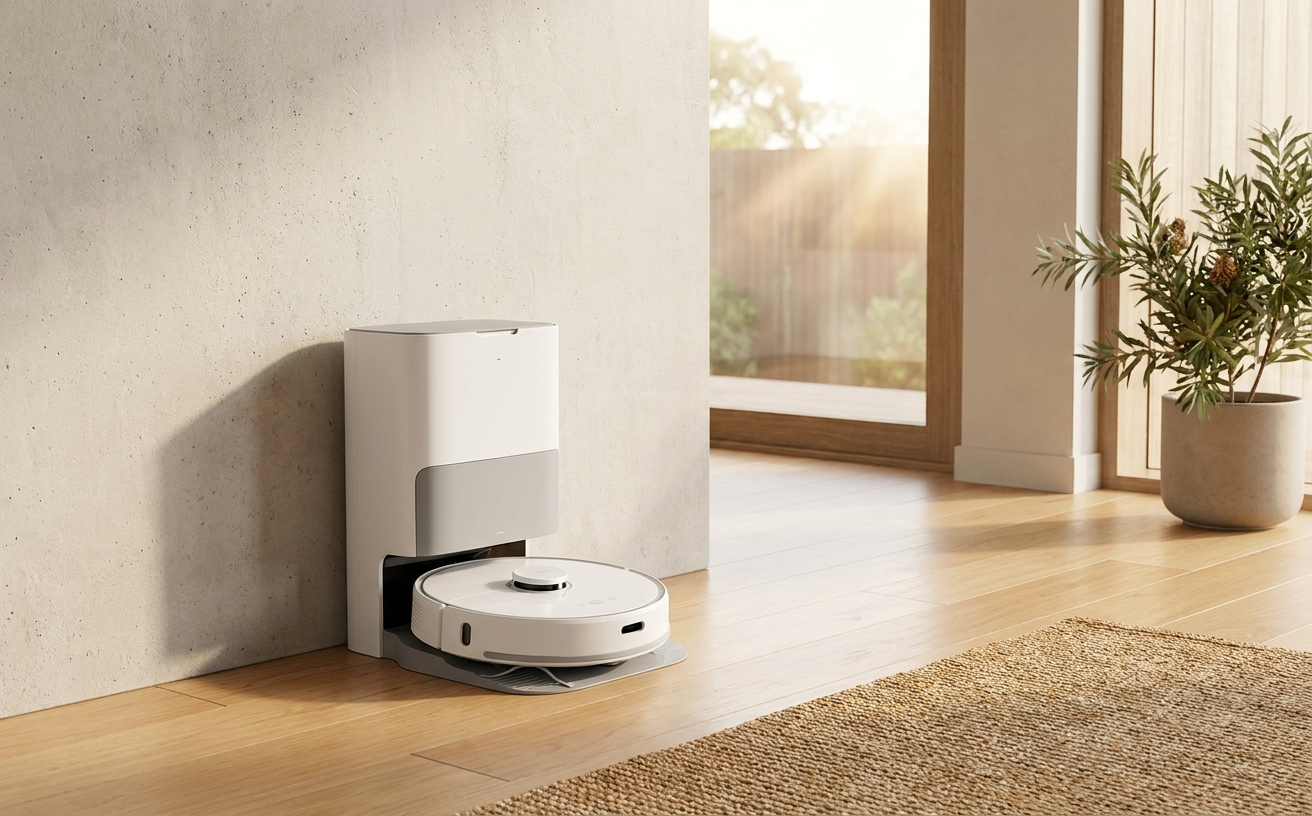
A self-maintenance dock keeps the robot clean and ready between sessions
Navigation and Obstacle Avoidance
The Narwal Flow uses dual 136° RGB cameras with an onboard AI chip that identifies over 200 types of objects with 0.19-inch precision. All data is processed locally on the chip, and the system holds TÜV privacy certification.
The Narwal Freo Z10 Ultra and Narwal Freo Z10 robot vacuum and mop combine front-facing structured light sensors with side sensors for millimetre-precise obstacle detection. They detect objects as small as 1 cm and clean along furniture edges within 5 mm. The Narwal Freo X10 Pro uses forward 3D structured light for obstacle avoidance with millimetre precision. All four models support multi-floor mapping, no-go zones, and app-based scheduling through the Narwal app.
The Narwal Freo S uses LDS laser radar navigation with structured-light obstacle detection, supporting multi-floor mapping and 20 mm threshold crossing. It is a practical fit for smaller Australian homes or apartments.
Which Narwal Robot Vacuum and Mop Suits Your Home?
The table below compares the four Narwal Australia robot vacuum and mop models available in 2026. For a broader comparison that includes other brands, see our best vacuum and mop combo guide.
| Feature | Narwal Flow | Narwal Freo Z10 Ultra | Narwal Freo X10 Pro | Narwal Freo S |
|---|---|---|---|---|
| Suction | 22,000 Pa | 18,000 Pa | 11,000 Pa | 8,000 Pa |
| Mopping System | FlowWash track roller, 12 N | Triangular mop, 8 N | Reuleaux triangular mop, 8 N | Dual mop pads, 8 N |
| Obstacle Avoidance | Dual RGB cameras + AI chip | Dual structured light + side sensors | 3D structured light | LDS + structured light |
| Dock Features | 176°F wash, 104°F dry, 120-day self-empty, self-clean | AI adaptive hot-water wash, 104°F dry, 120-day self-empty | Auto wash, 104°F dry, 120-day self-empty | 180-day self-empty dock |
| Tangle-Free System | DualFlow, SGS certified 0% | DualFlow, SGS certified 0% | DualFlow, SGS certified 0% | Standard roller brush |
| Carpet Handling | 12 mm mop lift, CarpetFocus boost | 12 mm mop lift, 160% suction boost | 12 mm mop lift, 4 modes | Carpet Boost auto-increase |
| Best For | Deep mopping, large homes, mixed floors | Families, pets, balanced performance | Mid-range, edge cleaning focus | Apartments, simple layouts |
The Narwal Flow is the strongest choice for households that prioritise mopping performance. Its FlowWash track roller delivers continuous self-rinsing that other mopping systems only do back at the dock, which makes a noticeable difference on large hard-floor areas. The 22,000 Pa suction and CarpetFocus boost handle mixed flooring without separate cleaning runs.
The Narwal Freo Z10 Ultra balances suction, intelligent dirt detection, and dock automation well for families with pets. Its AI-adaptive mop washing and particle-sensing system respond to different messes without manual input.
The Narwal Freo X10 Pro is a capable mid-range option. Its MopExtend system and Reuleaux triangular mop head are effective for homes with wall edges, kitchen toe kicks, and furniture legs. The DualFlow tangle-free brush system keeps it reliable in pet households.
The Narwal Freo S fits apartments and smaller homes where simpler navigation is adequate and budget matters. Its 180-day self-empty dock is the longest maintenance interval in this comparison.
Do You Still Need a Cordless Vacuum Mop?
A robot handles scheduled whole-home cleaning, but spot cleaning after cooking, stairs, and elevated surfaces still call for a handheld unit. The Narwal S30 Pro cordless wet and dry vacuum delivers 20,000 Pa suction with 20 N downward force and a built-in scissor system that cuts through tangled hair. It lies 180° flat to reach under sofas and beds, turns 63° for tight corners, and self-cleans at 90°C (194°F) with auto detergent dispensing. At 4.35 kg, it is light enough to carry between floors.
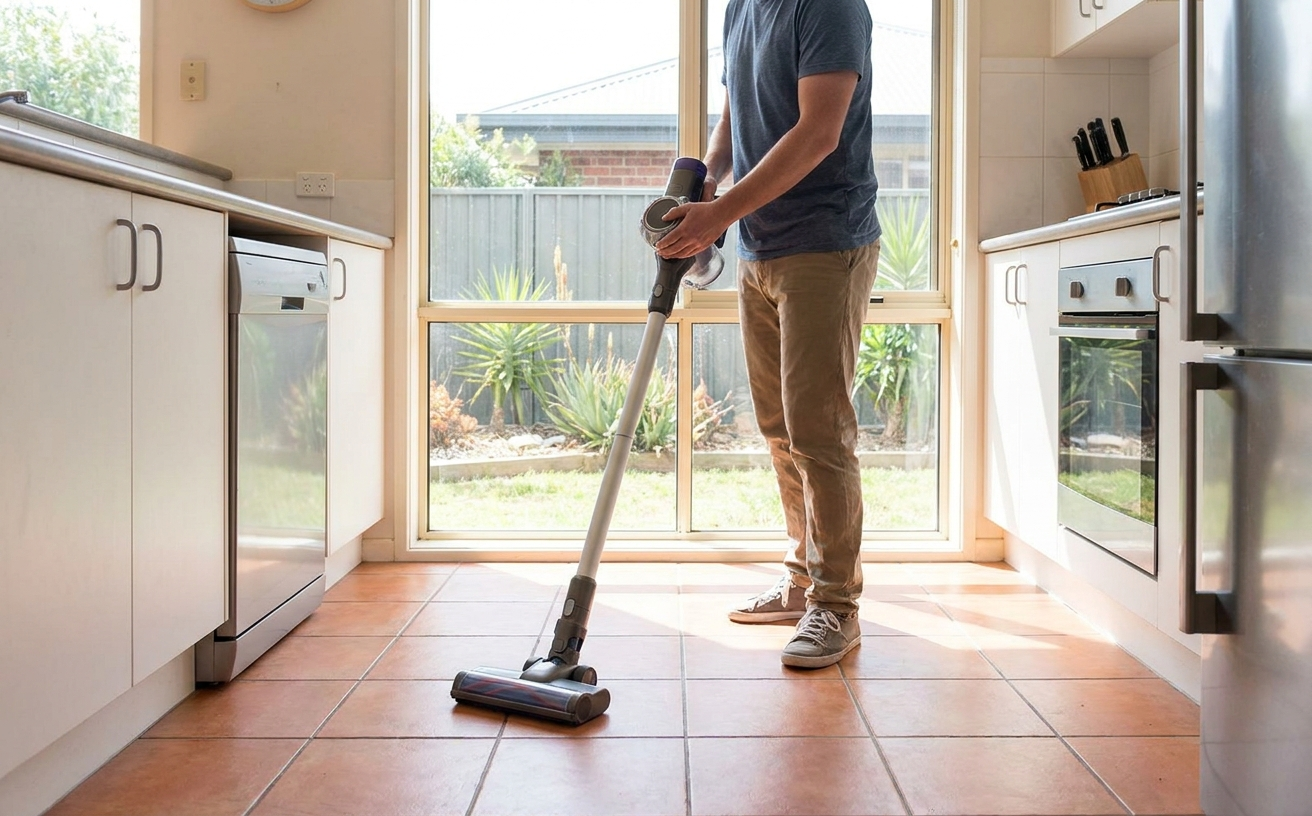
A cordless vacuum mop handles spot cleaning and kitchen spills that a robot cannot reach
FAQs
Are robot vacuum and mop combos safe for pets?
The Narwal Flow and Narwal Freo Z10 Ultra detect pets in real time and adjust their path to give animals extra clearance. Their DualFlow tangle-free brush systems also prevent pet hair from wrapping around the roller, keeping suction consistent without manual cleaning.
Will the robot cross door thresholds and different floor levels?
Most current models handle thresholds up to 20 mm. The Narwal Flow crosses obstacles up to 40 mm (1.6 inches), covering the raised thresholds, balcony lips, and room dividers common in Australian homes. Cliff sensors prevent the robot from falling on stairs or level changes.
How often should you run a robot vacuum and mop?
Daily runs on a light setting work well for homes with pets or high foot traffic. For lower-traffic households, two to three sessions per week keeps hard floors and carpet visibly clean. Most Narwal models let you set room-specific schedules through the app, so high-traffic areas like kitchens can run more often than bedrooms.
How long do robot vacuum and mop combos usually last?
A well-maintained robot vacuum and mop typically lasts three to five years. The robot body, motors, and navigation sensors are durable, but consumables like mop pads, roller brushes, side brushes, filters, and dust bags need periodic replacement. Narwal sells replacement kits for each model, and most consumables last two to six months depending on usage frequency.


