




Do Robot Vacuums Work on Hardwood Floors?
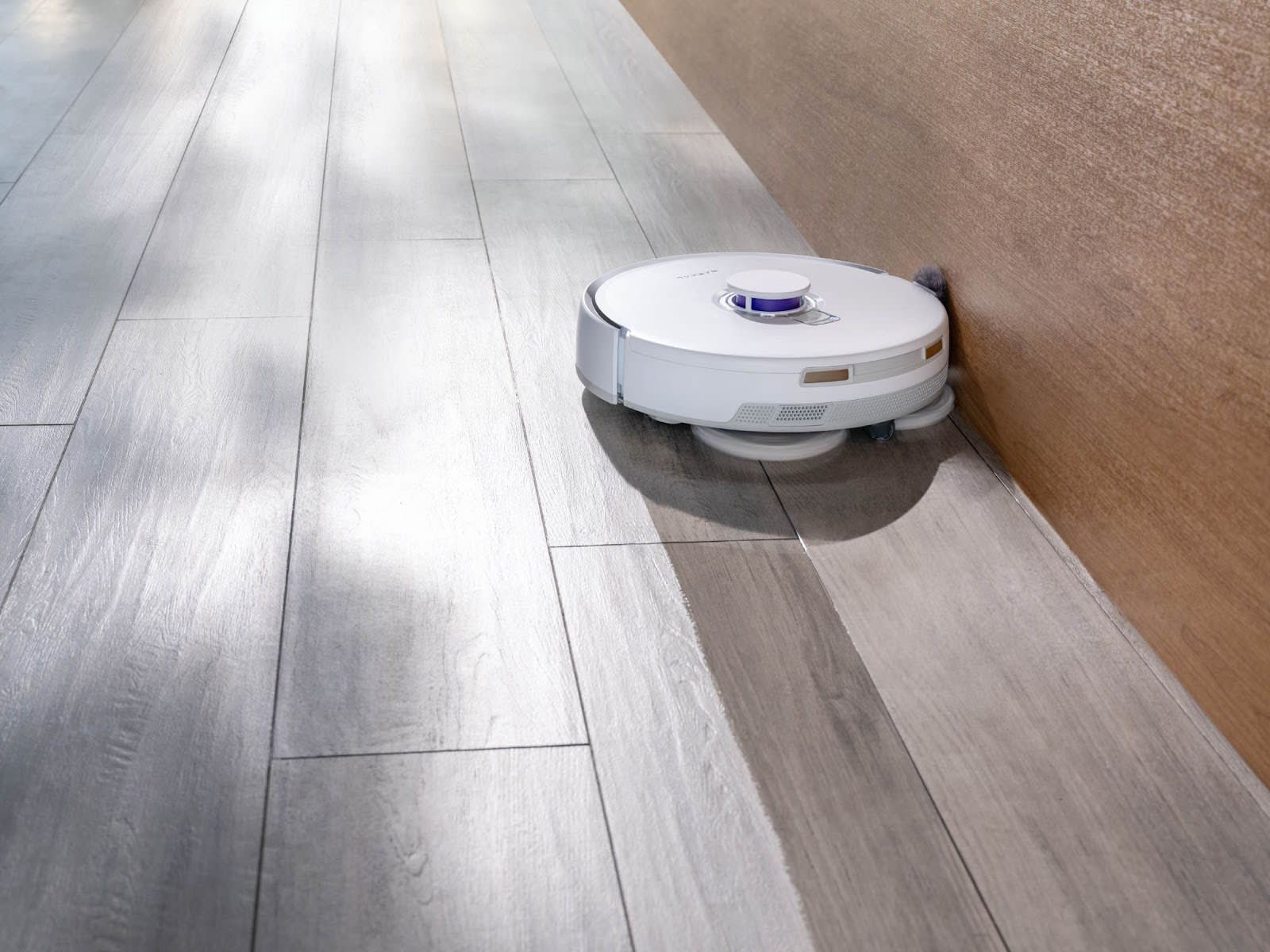
Yes, robot vacuums can be safe for hardwood floors when they use soft brushes, rubberized wheels, and controlled water output. The same rule generally applies to timber, engineered wood, and many laminate floors: remove grit quickly, avoid abrasive contact, and keep mopping moisture low.
Most reports of scratches come from debris caught in the wheels or brush roll, not from the robot vacuum itself. If you have delicate wood floors, choose a model with adjustable suction, low-moisture mopping, and no-go zones for fragile rugs or problem areas.
Key Considerations for Hardwood Floor Care
Dirt and debris can act like sandpaper on hardwood, scratching the surface if not removed promptly. It’s crucial to use a vacuum with soft brushes and wheels to prevent damage.
Hardwood is sensitive to water, so any mopping features must use minimal moisture to avoid warping or staining.
Dust and allergens can settle into hardwood seams, which means the vacuum must capture fine particles efficiently to keep the floor clean and safe.
Ideal Features of A Robot Vacuum for Hardwood Floors
- A robot vacuum with soft bristle brushes is essential to prevent surface scratches while still lifting debris effectively.
- Rubberized wheels are necessary to ensure smooth movement across the floor without causing scuff marks.
- Vacuums with adjustable suction levels are ideal, allowing for gentle but effective cleaning on delicate hardwood surfaces.
- A built-in dry mopping mode can be beneficial for cleaning stubborn spots without applying excessive moisture.
Hardwood Floor Maintenance Tips
- Placing rugs in high-traffic areas can help reduce wear and tear on hardwood floors.
- Instead of dragging furniture, lift and move it to avoid scratches or dents during cleaning.
- Use a hardwood-specific polish periodically to maintain the floor’s finish and add a protective layer against minor damage.
Check this blog to find the best robot vacuum for hardwood floors.
Do Robot Vacuums Work on Tile Floors?
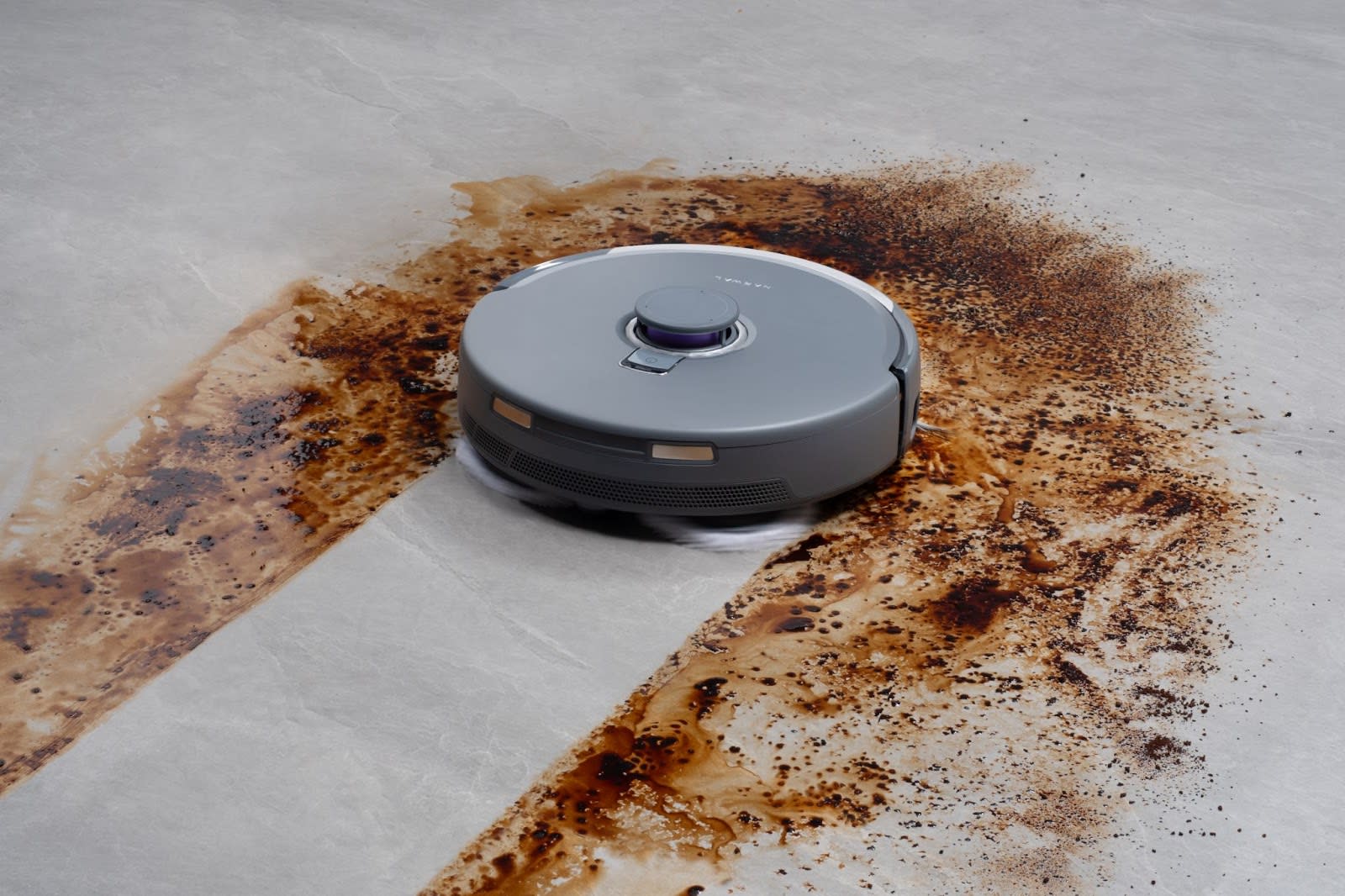
Tile floors are hard and smooth, making them less prone to damage compared to hardwood. However, they come with their own set of challenges. Grout lines often trap dirt, and dust accumulation on tiles can become more visible if not cleaned frequently. An ideal robot vacuum for tile floors can handle these challenges efficiently, ensuring your tiles remain spotless and polished.
Recommended features for tile floor cleaning:
- A robot vacuum with high suction power is necessary to effectively remove dirt that collects in grout lines and other textured areas.
- Mopping capability is ideal for giving tiles a sparkling finish after vacuuming.
- Vacuums with edge-cleaning brushes are better at cleaning corners and grout edges, ensuring no dirt is left behind.
- Models equipped with durable wheels are less likely to cause wear or damage to hard surfaces.
- Advanced navigation systems are crucial for cleaning expansive tiled areas efficiently, ensuring comprehensive coverage without missing spots.
Tiles are more forgiving with cleaning solutions, making hybrid models with mopping functions a great choice for maintaining cleanliness and shine.
For homes with extensive tile flooring, the Narwal Freo Z Ultra stands out as a top choice, combining powerful vacuuming with advanced mopping capabilities. Its ability to target grout lines with precision ensures a polished finish.
Do Robot Vacuums Work on Carpet and Rugs?
Many households with carpets often worry about common issues, such as:
- Some robot vacuums fail to identify and adjust their settings for carpeted areas, leaving dirt and debris behind.
- Thick or plush carpets can trap less advanced models, causing them to get stuck or lose efficiency.
- Rugs with long fibers may lead to tangles or jams, which could disrupt the vacuum’s cleaning cycle.
- Robot vacuums that lack sufficient suction power might struggle to clean debris embedded deep in the carpet fibers.
The good news is that these problems can be avoided by choosing the right robot vacuum for carpet.
Key Features of Robot Vacuums for Carpet
- Strong Suction Power: To lift dirt and debris trapped deep within fibers.
- Tangle-Free Brush Rolls: Prevent hair and carpet fibers from clogging the vacuum.
- Carpet Detection Technology: Automatically adjusts suction power when transitioning to carpets.
- Height Adjustment: Ensures optimal cleaning for both low-pile and high-pile carpets.
If your carpet has long fringes or is made of delicate materials like silk or wool, choose a robot vacuum that lets you set no-go zones. This way, you can keep the vacuum away from fragile areas and avoid any damage. For this feature, the Narwal series robot vacuums are a great choice.
Can Robot Vacuums Go from Hardwood to Carpet?
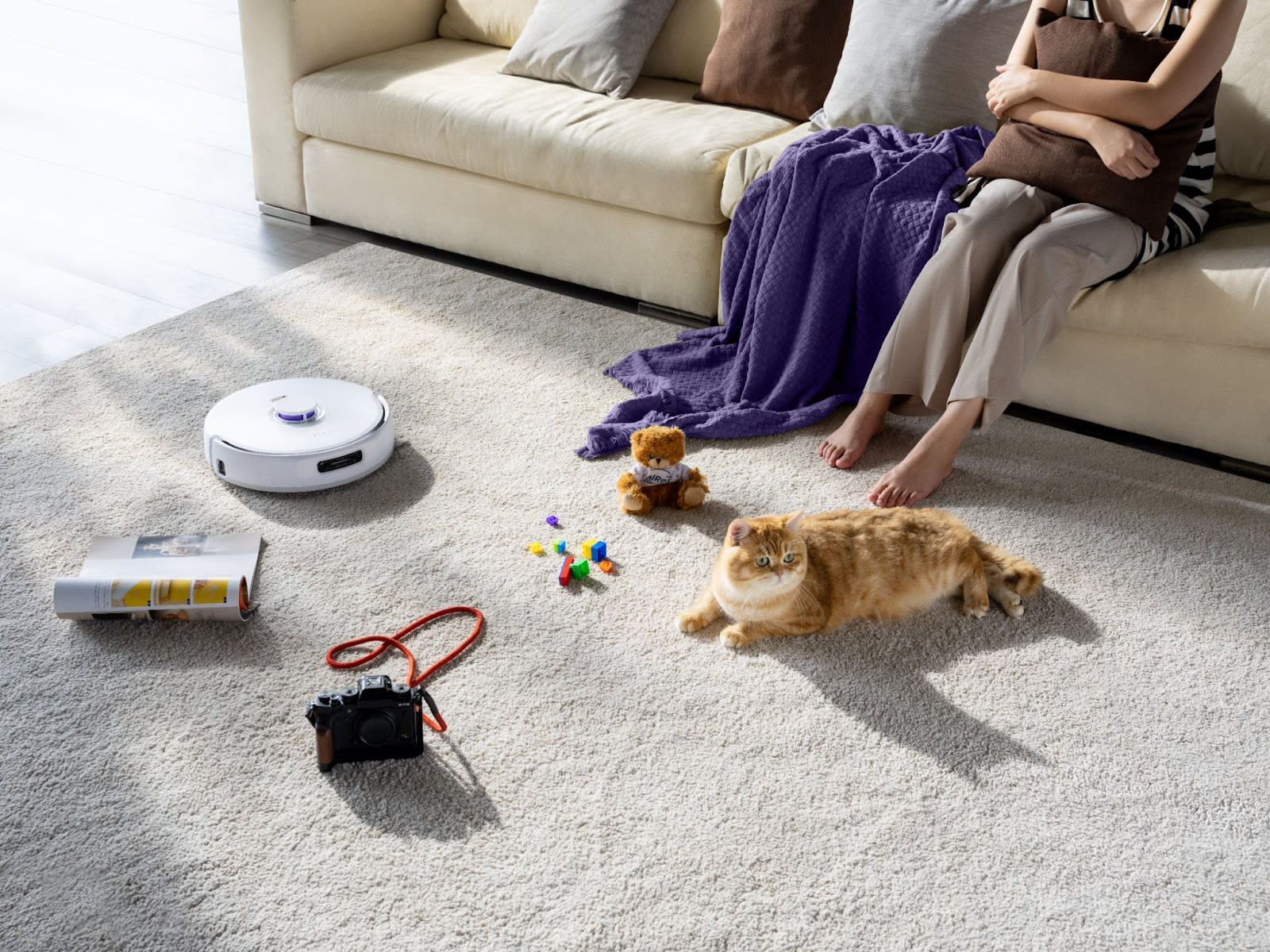
Yes, good robot vacuums can move from hardwood to tile to carpet without manual changes, but homes with transition strips, door thresholds, or uneven floor levels need stronger climbing and sensing performance. Look for carpet detection, automatic mop lifting, threshold-climbing ability, and floor-specific cleaning modes so the robot can vacuum carpet more aggressively while keeping wood and tile protected.
For Narwal’s current lineup, Narwal Flow is the most natural fit to mention here because it combines CarpetFocus cleaning, 12 mm mop lifting, and strong ledge-crossing ability for homes with mixed floors and frequent floor transitions.
Features to Look for in Mixed Flooring Vacuums:
- Dynamic Suction Adjustment: Automatically increases or decreases suction based on floor type.
- Versatile Brush Designs: Soft brushes for hard floors and rolling brushes for carpets.
- Smooth Transitions: Wheels designed to navigate thresholds and floor height changes without getting stuck.
- Customizable Cleaning Modes: Allows you to prioritize certain areas or floor types.
- Accurate Mapping and Zoning: Ensures comprehensive cleaning of each floor type.
Mixed flooring often demands robust cleaning modes and precise mapping to ensure every area gets equal attention. The Narwal Freo X Ultra excels in these scenarios, with customizable settings for each floor type. It also uses advanced AI navigation to remember floor-specific cleaning patterns, making subsequent cleanings faster and more efficient.
How Robot Vacuums Detects Floor Types?
Robot vacuums with strong floor compatibility rely on precise sensors to detect floor types. These sensors enable the vacuum to:
- Identify surface changes: Determine whether it’s cleaning hardwood, tile, or carpet.
- Adjust cleaning settings: Modify suction power and brush rotation speed based on floor type.
- Avoid obstacles: Prevent collisions with furniture or drops at stairs.
Some advanced models also feature machine learning capabilities, which enable the robot to adapt better over time. This means that the more you use your vacuum, the smarter it becomes in understanding your home’s specific layout and flooring requirements.
Learn more details about how robot vacuums detect floor types.
Do Robot Vacuums Scratch Floors?
High-quality robot vacuums are generally safe for hardwood, wood, vinyl, and laminate floors when the wheels and brushes are kept clean. In most cases, scratches are caused by grit, sand, or sharp debris stuck in the robot’s wheels or brush roll—not by the robot vacuum itself. To reduce the risk, clean the rollers regularly, clear sharp debris before runs, and use low-moisture mopping on timber or hardwood floors.
Do Robot Vacuums Work on Uneven Floors?
Yes, many robot vacuums can work on uneven floors, but performance depends on threshold height, transition strips, rug thickness, and wheel design. If your home has small ledges or room dividers, choose a model with strong threshold crossing, carpet detection, and mop lifting so it can move between hard floors and rugs without getting stuck or wetting the carpet.
FAQs
Can one robot vacuum handle hardwood, tile, and carpet in the same home?
Yes. Modern flagship models are designed specifically for mixed-floor households. They use ultrasonic sensors to detect the floor type in real-time. When moving from tile to carpet, the robot will automatically stop the mop, lift it out of the way (typically 10mm–12mm), and increase suction power to pull dirt from deep within the carpet fibers.
Is mopping safe for all hard floor types?
Not all floors are treated equal. While tile and stone are highly water-resistant, hardwood, laminate, and engineered timber are sensitive to moisture. In 2026, the best robots use electronic water tanks that allow you to customize the dampness levels for each room, ensuring your delicate wood floors stay dry enough to prevent warping.
Why do some robot vacuums struggle with carpets but thrive on tile?
Tile is a flat, non-porous surface where debris sits on top, making it easy to suck up. Carpet fibers trap hair, dust, and skin cells deep inside. To clean carpet effectively, a robot needs a bristle or "floating" brush that can agitate the fibers and much higher suction (ideally over 8,000 Pa).
Will rugs or door thresholds stop my robot vacuum?
It depends on the robot's "climbing" ability. Most premium models can cross thresholds up to 20mm (0.8 inches) high. However, very thick "shag" rugs or high transition strips between rooms can sometimes cause the robot to get stuck. If you have high thresholds, look for models with large, rugged wheels.
Can a robot vacuum scratch my hardwood floors?
Generally, no. Scratches are usually caused by trapped grit (like small pebbles) caught in the robot's brushes or wheels. To prevent this, regularly check the bottom of your robot and wipe the wheels. Using a robot with soft-rubber brushes instead of stiff bristles also provides an extra layer of protection for delicate finishes.
What should I look for if I have both pets and mixed flooring?
Focus on tangle-prevention and filtration. Pet hair behaves differently on tile (where it blows around) than on carpet (where it sticks). A robot with a zero-tangle brush and HEPA filtration will ensure that fur is removed from all surfaces without clogging the machine or releasing allergens back into the air.
How important are "No-Go Zones" for mixed floors?
They are essential for protecting specific areas. You can use the app to draw virtual barriers around high-pile rugs that are too thick for the robot to climb, or around pet water bowls to prevent the robot from bumping them and spilling water onto your hardwood floors.
What are the easiest floor types for a robot to clean?
Sealed tile, luxury vinyl plank (LVP), and polished concrete are the easiest. These surfaces allow the robot to maintain a perfect vacuum seal for maximum suction and provide the best "grip" for the mop pads to scrub away stains without the risk of water damage.
Does daily cleaning help protect my floors?
Yes. By cleaning every day, the robot removes the fine sand and dirt that act like sandpaper under your shoes. Removing this abrasive debris daily actually extends the life of your floor's finish, especially in high-traffic areas like hallways and kitchens.
Should I use a cleaning solution on my floors?
Only use solutions specifically approved by the manufacturer. Standard floor cleaners can be too sudsy, which may cause the robot's wheels to slip on tile or clog the internal water pumps. Low-foam, pH-neutral formulas are the safest bet for keeping both your floors and your robot in top condition.
Finding Your Perfect Robot Vacuum for Different Floors
Choosing the right robot vacuum for your flooring can transform your cleaning routine. From hardwood and tile to carpet and rugs, it’s important to pick a model that adapts well to your home layout and surfaces.
High-quality robot vacuums, like those in the Narwal Australia collection, offer features tailored for different floor types—such as mop lifting for carpets, edge-cleaning for tiles, and low-moisture mopping for timber.
Whether you need a vacuum that’s gentle on hardwood, powerful on carpet, or smart enough for a mix of surfaces, investing in the right model ensures a spotless home with less hassle. To explore models made for all floor types, check out our full range of robot vacuums for different floors.


