




What is a good suction power for a vacuum cleaner? It depends on your home's flooring, cleaning needs, and vacuum type. As a general guide, good suction ranges from 150–250 AW or 2,500–6,000 Pa for everyday cleaning, and up to 20,000 Pa for tougher messes like pet hair and embedded carpet dirt. Picking a number that is too low for your floors leaves debris behind, while paying for more power than you need adds noise and cost. This guide breaks down the right level by vacuum type and surface.
Quick Summary
- Good suction power depends on the vacuum type, floor surface, and the kind of debris you clean most often.
- For traditional vacuums, 150–250 AW is typically strong enough for most homes.
- For robot vacuums, 2,500–6,000 Pa suits daily cleaning, while 12,000–20,000 Pa is better for deeper cleaning and pet hair.
- Hard floors usually need moderate suction, while thick carpets and embedded debris need stronger suction.
- Suction performance also depends on airflow, filtration, brushroll design, and maintenance—not just the number on the box.
- Regular filter, brushroll, and nozzle cleaning helps maintain strong suction over time.
This guide covers recommended suction ranges for upright, canister, stick, handheld, and robot vacuums, the levels that suit different surfaces, and how to choose the right option if you clean pet hair, large debris, or fine dust.
What Is Suction Power in a Vacuum Cleaner?
Suction power describes how strongly a vacuum pulls air, dirt, and debris into the dustbin. It is usually measured in air watts (AW) or pascals (Pa).
A vacuum with higher suction power is generally better at lifting dirt from carpets, rugs, and other textured surfaces. Lower or moderate suction still works well for lighter tasks such as cleaning hardwood floors, tiles, or quick everyday messes.
How Is Suction Power Measured?
There are a few common ways suction power is measured:
- Air Watts (AW): A common measurement for traditional vacuums that combines suction strength and airflow. Higher AW usually means stronger overall cleaning performance.
- Pascals (Pa): A measurement of suction pressure, commonly used for robot vacuums. Higher Pa means stronger suction force.
- Water Lift (inH2O): A measure of how high the vacuum can lift a column of water. This is more common in industrial or heavy-duty models.
These measurements help compare vacuum strength, but real-world results also depend on how well the vacuum performs on your surfaces and cleaning tasks.
Ideal Suction Power Levels by Surface and Debris Type
The right suction power depends on both the surface you clean and the type of debris you deal with. Hardwood floors, pet hair, fine dust, and thick carpets all place different demands on a vacuum.
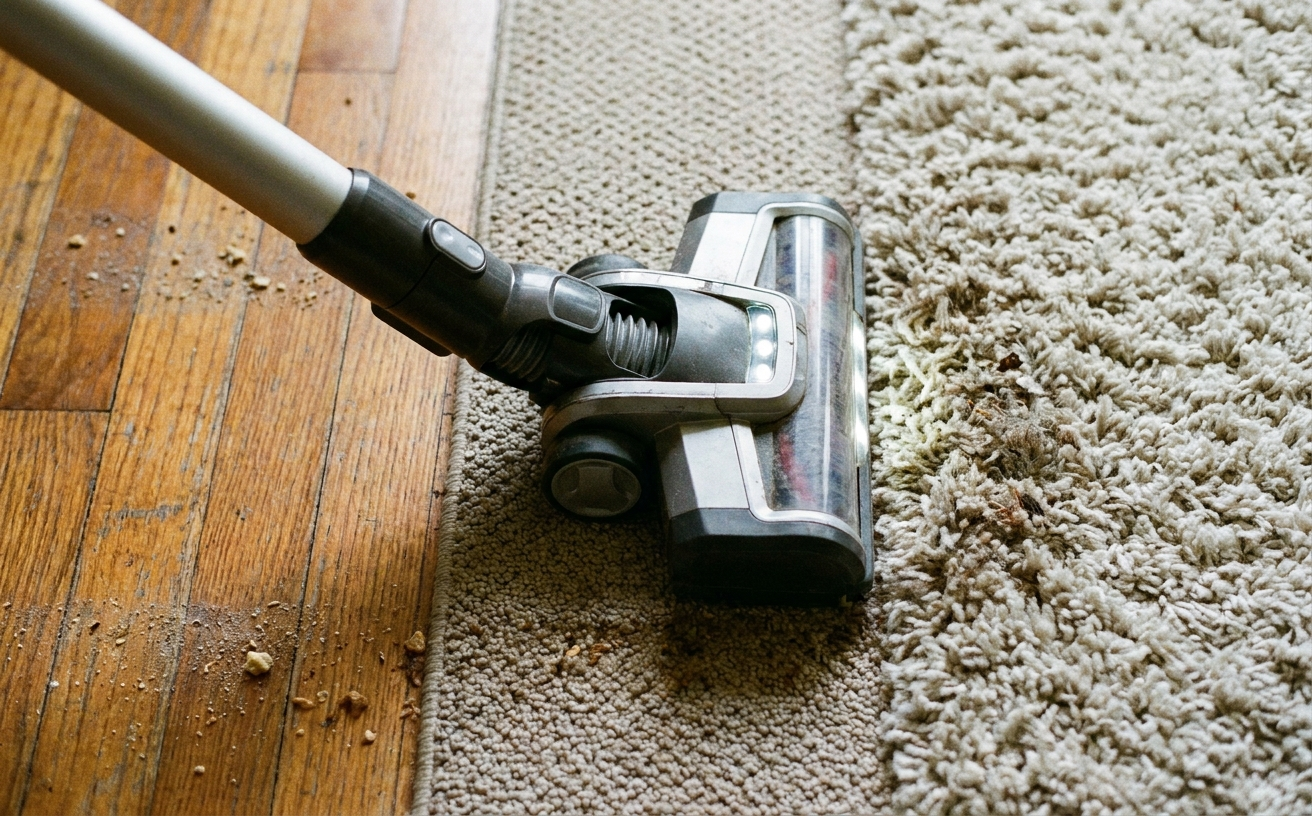
Different surfaces and debris types call for different suction levels.
Recommended Suction Power by Cleaning Scenario
| Surface or Debris Type | Recommended Suction Power | Notes |
|---|---|---|
| Hard floors (wood, tile) | 100–150 AW / 800–1,200 Pa | Moderate suction helps prevent fine dust from scattering |
| Low- to medium-pile carpet | 180–200 AW / 1,400–1,600 Pa | Suitable for everyday dirt and dust |
| High-pile or thick carpet | 220–250 AW / 1,700–2,000+ Pa | Stronger suction helps lift embedded debris |
| Curtains or delicate rugs | 100–150 AW / ~1,000 Pa (adjustable) | Lower suction helps avoid damage |
| Pet hair on carpet or furniture | 250+ AW / 3,000–6,000 Pa | Strong suction plus a motorized brush is ideal |
| Large debris (crumbs, leaves) | 200–250 AW / 2,500–3,000 Pa | Strong airflow helps prevent clogs |
| Dust and fine particles | 180–200 AW / 2,500–6,000 Pa | A good balance of suction and filtration matters |
| Wet or sticky messes | 15,000–20,000 Pa | Wet-dry vacuums like the S30 Pro suit these tasks best |
Tips Based on Use Case
- For pet owners: Look for vacuums with over 250 AW or 3,000+ Pa, plus motorized, anti-tangle brushes.
- For delicate fabrics: Choose a model with adjustable suction to protect curtains, linen rugs, or sheer upholstery.
- For multi-surface homes: Intelligent suction adjustment or multiple power modes makes switching between carpet and hard floors easier.
What Is a Good Suction Power for Each Vacuum Type?
Different vacuum types are built for different jobs. Knowing the typical suction range for each type makes it easier to choose a model that fits your cleaning routine.
Upright Vacuums
Upright vacuums are designed for deeper cleaning, especially on carpets. A good suction range is 180–200 AW or 1,400–1,600 Pa.
They are well suited to:
- large floor areas
- homes with more carpet
- deep cleaning tasks
Canister Vacuums
Canister vacuums are versatile and work well across hard floors and carpets. A recommended suction range is 220–250 AW or 1,700–2,000 Pa.
They are a good fit for:
- mixed flooring
- stairs
- tighter corners and edges
Cordless Stick Vacuums
Cordless stick vacuums are lightweight and convenient for daily use. A practical range is 100–150 AW or 800–1,200 Pa.
They are best for:
- quick cleanups
- hard floors
- light daily maintenance
Handheld Vacuums
Handheld vacuums are intended for cars, upholstery, and smaller areas. Around 20–50 AW or 160–400 Pa is usually enough.
They work well for:
- crumbs
- furniture
- small pet-hair cleanups
Robot Vacuums
For autonomous daily cleaning, a good suction range is 2,500–6,000 Pa. Premium models such as the Narwal Flow or Narwal Freo Z10 Ultra can reach 12,000–20,000 Pa for deeper cleaning and stronger pet hair pickup.
They are ideal for:
- routine maintenance
- hands-free cleaning
- mixed hard floors and low-pile carpets
- deeper cleaning in higher-powered models
Recommended Suction Power by Vacuum Type
| Vacuum Type | Recommended Suction Power | Suitable For |
|---|---|---|
| Upright | 180–200 AW / 1,400–1,600 Pa | Deep cleaning carpets, large floor areas |
| Canister | 220–250 AW / 1,700–2,000 Pa | Mixed floors, tight spaces |
| Cordless stick | 100–150 AW / 800–1,200 Pa | Quick cleanups, hard floors |
| Handheld | 20–50 AW / 160–400 Pa | Cars, furniture, pet hair |
| Robot (standard) | 2,500–6,000 Pa | Daily cleaning, hard floors, low-pile carpets |
| Robot (high-end) | 12,000–20,000 Pa | Pet hair, thicker carpets, deeper cleaning |
How to Choose the Right Suction Power for Your Vacuum
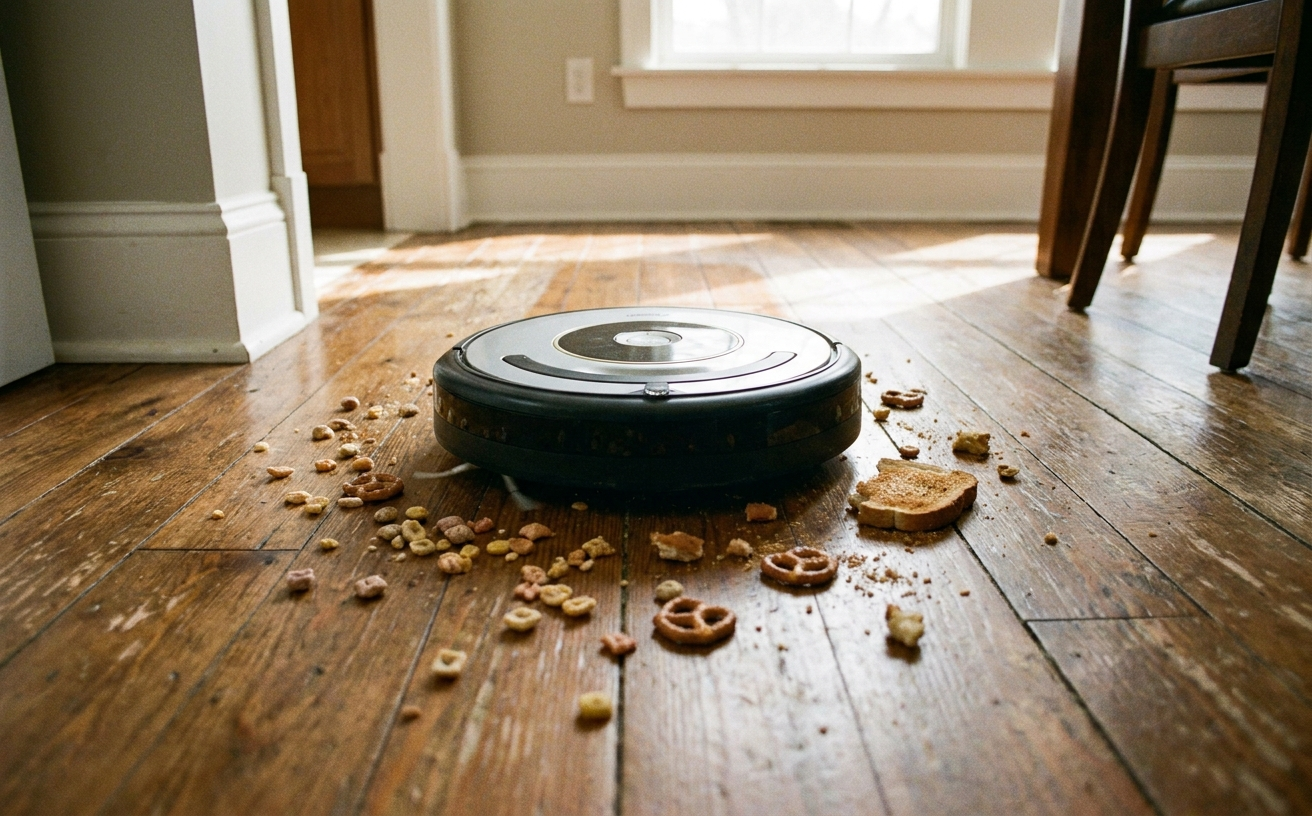
Match suction power to your home layout, floor types, and the messes you clean most.
Choosing the right suction power comes down to your home layout, floor types, and the kind of messes you clean most often.
For larger homes or homes with thick carpets, stronger suction is the better choice because it lifts dirt from deeper within the fibres. For hard floors, moderate suction is usually enough. If your home has a mix of floor types, a vacuum with adjustable suction is more practical than one fixed power level.
For cordless vacuums, stronger suction can reduce runtime. If longer cleaning sessions matter, look for a model with good battery life and multiple suction settings.
Noise is another factor. Stronger suction often creates more noise, so check the decibel rating or look for quiet motor technology if sound is a concern. If a noisy machine is already an issue in your home, see our guide on robot vacuum noise and how to reduce it.
Finally, consider budget. For many homes, moderate suction in the range of 150–200 AW or 1,200–1,600 Pa is enough for regular cleaning. The strongest option is not always the best one—it is the one that matches your real cleaning needs.
Factors That Influence Suction Power in a Vacuum Cleaner
Suction performance is not determined by a single number. Several design and performance factors affect how well a vacuum actually picks up dirt.
Motor Power and Efficiency
The motor creates the suction, but motor efficiency matters as much as raw power. An efficient motor delivers stronger, more consistent suction while using less energy—which also helps preserve battery life in cordless models.
Airflow and Filtration System
Airflow is essential to suction performance. If the airflow path is restricted, suction drops. Common causes include clogged filters, overly restrictive filtration, and poor internal air-path design.
A good filtration system traps fine dust without hurting airflow too much. HEPA filters, for example, capture smaller particles, but the vacuum still needs enough airflow to clean effectively.
Design and Build Quality of the Vacuum
The overall design affects how well suction reaches the floor. Long hoses, narrow passages, or poorly designed air ducts reduce airflow.
A well-built vacuum usually has:
- a smoother air path
- durable construction
- an efficient nozzle shape
- fewer airflow restrictions
Brushroll and Nozzle Design
The brushroll and nozzle have a major impact on pickup performance. A motorized brushroll loosens embedded dirt from carpets so suction can pull it in more effectively.
The nozzle matters too. If it cannot maintain a good seal with the floor, suction drops. A well-designed nozzle keeps suction concentrated where it is needed.
How to Maintain or Maximize Suction Power in Your Vacuum Cleaner
Regular maintenance is one of the easiest ways to keep suction strong over time.
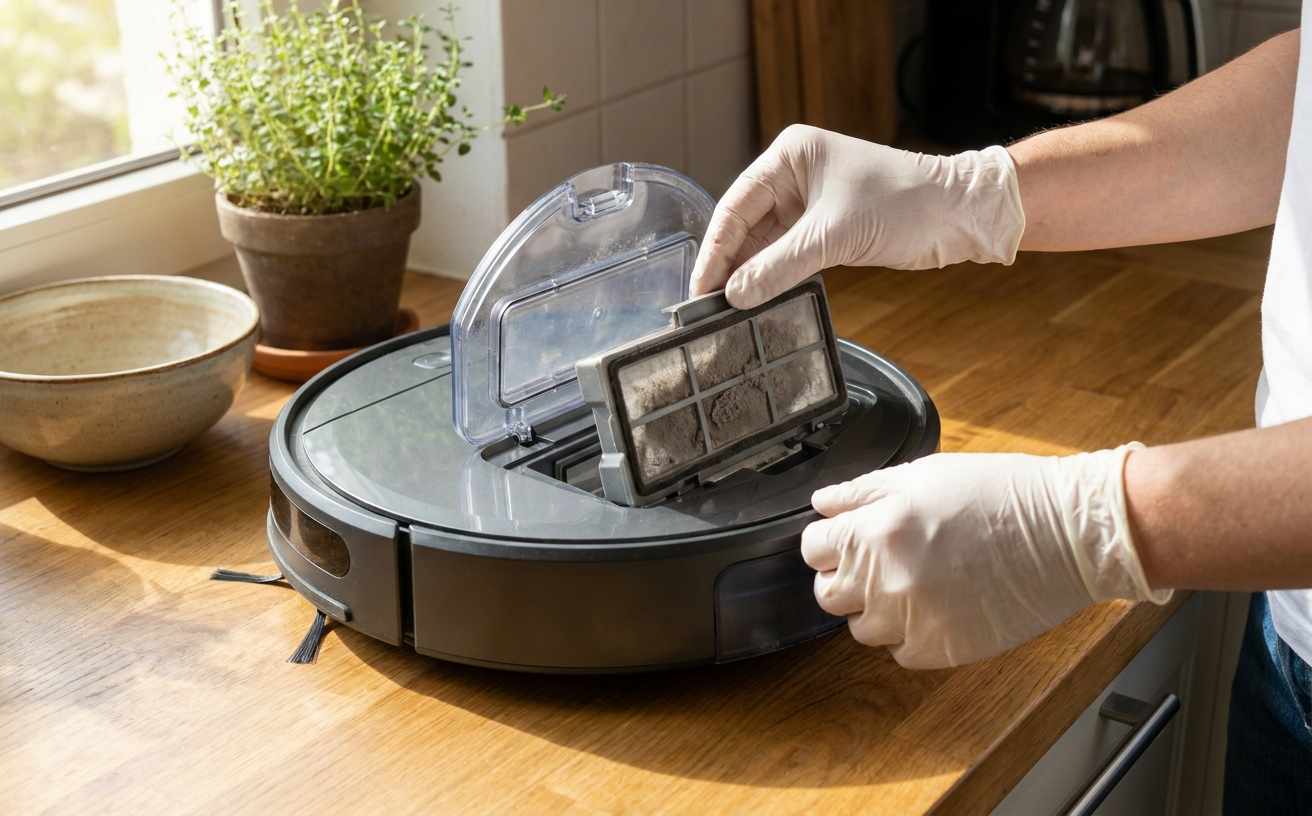
Routine filter, brushroll, and nozzle cleaning keeps suction strong over time.
Clean or Replace the Filter Regularly
Remove the filter and tap it gently to clear loose dust. If it is washable, rinse it under warm water and let it dry completely before reinstalling. Replace it if it is damaged or too clogged to clean properly. For a full walkthrough, see how to maintain a robot vacuum filter.
Clear the Brushroll of Hair and Debris
Hair wrapped around the brushroll reduces cleaning performance. Remove tangled strands by hand or with scissors and make sure the brushroll spins freely.
Check the Hose and Nozzle for Blockages
Detach the hose and inspect it for clogs. If needed, use a broomstick or similar tool to push debris through. Check the nozzle and remove any visible obstruction.
Replace the Belt if Necessary
If your vacuum uses a belt, inspect it for wear or damage. A worn belt can stop the brushroll from spinning properly, which affects overall pickup.
Check the Motor if Suction Remains Weak
If suction stays weak even after cleaning the vacuum, the motor may no longer be performing efficiently. Refer to the user manual or a repair professional if you suspect a motor issue.
Use Adjustable Suction When Available
A vacuum with adjustable suction is more efficient in daily use. Lower suction handles light tasks, while higher suction can be reserved for carpets or tougher messes.
Is 20 kPa (20,000 Pa) Good Suction Power?
Yes, 20 kPa is very strong suction. At 20,000 Pa, a vacuum sits at the top end of consumer cleaning power and is built for demanding tasks rather than light daily dusting.
This level is most useful on thick carpets, for picking up embedded pet hair, and for wet or sticky spills handled by wet-dry vacuums. On bare hardwood or tile, suction this high is more than most homes need for routine cleaning, though it still clears coarse debris in a single pass. The trade-off is noise and, on cordless models, shorter runtime. If your home is mostly hard floors with occasional messes, a model that can reach 20 kPa but also runs at lower settings gives you that headroom without using it constantly.
Is 12,000 Pa Suction Good for a Robot Vacuum?
Yes, 12,000 Pa is strong suction for a robot vacuum and places it in the high-performance tier. Most standard robot vacuums clean well at 2,500–6,000 Pa, so 12,000 Pa is roughly double the everyday range.
At this level, a robot vacuum handles low- and medium-pile carpets, pet hair, and fine dust in crevices with little trouble. It is a sensible choice for homes with shedding pets or a mix of carpet and hard floors. Real-world pickup still depends on brushroll design, airflow, and filter maintenance, so the Pa figure is a strong indicator rather than a complete one. For mostly hard-floor homes, 12,000 Pa is comfortably above what daily maintenance requires.
Is 600W Good Power for a Vacuum Cleaner?
600 watts is a moderate power rating. Watts measure the energy the vacuum consumes, not the suction it produces, so wattage alone does not tell you how well the vacuum picks up dirt.
Two vacuums rated at 600W can perform very differently depending on motor efficiency, airflow path, and nozzle design. Air watts (AW) and pascals (Pa) are more reliable indicators of cleaning strength than input wattage. If you are comparing vacuums and only see a wattage figure, treat it as a rough guide and look for an AW or Pa rating before deciding. For light to moderate cleaning on hard floors, a well-designed 600W vacuum is usually enough.
Top Robot Vacuums with Strong Suction for Every Need
If you want strong suction in a robot or wet-dry vacuum, these Narwal models are designed for different home layouts and cleaning habits. For a closer look at how these models compare, see our roundup of robot vacuums with the best suction power.
Quick Comparison
| Product | Best For | Suction Power | Key Features |
|---|---|---|---|
| Narwal Flow | Max power and coverage | 22,000 Pa | Edge-to-edge cleaning, auto dirt sensing, ideal for large households |
| Freo Z10 Ultra | Smart and balanced cleaning | 18,000 Pa | Floor type detection, mop self-cleaning, dual scrubbing pads |
| S30 Pro | Hard floors and wet messes | 20,000 Pa | Wet-dry cleaning, AI DirtSense, built-in scissors that cut hair tangles |
Narwal Flow – For Deepest Clean on Every Surface
With 22,000 Pa suction, Narwal Flow leads this lineup in raw power. It is a strong option for larger homes or busy households where food crumbs, sand, and pet hair are part of daily life.
Its key features include:
- edge-to-edge cleaning
- DirtSense technology
- strong performance across rugs, tiles, and other surfaces
Narwal Flow - Robot Vacuum & Mop【Flow Series】 $2,999.00
Freo Z10 Ultra – Smart Choice for Mixed Flooring
This 2-in-1 robot vacuum and mop delivers 18,000 Pa suction and uses floor detection to adjust suction and mop pressure automatically. It suits homes with both carpeted and hard-floor areas.
Its standout features include:
- floor type detection
- self-cleaning mop pads
- 2.5L dust storage
Narwal Freo Z10 Ultra - Robot Vacuum & Mop【Z Series】 $1,699.00 $2,499.00
S30 Pro – Power Meets Convenience on Hard Floors
For kitchens, hallways, and open-plan living spaces, the S30 Pro offers 20,000 Pa suction in a cordless wet-dry format. Built-in scissors cut through tangled hair while the vacuum runs, and the dock self-cleans and dries the roller at 194°F.
Its key features include:
- wet-dry cleaning
- built-in scissors that cut hair tangles
- 194°F self-cleaning and drying
Narwal S30 Pro - Wet Dry Vacuum $999.00
FAQs
Is 20,000 Pa suction power sufficient for a vacuum cleaner?
Yes, 20,000 Pa is very strong suction power and is suitable for deep cleaning, especially for carpets, larger debris, and more demanding cleaning tasks.
Is 600 watts of power good for a vacuum cleaner?
600 watts is a moderate power level. It can be enough for light cleaning, but vacuums with higher wattage often perform better for deeper cleaning, especially on carpets.
What is a good kPa for a vacuum cleaner?
A good kPa depends on the vacuum type. For robot vacuums, 2.5–6 kPa (2,500–6,000 Pa) suits daily cleaning, while 12 kPa and above is better for pet hair and thicker carpets. Wet-dry vacuums often run far higher, around 15–20 kPa, because they handle sticky and wet messes. Hard floors need less suction than carpets, so match the kPa figure to your main floor type rather than choosing the highest number available.
What does 20 kPa suction mean?
20 kPa means 20 kilopascals of suction pressure. Kilopascals are simply a larger unit of the pascals used to rate most robot vacuums, so 20 kPa equals 20,000 Pa. It is a measure of suction pressure, not airflow or motor wattage.
Why do robot vacuums lose suction?
Robot vacuums commonly lose suction because of clogged filters, a full dustbin, tangled brushrolls, blocked airways, or worn and damaged parts. Our guide on why robot vacuums lose suction explains how to diagnose and fix each cause.
Conclusion: Choose the Right Suction Power for Your Home
Understanding what a good suction power is for your vacuum cleaner can make a noticeable difference in cleaning performance. From light daily dusting to deeper carpet cleaning, matching suction power to your surfaces and debris types helps you get better results with less effort.
Whether you are considering a high-performance robot vacuum like the Narwal Flow or a versatile cleaner like the S30 Pro, suction power is one of the most useful factors to compare.
If you are still unsure which model fits your space, visit Narwal Australia Official or browse top robot vacuums with strong suction to find the right fit for your home.


