




Yes, most robot vacuums can cross thresholds, but only up to a point. Flat floor transitions and small bumps under 2 cm are usually manageable. Raised door sills, thick rugs, and uneven flooring are where many models get stuck or fail to enter the next room.
This guide explains how high robot vacuums can typically climb, what affects threshold performance, and how to choose the right model if your home has challenging transitions.
Quick Summary
-
Most robot vacuums can handle thresholds around 1.5 to 2 cm.
-
Threshold height is only one factor; edge shape, surface material, traction, and navigation also matter.
-
Homes with old wooden door sills, thick rugs, or mixed flooring often need stronger climbing performance.
-
Larger wheels, better suspension, higher ground clearance, and smarter sensors all improve crossing ability.
-
If your current robot gets stuck, threshold ramps or smoother transitions can help.
-
Narwal Flow is designed for homes with raised thresholds and can handle up to 40 mm (1.6") in controlled conditions.
Do You Need a Robot Vacuum for High Thresholds?
If your home has mostly flat, open floors, probably not. But if you have raised transitions, mixed flooring, or doorway bumps over 2 cm, threshold performance matters a lot.
You may need a robot vacuum with stronger climbing ability if your home includes:
-
wood-to-carpet transitions across several rooms
-
old-style wooden thresholds between spaces
-
slightly sunken or split-level areas
-
layered rugs or thick rug edges
-
a layout where you want full-room cleaning without supervision
In homes like these, a robot vacuum that cannot cross thresholds cleanly may skip rooms, get stuck at doorways, or require manual repositioning. That defeats the point of automation.
How High Can Robot Vacuums Climb Over Thresholds?
Most robot vacuums can cross thresholds between 1.5 and 2 cm high. Once a threshold goes beyond 2 cm, success depends much more on the model and the shape of the transition.
|
Threshold Height |
Can Most Robot Vacuums Cross? |
Notes |
|
Under 1.5 cm |
Yes, easily |
Smooth transition for most models |
|
1.5 to 2.0 cm |
Usually yes |
Entry-level models may struggle |
|
2.1 to 2.5 cm |
Sometimes |
Better wheels and stronger traction help |
|
Above 2.5 cm |
Rarely |
Often requires premium climbing capability or a ramp |
Height alone does not tell the full story. A rounded wooden strip is easier to cross than a sharp metal divider. A beveled rubber transition is usually easier than a narrow, steep edge.
If your robot vacuum stops at doorways or leaves one room untouched, the threshold may be the real issue.
What Really Determines a Robot Vacuum’s Ability to Cross Thresholds
Threshold performance depends on a mix of hardware and software, not one single spec.
Wheel design
Large wheels with deep tread improve grip and help the robot climb over raised edges. Small or smooth wheels often lose traction, even on moderate door sills.
Ground clearance
If the bottom of the robot sits too low, it may scrape or get stuck halfway across. More clearance gives the robot more room to get over floor transitions.
Motor strength and traction
A stronger drive system helps the wheels push through resistance. This matters when crossing thick carpet edges, raised thresholds, or uneven flooring.
Weight and body balance
Weight distribution affects how well a robot climbs. Models with rear-heavy designs, wide mop modules, or bulky water tanks may lose balance during transitions.
Suspension system
Adaptive suspension helps maintain wheel contact on uneven surfaces. Without it, the robot may tilt, spin in place, or stall midway over a threshold.
Sensors and navigation
Smart navigation systems can detect thresholds early and adjust speed or approach angle. Better sensing often means fewer failed climbs and more complete room coverage.
How Top Robot Vacuum Brands Handle Threshold Transitions
Most mainstream robot vacuums perform best on thresholds under 2 cm. Performance above that level is less consistent and depends heavily on floor type, threshold shape, and whether mop components are attached.
In general:
-
Roomba i3, i7, and s9+ models typically handle around 1.8 to 2.0 cm on hard floors.
-
Roborock S7 and S8 series may perform slightly better, often up to about 2.2 cm on tile or wood, though thicker carpets can still be a challenge.
-
Ecovacs Deebot T10 and X1 series generally perform well around 2 cm, especially on beveled or rubber transitions.
Once thresholds reach around 2.3 to 2.5 cm or more, many robot vacuums struggle. They may stall, lose traction, rotate in place, or return without cleaning the next area.
Narwal Flow is designed for more demanding transitions. According to internal engineering specifications and controlled tests, it can climb up to 40 mm (1.6"), making it a stronger fit for homes with raised door sills, layered rugs, and uneven room transitions.
What to Look for When Choosing a Robot Vacuum for Thresholds
If threshold crossing is important in your home, focus less on suction specs and more on mobility.
Look for:
-
Large, rubberized wheels for better grip
-
Deep tread patterns for traction on raised edges
-
Good ground clearance to avoid scraping
-
Suspension or adaptive wheel movement for uneven flooring
-
Balanced body design that will not bottom out easily
-
Smart sensors and mapping that help the robot approach thresholds correctly
Also, treat claimed climbing height carefully. A spec sheet may say 2 cm, but real-world performance can vary based on:
-
threshold shape
-
flooring material
-
carpet thickness
-
mop attachments
-
water tank load
The best way to evaluate a model is to compare its design and proven use cases with your actual floor layout.
What If Your Robot Vacuum Can’t Cross Thresholds?
If your current robot vacuum cannot get over door sills or raised transitions, there are several practical fixes.
Use a threshold ramp
A low-profile rubber or wooden ramp is usually the most effective solution. It reduces the slope and makes the transition easier to climb.
Smooth out the floor transition
If you are renovating or replacing flooring, switching to a beveled or lower-profile threshold can make a major difference.
Add a thin rug with a beveled edge
In some cases, a stable, low rug can help create a gentler approach to a small bump. This works best for minor height changes.
Isolate hard-to-reach areas
If one threshold is too high, use virtual boundaries or close the door during scheduled cleaning and clean that room separately.
Reposition the robot manually
This is not ideal, but it can work for occasional cleaning in split-level spaces or rarely used zones.
If your home has several thresholds over 2.5 cm, and the robot fails repeatedly, a more capable model may save time and frustration.
Narwal Flow: Engineered for Homes with Challenging Thresholds
For homes with raised thresholds, thick rugs, or mixed floor levels, Narwal Flow is built to handle more demanding transitions with less interruption. It combines cleaning performance with mobility features designed for real multi-room layouts.
[cta:narwal-flow-robot-vacuum-mop]
Up to 40 mm (1.6") Threshold-Climbing Capability
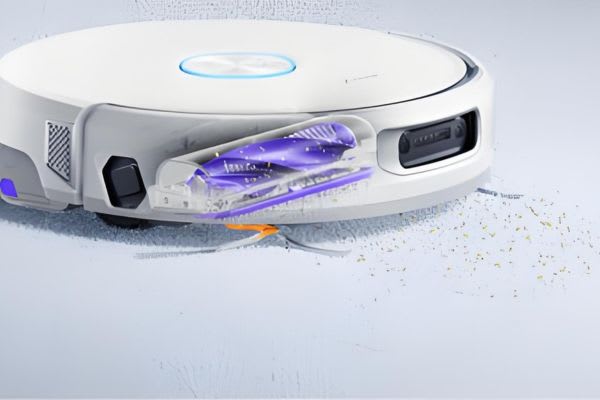
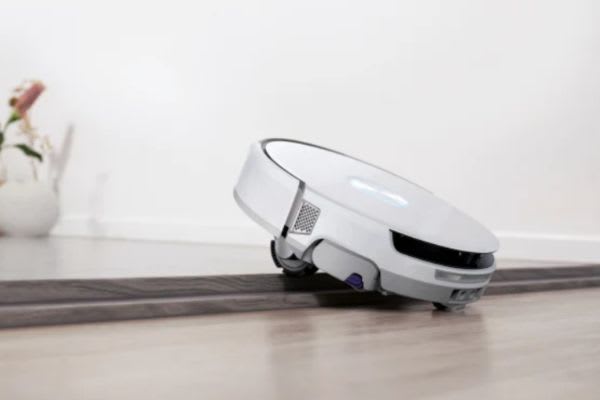
Flow is designed to cross ledges up to 40 mm (1.6"), helping it move more smoothly across raised thresholds and uneven room transitions.
Oversized Wheels + Suspension System for Stability
Large treaded wheels and a dynamic suspension system help maintain traction and balance while crossing raised surfaces.
Smart Threshold Approach with dToF + Dual RGB Cameras
With dToF and dual 136° RGB cameras, Flow can detect upcoming transitions and adjust its path before contact to improve crossing performance.
Low-Profile Body, High-Capacity Mobility
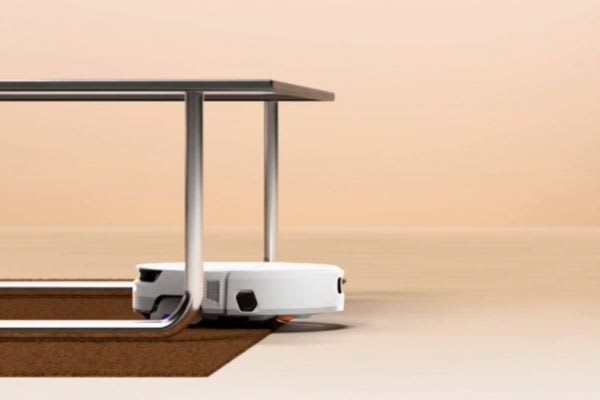
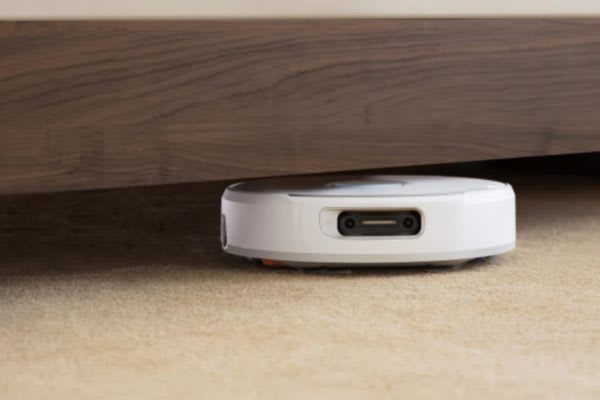
At 95 mm (3.7") tall, Flow is low enough to reach under furniture while still supporting stronger mobility across floor transitions.
Designed for True Multi-Room Cleaning
Whether your home has wood thresholds, layered rugs, or balcony lips, Flow is designed to clean across rooms without frequent manual lifting.
Threshold-climbing performance is based on internal engineering specifications and controlled tests. Actual results may vary depending on surface type, edge angle, and environmental conditions.
FAQ
What’s the best robot vacuum for high thresholds in 2025?
Popular options for higher thresholds include Narwal Flow, Roborock S8 Max, and Ecovacs X2. Narwal Flow stands out for homes with more challenging transitions because it is designed to handle up to 40 mm (1.6") in controlled conditions.
Can robot vacuums clean raised areas like steps?
No. Robot vacuums are not designed to climb actual stairs or full steps. They can only manage smaller floor transitions and thresholds within their climbing range.
Will a robot vacuum damage wooden thresholds?
Usually no, but repeated bumping may wear the finish over time. A model with accurate sensors, stable traction, and smoother crossing ability is a better choice for protecting wood surfaces.
The Right Robot Vacuum Doesn’t Stop at 2 cm
Many robot vacuums perform well on flat floors but struggle when thresholds rise above 2 cm. That can mean missed rooms, incomplete cleaning, and more manual intervention.
If your home has raised door sills, split levels, layered rugs, or mixed flooring, threshold performance should be part of your buying decision. A robot vacuum that can move freely between rooms delivers a much more complete clean.
Narwal Flow is designed for homes that need more than standard mobility, with the ability to handle up to 1.6" transitions, navigate room-to-room, and clean beyond the easiest surfaces.


