
A robot vacuum and mop cleaner working on hardwood flooring in a typical Australian home
Robot vacuum and mop cleaners combine automated vacuuming and wet mopping into a single device. For Australian households dealing with dust from dry summers, pet hair on tiles, or muddy footprints on hardwood, they address two cleaning tasks at once. The right model depends on your floor types, home layout, pet situation, and how much ongoing maintenance you are willing to accept.
How Do Robot Vacuum and Mop Cleaners Work?
A robot vacuum and mop cleaner navigates your home using sensors or LiDAR, vacuuming dust and debris while simultaneously or sequentially mopping hard floors. Most models use a combination of suction, rotating brushes, and either spinning mop pads or a rolling mop system to handle both dry and wet cleaning in a single run.
The robot maps your home on its first run, building a floor plan it uses to clean systematically. Better models distinguish between hard floors and carpet, automatically lifting their mop when they reach a rug. After cleaning, the robot returns to its dock, where many current models wash their own mops, dry them with warm air, empty collected dust into a larger bin, and refill their water tanks.
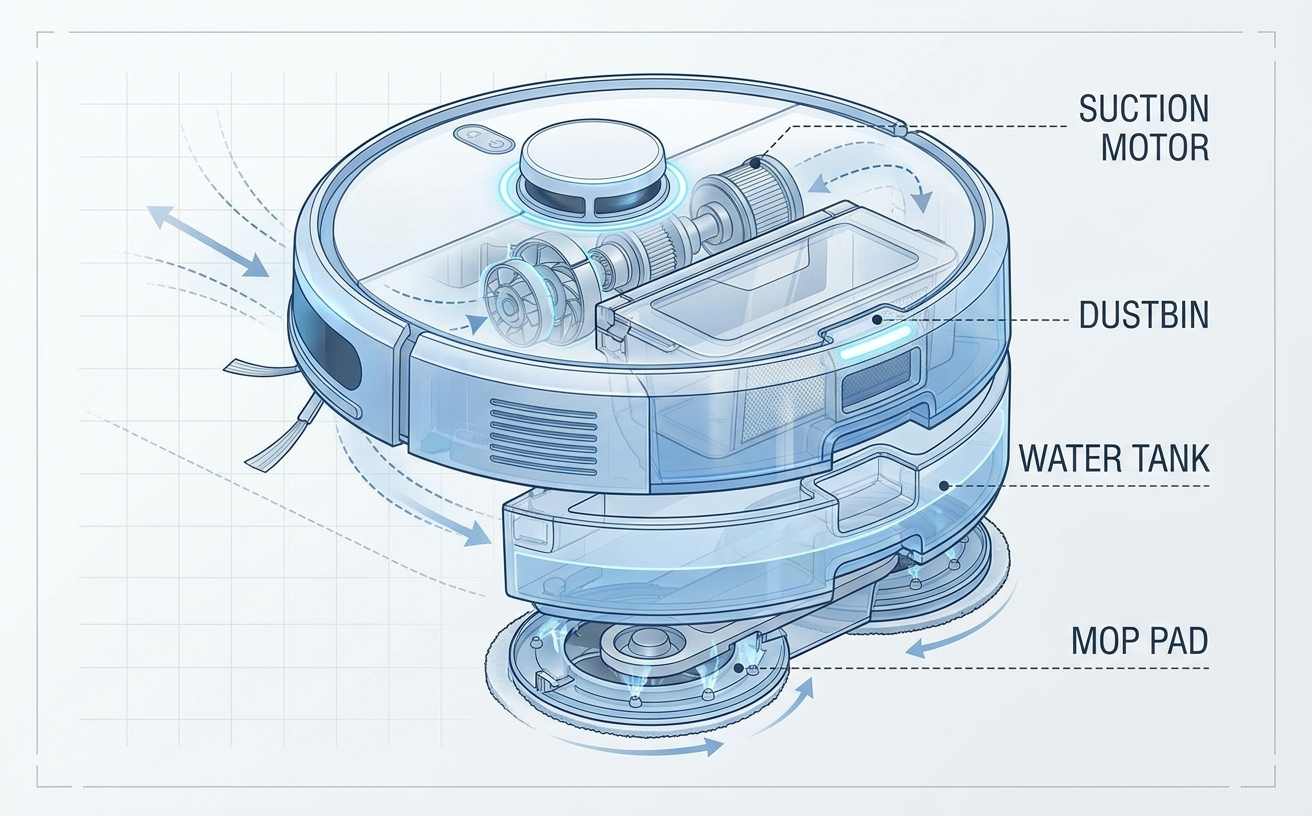
Internal components of a typical robot vacuum and mop cleaner
Spinning Pads vs. Track Rollers
Spinning mop pads rotate at high speed (typically 150 to 200 RPM) and press down with several newtons of force. They handle light daily grime, kitchen grease, and dried coffee well. Most spinning-pad robots use triangular or circular pads that extend toward edges and walls. The Narwal Freo Z10 robot vacuum and mop, for example, uses a triangular mop design with 8N of downward pressure, and the pads dynamically extend outward along walls and around furniture corners for closer edge coverage.
Track-roller systems work differently. A rolling mop continuously moves forward, scrubbing with fresh contact surface and rinsing itself during operation. The section touching your floor is cleaner than a spinning pad that carries the same dirt through multiple rotations. The Narwal Flow robot vacuum and mop uses this approach, applying 12N of consistent pressure while rinsing the roller with 45°C warm water in real time.
Both systems deliver good results on lightly soiled floors. The difference shows up on sticky, dried-on, or heavily soiled surfaces, where the track-roller approach has an edge because the mop surface stays cleaner throughout the job.
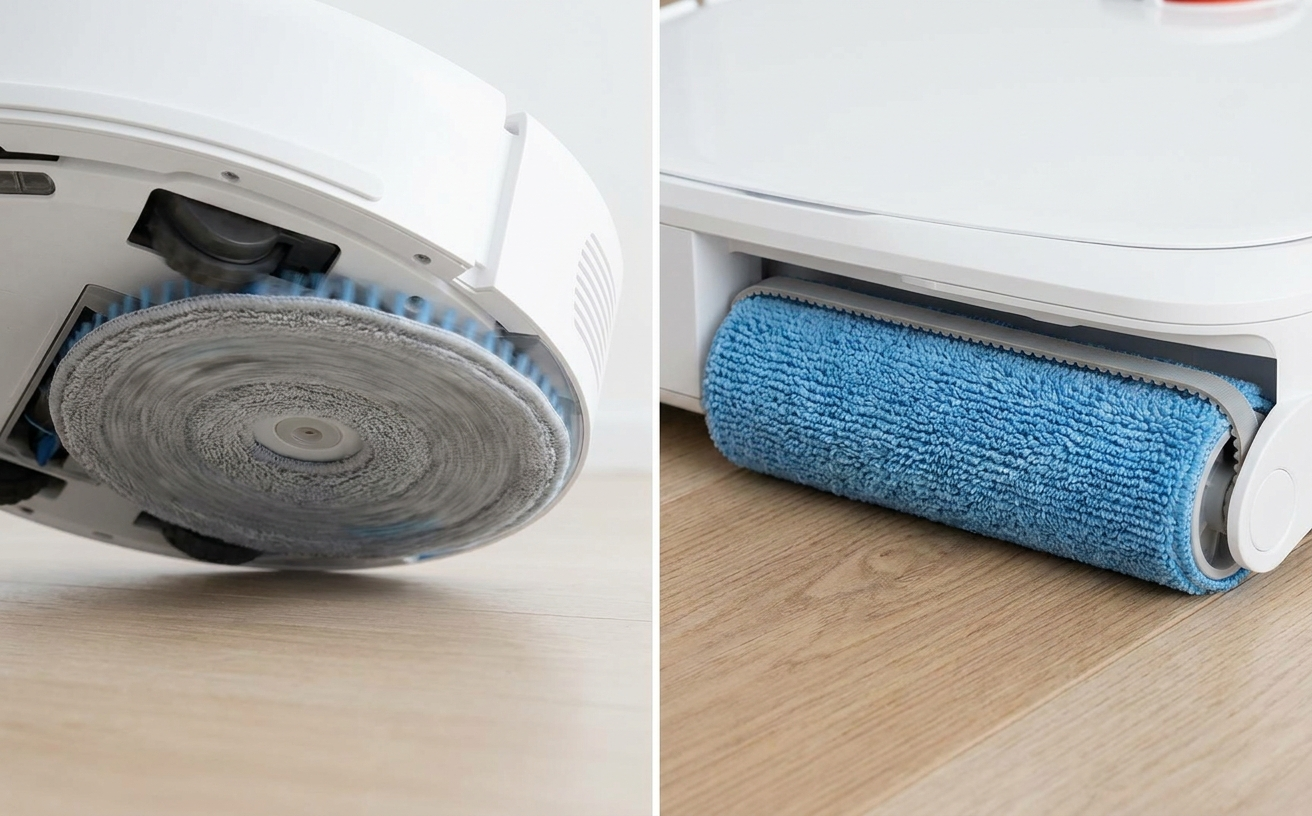
Spinning mop pads (left) versus track-roller mopping systems (right)
Which Floor Types Can Robot Vacuum Mops Handle?
They work on hard floors (tile, timber, laminate, vinyl, stone) and most low-to-medium pile carpets. They are not designed for thick shag carpet or very uneven surfaces like outdoor pavers.
On hard floors, the vacuum handles dust, crumbs, and hair while the mop addresses sticky residues and light stains. Most models adjust water output by floor type: timber floors receive less water to prevent warping, while tiles get a wetter mop for better stain removal. The Narwal Freo S robot vacuum and mop offers three adjustable water levels and applies 8N of mopping pressure, enough to handle daily grime without risking damage to sealed timber.
On carpet, the robot should automatically lift its mop pads and increase suction. Ultrasonic sensors detect carpet transitions faster and more accurately than bump detection. Some models offer multiple carpet-cleaning modes through their app, from light vacuuming for a doormat to deeper matrix-pattern cleaning for a living room rug.
Obstacle Avoidance: What Actually Matters
Basic models use bumper sensors and only learn where edges are after hitting them. Current models with structured-light sensors or RGB cameras detect objects before contact and navigate around them.
Camera-based avoidance that recognises specific objects (cables, socks, pet toys) matters most in homes with children, pets, or cluttered floors. The Narwal Freo Z10 Ultra robot vacuum and mop uses dual 136-degree cameras and an onboard AI chip to identify over 200 types of objects, cleaning close to furniture legs while steering clear of hazards like pet accidents. All processing happens on the local chip, not in the cloud.
If your floors are generally clear, a simpler LiDAR-plus-bumper system works fine and costs less.
Dock Stations and Self-Maintenance
A basic dock only charges the robot. A full-service dock handles mop washing, mop drying, dust emptying, water refilling, and detergent dispensing. The shift toward all-in-one vacuum and mop systems means the dock now does most of the maintenance work that used to fall on the owner.
Hot-water mop washing is the single most impactful dock feature. Models that wash mops at temperatures between 45°C and 75°C and then dry them with 40°C warm air keep mop pads hygienic and odour-free. In Australia’s warmer climate, skipping the drying step leads to mould and a musty smell within days.
Dust storage capacity affects how often you empty the bin. A 2.5-litre dust bag typically lasts 90 to 120 days. Smaller bins under 1 litre may need emptying every few weeks.
Some docks also self-clean their internal plumbing, preventing grime build-up in the wash tray and drainage. The Narwal Flow’s dock cleans the dirty water tank and internal pipes as part of its cycle and includes a replaceable filter to trap lint. Optional auto-refill and drainage systems connect directly to your home’s water supply, removing the need to manually add or empty water.
How to Choose the Right Robot Vacuum and Mop
If your home is mostly hard floors, mopping performance and edge cleaning matter more than extreme suction. Significant carpet area calls for suction above 10,000 Pa and automatic mop lifting of at least 12mm. Our mop and vacuum combo guide walks through how to match these specs to your floor layout.
Larger homes with multiple rooms benefit from LiDAR navigation and multi-floor mapping (most models support up to four floors). For apartments under 100 square metres, simpler navigation covers the space without issue.
Pet owners should prioritise anti-tangle brush systems. Hair wrapping around the roller brush is the most common maintenance headache with robot vacuums. Conical floating brushes and dynamic side brushes that shift between open and closed positions prevent tangles at the source. The Narwal Freo X10 Pro robot vacuum and mop carries an SGS-certified 0% hair-tangle rating.
Noise ranges from 55 to 65 dB during vacuuming. Dedicated quiet modes on some models drop below 57 dB. If you work from home or run the robot overnight, check noise specs for both vacuum and mop modes separately, as they often differ.
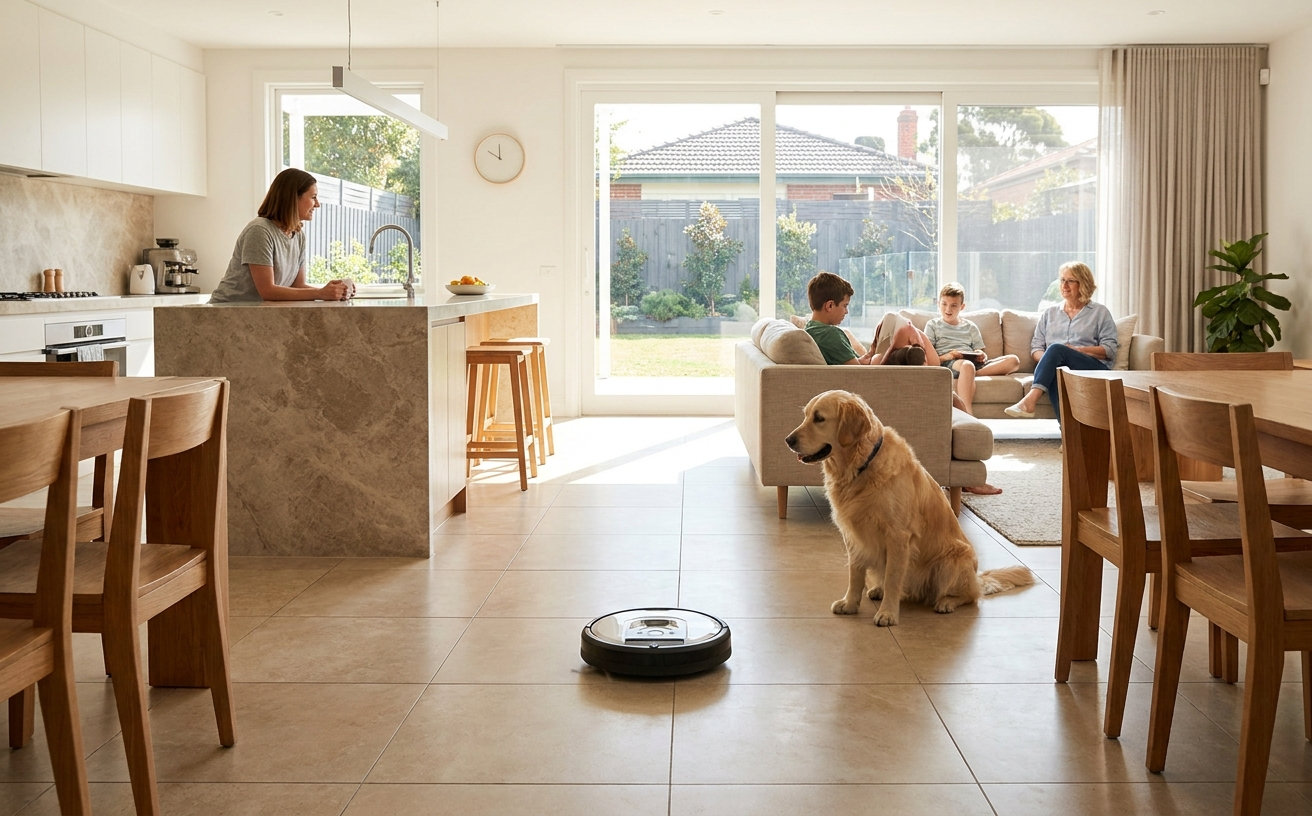
A robot vacuum and mop cleaner at work in an Australian family home
Key Specifications at a Glance
| Specification | Entry Level | Mid-Range | Full-Featured |
|---|---|---|---|
| Suction Power | 4,000–8,000 Pa | 8,000–15,000 Pa | 15,000–22,000+ Pa |
| Mop Type | Damp cloth drag | Spinning pads | Track roller or heated spinning pads |
| Navigation | Gyroscope / bumper | LiDAR | LiDAR + camera AI |
| Obstacle Avoidance | Basic bumper | Structured light | Dual cameras + AI chip |
| Dock Features | Charging only | Mop wash + dust empty | Hot wash, dry, self-clean, auto refill |
| Dust Storage | Manual empty | 30–60 days | 90–120 days |
| Carpet Handling | No mop lift | 9–12mm mop lift | 12mm lift + suction boost |
| Best For | Small apartments, light cleaning | Mixed-floor homes, families | Large homes, pets, heavy use |
Common Buying Mistakes and Real Limitations
Buying on suction power alone is a common error. A robot with 20,000 Pa suction but poor navigation will miss areas entirely. Navigation quality, mapping accuracy, and cleaning path efficiency matter more for overall results than raw suction numbers.
Ignoring ongoing costs catches people off guard. Disposable mop pads, dust bags, filters, and cleaning solution refills add up over a year. Some models use washable pads that last months; others require frequent replacements.
Forgetting to measure clearance heights can result in a robot that does not fit under your sofa or bed frame. Most models stand between 95mm and 110mm tall. The Narwal Flow, at 95mm, sits at the slimmer end and fits under more furniture than taller competitors.
Robot vacuum and mop cleaners also have real limitations. They cannot clean stairs, and most struggle with very dark floors that confuse cliff sensors. Thick carpet, high thresholds above 20 to 40mm (depending on model), and heavily cluttered rooms remain challenging. Large liquid spills still require a manual mop, and areas like bathroom grout or heavy kitchen grease may need periodic hand scrubbing. A robot handles daily and weekly upkeep well, but it does not eliminate the need for occasional deeper manual cleaning.
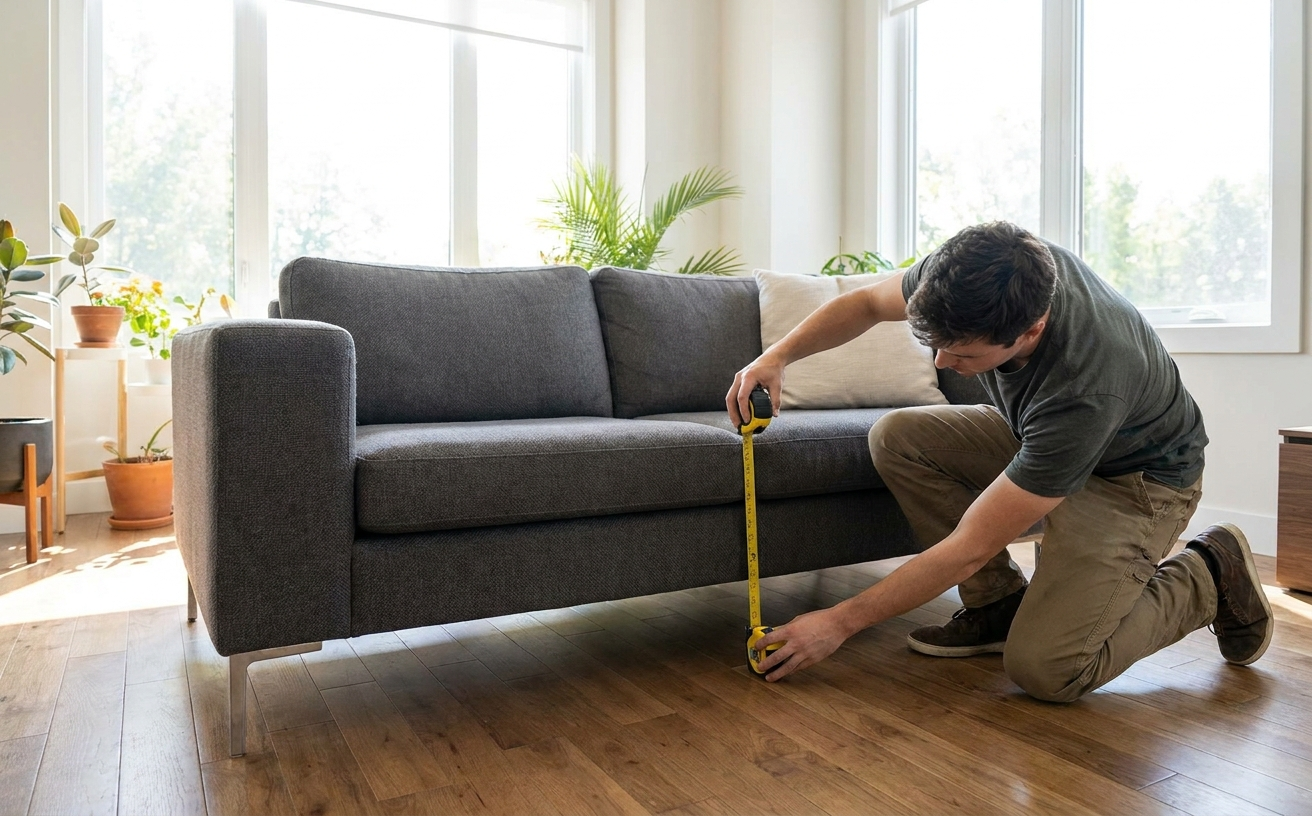
Measure furniture clearance before choosing a robot vacuum to ensure it fits underneath
FAQs
Can a robot vacuum and mop replace manual mopping entirely?
For everyday maintenance, yes. Running the robot daily or every other day keeps hard floors clean enough that most households only reach for a manual mop when handling large spills or doing a seasonal deep clean.
Should I get a robot vacuum with or without a mop?
If your home has any amount of hard flooring, the mop function is worth having. It picks up sticky residues and fine dust that vacuuming alone leaves behind. If your entire home is carpeted, a vacuum-only model saves money since the mop will rarely be used.
How often should you run a robot vacuum and mop?
Most households benefit from running the robot every one to two days. Homes with pets or young children may need daily runs. Less frequent schedules (two to three times a week) work for smaller spaces or homes without pets, though more frequent runs prevent dirt from building up between sessions.
How long do robot vacuum and mop cleaners last?
A well-maintained robot vacuum and mop typically lasts three to five years. Battery capacity gradually decreases over time, and replacement batteries are available for most models. Brushes, filters, and mop pads are consumable parts that need periodic replacement but are inexpensive relative to the unit itself.
Do I need Wi-Fi to use one?
Basic cleaning cycles work via physical buttons without Wi-Fi. You need Wi-Fi and the companion app for scheduling, custom cleaning zones, no-go areas, floor-specific settings, and firmware updates. A 2.4 GHz connection is standard.


