
How often you vacuum depends on your floors, household, and lifestyle.
Most homes stay clean with a simple rhythm: vacuum high-traffic areas daily or every other day, medium-use rooms twice a week, and low-traffic spaces once a week. Pets, allergies, and busy households push that frequency up — usually to daily in the rooms that get the most foot traffic.
Carpets need more frequent vacuuming than hard floors because the fibers hold dust and allergens you can't see. A robot vacuum changes the math entirely: instead of one long weekend session, daily short runs keep floors consistently clean with almost no effort.
Quick Summary
- Vacuum high-traffic areas daily or every other day, medium-use rooms twice a week, low-traffic areas at least weekly
- Carpet and rugs need more frequent vacuuming than hard floors because they hold dust and allergens
- Pets, allergies, asthma, kids, and busy households do best with daily vacuuming in key zones
- A common baseline is two to three times a week, then adjust by room use and season
- Robot vacuums work best on a daily or alternate-day schedule
How Often Should You Vacuum? (The Short Answer)
Vacuum high-traffic areas every day or every other day, medium-traffic areas twice a week, and all other spaces at least once a week. Carpets and rugs need more frequent cleaning than hard floors because they trap dust, dirt, and allergens. With pets or allergies, daily vacuuming is best.
Regular vacuuming also reduces dust mites and bacteria, and protects your flooring from grit damage.
| Area or Condition | Recommended Frequency | Reason |
|---|---|---|
| High-traffic areas (hallways, living rooms) | Every day or every other day | Dirt and dust build up quickly |
| Medium-traffic areas (bedrooms, studies) | Twice a week | Maintains air quality |
| Low-traffic areas (guest rooms) | Once a week | Prevents dust accumulation |
| Carpeted floors and rugs | At least twice a week | Traps dust, pollen, and allergens |
| Hardwood or tile floors | Once a week | Avoids scratches and buildup |
| Homes with pets | Daily | Controls fur and dander |
| Allergy-prone households | Daily | Reduces allergens |
If keeping this schedule feels difficult, a robot vacuum can handle the daily runs for you.
How Often Should You Vacuum Your Home: Floors, Rooms, and Living Conditions
Frequency depends on your floors, household size, and environment. Most homes land at two to three times a week overall, adjusted from there.
Household Size and Occupants
- Single person or couple: Once a week
- Families with children: Two to three times a week
- Pet owners: Daily or every other day
- Large households: Two to three times a week
Increase the frequency if anyone in the home has asthma or allergies.
Floor Type
Carpets trap dust, pollen, and pet hair deep within the fibers. Hard floors show debris faster but need gentle, regular cleaning.
| Floor Type | Recommended Frequency | Why It Matters |
|---|---|---|
| Carpet and rugs | Two to three times per week | Fibers hold dust, pollen, and allergens |
| Hardwood, tile, laminate, or vinyl | Once or twice per week | Prevents scratches and grit buildup |
| Mixed flooring homes | Adjust by surface | Focus on carpeted or pet-heavy zones |
Move the vacuum slowly over carpets to lift embedded dust. Use a soft-brush or hard-floor setting on delicate surfaces.
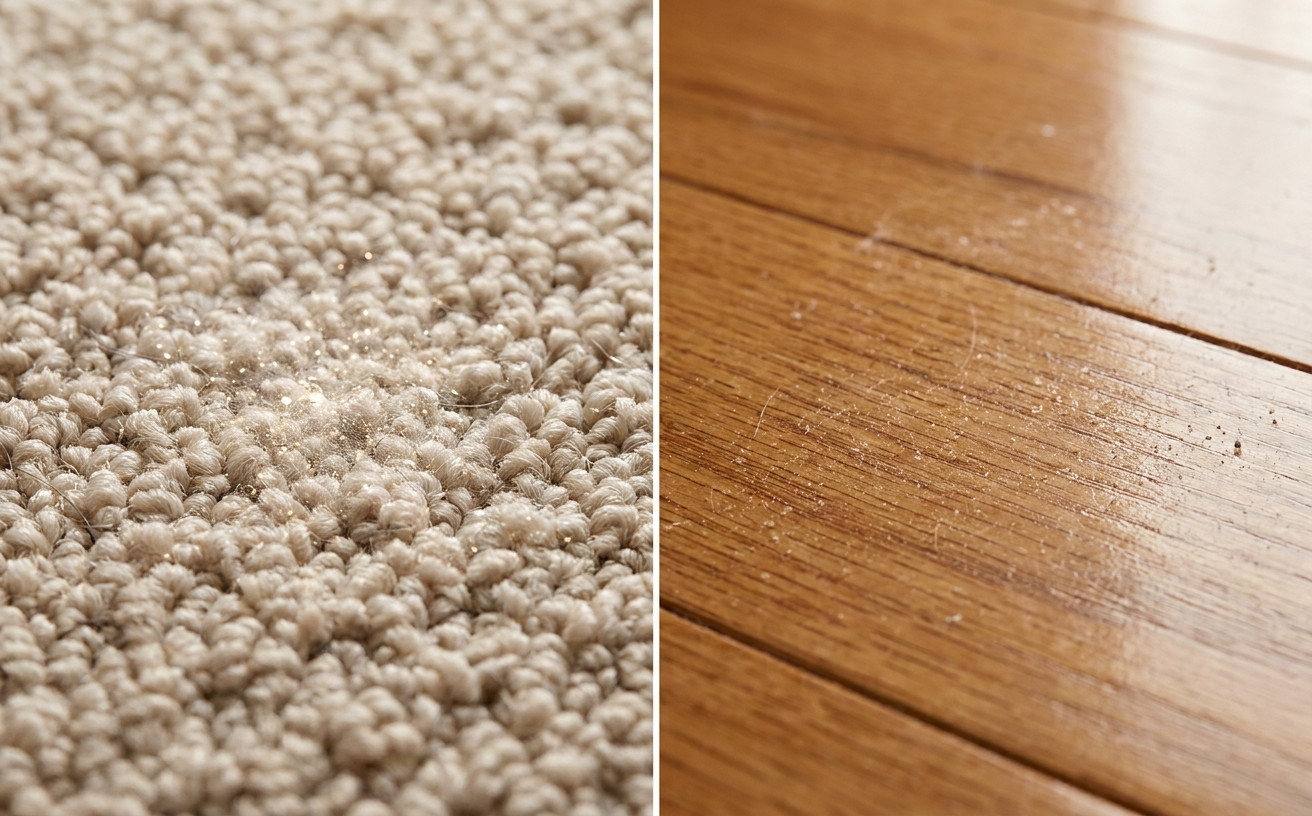
Carpets hold dust deep in their fibers; hard floors show debris faster but need gentler cleaning.
Room-by-Room Frequency Guide
- Living room and hallway: Two to three times a week
- Bedroom: Once a week
- Kitchen and dining areas: Two to three times a week — crumbs and spills attract pests
- Bathroom: Once a week — hair, lint, and dust
- Guest rooms or low-use spaces: Every one to two weeks
- Under furniture or rugs: Once a month
Open-plan homes should treat the central living area as high-traffic since dust spreads between connected spaces For a fuller room-by-room breakdown, see how often to vacuum each room.
Location and Lifestyle
- Urban homes: Two to three times a week (fine dust and pollution)
- Coastal or rural areas: More frequent cleaning near entryways (sand and soil)
- Australian climate: Two to three times a week, especially in spring and summer for pollen
- Allergy-prone households: Daily, with a HEPA-filter vacuum
During pollen-heavy months, vacuum more often and keep windows closed.
How Often Should You Use a Robot Vacuum?
A robot vacuum is built for daily upkeep, not deep cleaning sessions. Most homes benefit from a daily run in high-traffic areas — living room, hallway, kitchen.
Smaller apartments or single-person households can run every other day. Larger homes, families with kids, or pet households should run daily. Frequent short cycles remove dust before it builds up and becomes harder to lift.
| Household Type | Recommended Frequency | Reason |
|---|---|---|
| Small apartment or single occupant | Every other day | Light buildup |
| Family home or large household | Daily | More foot traffic and debris |
| Homes with pets | Daily | Fur, dander, tracked-in dirt |
| Allergy-prone or urban homes | Daily | Fine dust and allergens |
Smart mapping and adaptive cleaning let the vacuum focus on areas that get dirty faster without manual input.
The Narwal Freo Z10 Ultra fits this routine: AI DirtSense™ adjusts cleaning intensity based on how dirty the floor is, while the 120-day self-emptying base and auto-cleaning mop system make daily or alternate-day operation low-maintenance.
[cta:narwal-freo-z10-ultra-robot-vacuum-mop]
Run your robot vacuum daily if possible, every other day in smaller homes. Consistent short cycles beat occasional long sessions.
How Often Should You Vacuum with Pets or Allergies

Homes with pets or allergies need daily or every-other-day vacuuming.
Homes with pets or allergy-prone family members need daily or every-other-day vacuuming. Pet hair, dander, and fine dust settle quickly and trigger irritation For more background, see what dust is..
If You Have Pets
- Daily cleaning in shared spaces keeps hair from building up and reduces odors
- Use a vacuum with strong suction and a tangle-free brush roll for long or thick fur
- Focus on corners, under furniture, and baseboards
- During shedding seasons or multi-pet homes, schedule a daily robot vacuum run
If You Have Allergies or Asthma
- Vacuum daily with a HEPA-filter vacuum
- Clean or replace filters regularly to maintain suction and filtration
- Pair the vacuum with an air purifier
- During high-pollen months, close windows while vacuuming and increase frequency
For pet or allergy households, the Narwal Freo Z10 Ultra is built for this: the DualFlow Tangle-Free system (SGS-certified 0% hair tangle rate) prevents pet hair clogging, the anti-bacterial 2.5L disposable dust bag captures dander and fine debris, and hot-water mop washing (up to 167°F / 75°C) keeps the mop heads hygienic for daily floor cleaning.
FAQs
Does frequent vacuuming damage carpets or hardwood floors?
No. Use a soft-roller brush for hardwood and a motorized beater bar for carpets. Cleaning the brushes and wheels regularly prevents trapped grit from scratching your floor's finish.
Can daily vacuuming replace professional carpet cleaning?
No. Vacuuming removes surface debris but cannot reach deep bacteria, oily residues, or allergens trapped at the base of carpet fibers. Get a professional deep clean every 12 to 18 months.
How often should I empty my robot vacuum's dustbin?
Empty the onboard dustbin every 2 to 3 cleaning cycles, or weekly for daily users. Self-emptying models compress debris into a base-station bag that can last up to 120 days.
How often should you sweep and mop floors?
Sweep or vacuum hard floors twice a week to remove grit before it scratches. Mop weekly in low-traffic rooms and two to three times a week in kitchens and high-spill areas.
Is it better to vacuum or mop first?
Vacuum first, then mop. Vacuuming lifts hair and loose debris that would otherwise smear on a damp mop. Robot vacuum-and-mop combos handle both in one pass automatically.
Can vacuuming too much wear out the carpet fibers?
No. The dirt and grit left in the carpet acts like sandpaper and frays the fibers when walked on. Frequent vacuuming removes that grit and helps carpets last longer.
Conclusion: Find the Right Vacuuming Routine for Your Home
Clean often, not occasionally. The schedule depends on your floors, household size, and lifestyle.
- Most homes: High-traffic areas every day, medium-use areas twice a week, low-traffic rooms once a week
- Pets or allergies: Daily
- Robot vacuum users: Daily or every other day
Regular vacuuming improves indoor air quality and extends floor life. A robot vacuum or wet-and-dry vacuum makes the routine easier to keep.
Start with what fits your lifestyle and stay consistent. To explore tools for daily cleaning, visit Narwal Australia, browse the latest robot vacuums, or check the wet and dry vacuums.


