
DIY cleaning ingredients ready for mixing a robot vacuum floor solution
DIY cleaning solutions made from baking soda, soap, and vinegar are cost-friendly, non-toxic, and well suited to households with kids or pets. They're not the only option, though — plain water and pH-neutral commercial cleaners are safe alternatives when you'd rather skip the mixing.
This guide covers DIY recipes for parquet, marble, and concrete floors, along with ready-made alternatives and safety tips for protecting your robot vacuum.
Quick Summary
- Different floor types need different DIY cleaning solutions, especially delicate surfaces like parquet and stone.
- Use only low-foam, diluted ingredients to avoid residue and reduce the risk of damaging your robot vacuum.
- Test any DIY solution on a small area first, particularly on sensitive or polished floors.
- Do not put acidic solutions like vinegar into a robot vacuum's water tank unless the product manual clearly allows it.
- In hard water areas, distilled water can help reduce residue build-up inside the robot vacuum.
- Plain water and pH-neutral commercial cleaners are safe alternatives to proprietary detergent for daily mopping.
- For Narwal robot vacuums, the official cleaning solution is recommended when using the water tank.
What Cleaning Solution Can You Put in a Robot Vacuum
Most robot vacuums accept one of three options in the water tank: the manufacturer's official cleaning solution, a mild DIY solution with low-foam ingredients, or plain water. Which one to use depends on your model, your floor type, and how heavy the mess is.
Always check the product manual first — some models only allow water. Avoid bleach, ammonia, and heavy fragrances, as these can corrode rubber seals and plastic parts over time.
Why Use a DIY Cleaning Solution for Your Robot Vacuum?
DIY cleaning solutions offer practical benefits over commercial floor cleaners, especially for households that want more control over what goes on their floors.
Cost savings
Common household ingredients like baking soda and soap cost a fraction of commercial floor cleaners.
Safer for families
Mild, non-toxic ingredients reduce chemical exposure in homes with children or pets.
Tailored to your floors
DIY solutions can be adjusted — gentler for parquet, stronger for outdoor concrete.
Lower environmental impact
Homemade solutions reduce single-use plastic and can be made from biodegradable ingredients.
DIY Robot Vacuum Cleaning Solution Recipes for Every Floor Type
The right DIY recipe depends on the flooring you're cleaning. Below are solutions for three common floor types.
Parquet Flooring
Parquet is delicate and requires extra care. Here's a simple recipe:
- Fill a bucket with 2–3 litres of warm water.
- Add 2–2.5 tablespoons of baking soda and a small piece of soap.
- Mix well until fully dissolved.
- Use a damp microfiber cloth to spread the solution across the floor.
- Let the robot vacuum mop the floor.
- Allow the floor to dry completely.
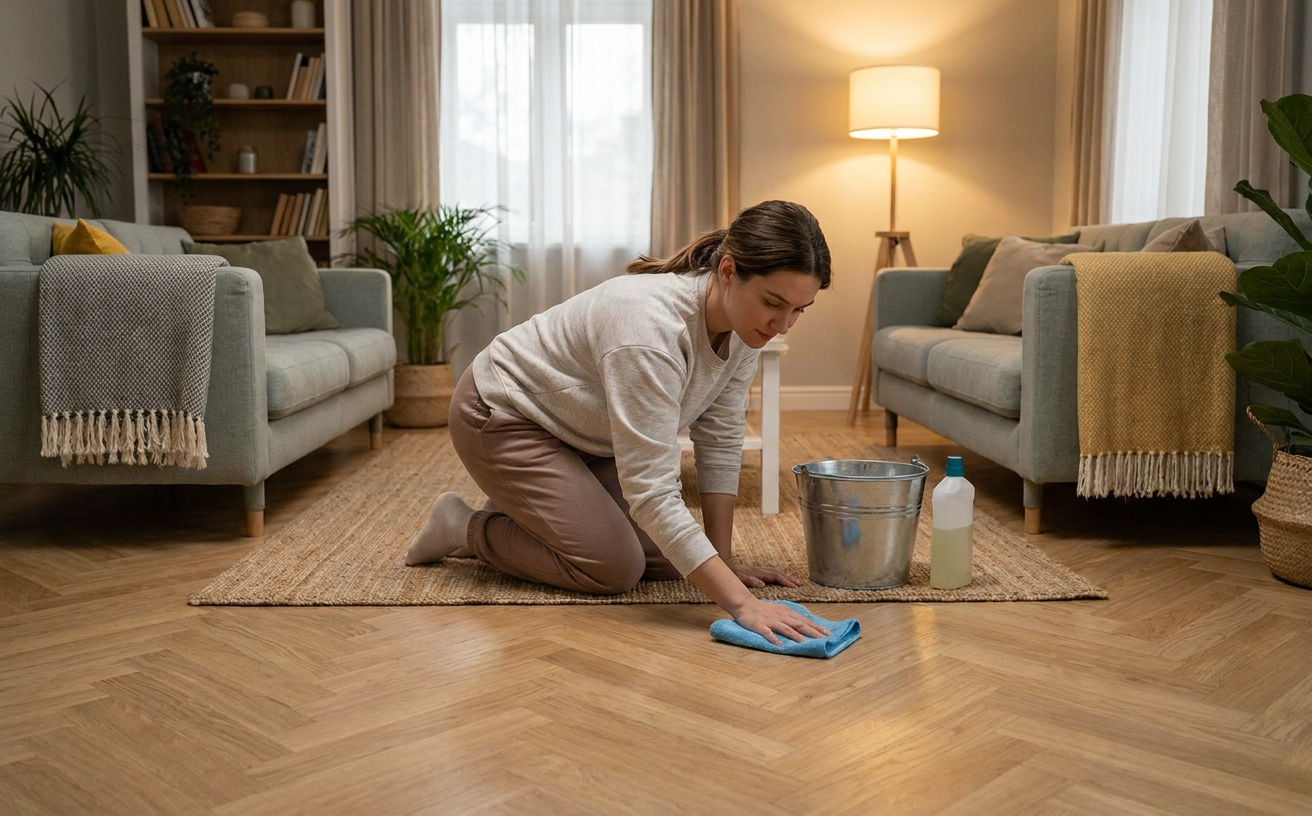
Applying a gentle DIY cleaning solution to parquet flooring
Warning: If the floor has pet urine stains, dry them thoroughly first using newspapers or an old cloth before cleaning.
Tips for parquet floors:
- If your robot vacuum's manual allows it, you can pour the DIY solution into the water tank.
- For extra shine, add 1 tablespoon of white linseed oil. This vegetable oil can help nourish the wood.
- You can also add a small amount of Narwal cleaning solution to the water tank for faster drying and better results.
Marble or Stone Floors
Marble and stone are durable but still need a gentle approach. Here's the recipe:
- Fill a bucket with 2–3 litres of water.
- Add 1 drop of liquid dish soap and let it dissolve fully.
- Add about 10 tablespoons of denatured alcohol and 3 tablespoons of baking soda.
- Mix well.
- Use the solution to wash the floor.
Warning: Do not use too much dish soap — excess foam is difficult to rinse away.
Tip: Use a well-wrung microfiber cloth to avoid leaving too much water or foam on the surface.
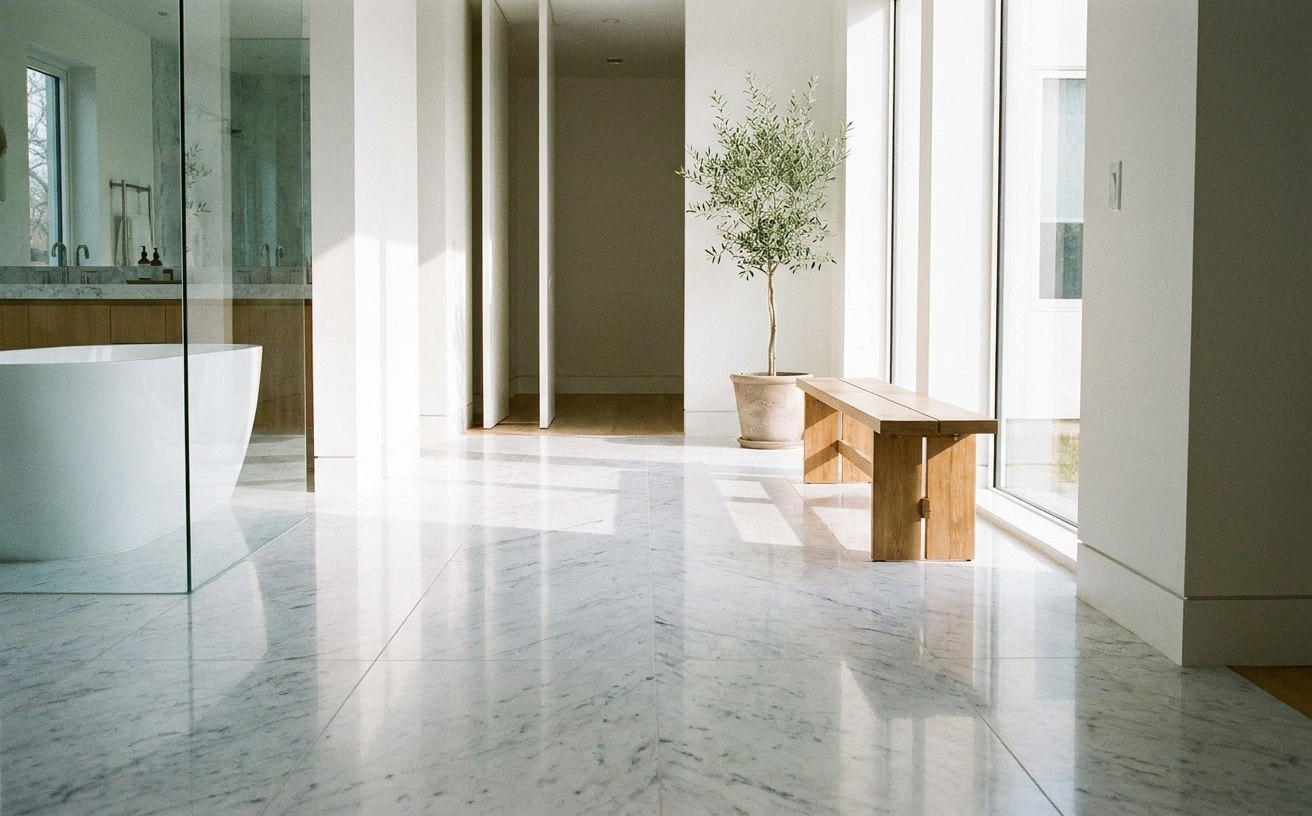
Marble floors need a gentle cleaning approach to maintain their finish
Ceramic or Concrete Floors
Ceramic and concrete floors are common in outdoor spaces, where exposure to rain, wind, and dirt leads to heavier build-up.
Warning: This mixture contains vinegar and may not be suitable for polished floors. Do not put this solution in the robot vacuum's tank — acidic substances can damage internal components.
- Fill a bucket with 2.5–3 litres of water.
- Add 1 drop of dish soap.
- Add 4 tablespoons of vinegar and 4 tablespoons of denatured alcohol.
- Mix well.
- Spread the solution on the floor and let the robot vacuum clean the area.
This recipe works best for outdoor ceramic or concrete floors.
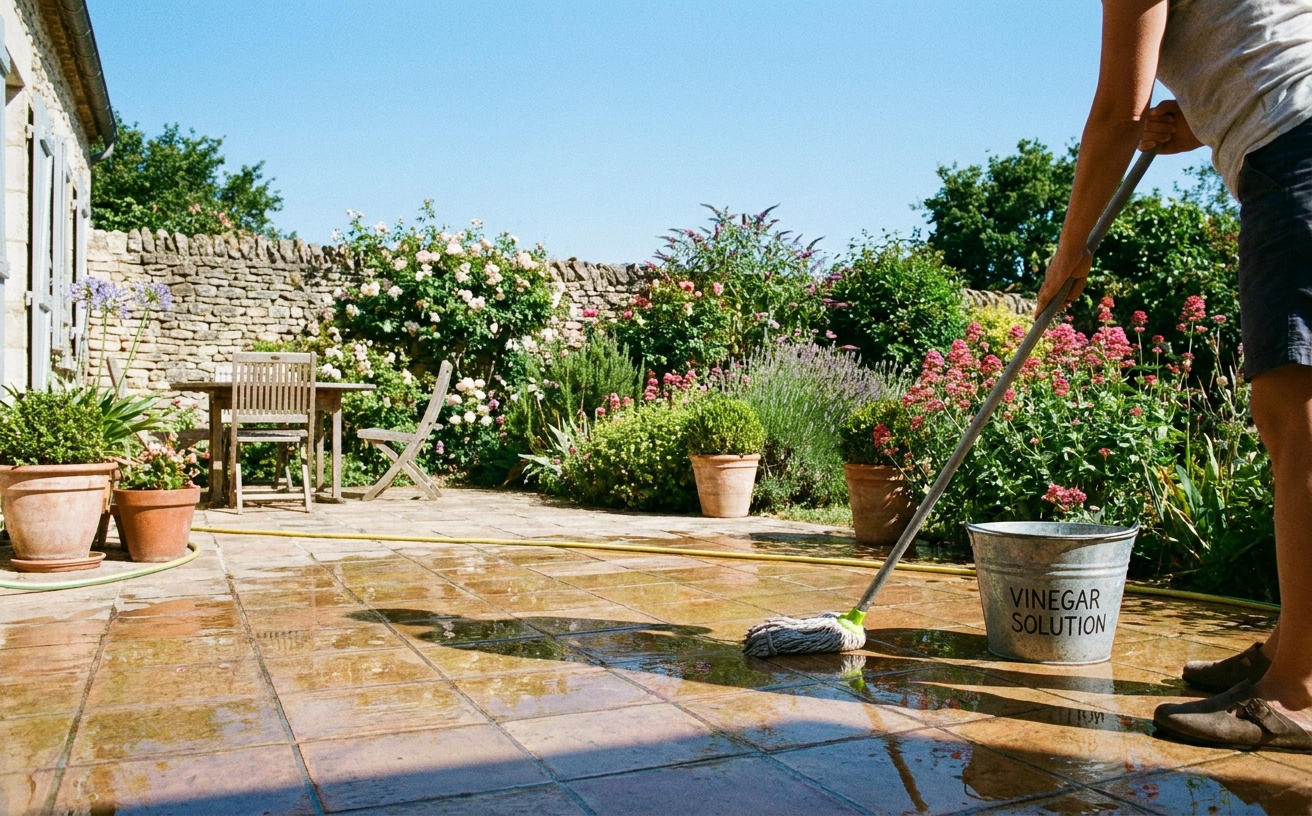
A vinegar-based DIY solution works well on outdoor ceramic and concrete floors
Tips for Safely Using DIY Cleaning Solutions in Robot Vacuums
Safe preparation matters as much as the recipe. Follow these steps to protect both your floors and your robot vacuum.
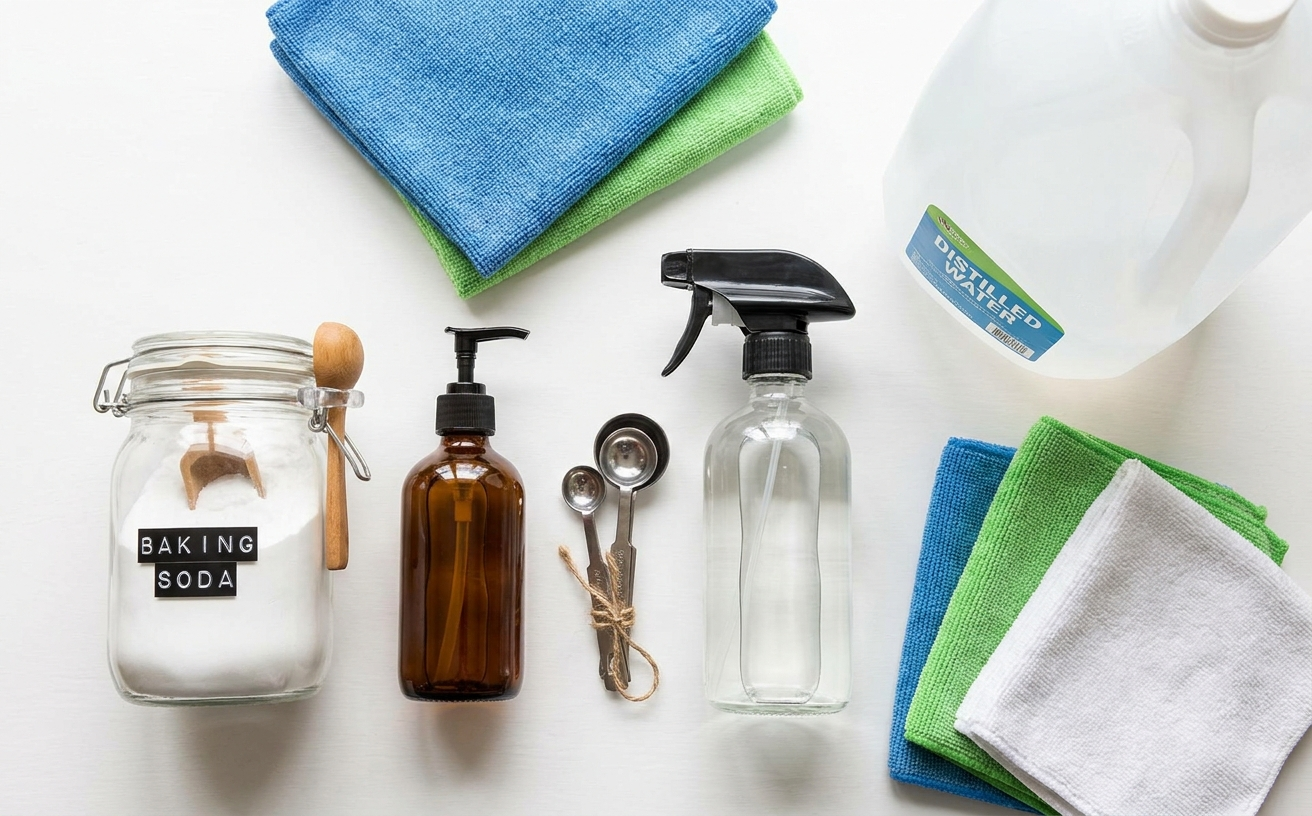
Essential supplies for preparing a safe DIY robot vacuum cleaning solution
Gather ingredients first
Depending on the recipe, you'll need baking soda, dish soap, distilled water, vinegar, or denatured alcohol.
Use clean containers and tools
Residue from other cleaning products can affect the performance of your DIY solution.
Mix thoroughly
A fully dissolved solution is less likely to leave uneven residue.
Store properly
Keep leftover solution in a sealed, non-transparent container. Label it with the type and date.
Test on a small area
This is especially important for delicate, polished, or specially finished surfaces.
Use distilled water in hard water areas
In parts of Australia with hard water, distilled water can help reduce mineral build-up inside the robot vacuum.
Safe Alternatives to Robot Vacuum Cleaning Solution
If you'd rather not mix a DIY solution, these ready-made options can work for daily mopping without risking damage to your machine.
Plain water is the simplest and safest choice. It won't leave residue, won't harm seals or pumps, and handles light dust and everyday dirt effectively. Most robot vacuums run fine on water alone for routine cleaning.
pH-neutral, low-foam commercial cleaners designed for hard floors work in some models. Choose products free from bleach, ammonia, and heavy oils. Dilute generously — a tiny amount per tank is usually enough. Excessive soap creates foam that can trigger overflow errors or clog the system.
Official manufacturer solutions are formulated for the machine's dispensing system and internal components. Models with automatic detergent dispensing, such as the Narwal Freo Z10 Ultra robot vacuum and mop, should use the recommended solution for that system to ensure proper dilution without residue.
Warranty note: Using non-official solutions may void your warranty if the machine is damaged as a result. Check your product manual or contact the manufacturer before switching.
Keep Your Floors Spotless with Safe and Custom Robot Vacuum Solutions
Whether you're cleaning parquet, stone, tile, or concrete, match the solution to the surface, use low-foam ingredients, and follow your product manual before adding anything to the water tank.
For Narwal models, the official cleaning solution is recommended for use in the water tank. The Narwal Flow robot vacuum and mop features a real-time self-cleaning mopping system with 113°F warm water rinse and 12N mopping pressure, keeping the mop fresh throughout every cleaning cycle.
FAQs
Can I use a DIY cleaning solution with any robot vacuum?
Not always. Some robot vacuums only allow water in the tank, while others accept specific low-foam solutions. Check your product manual before adding anything other than water, and test on a small floor area first.
What ingredients should I avoid in DIY solutions?
Avoid bleach, ammonia, mineral oils, and abrasive materials such as coarse salt or sand. These can damage floors or corrode internal components like rubber seals and plastic tubing.
Can I use vinegar in Narwal robot vacuums?
Do not add vinegar to the water tank. Acidic ingredients can damage internal parts over time. Vinegar-based solutions should only be applied manually on suitable surfaces like ceramic or concrete, followed by a clean water rinse. For daily mopping, plain water is the safest alternative.
What should you not use to clean hardwood floors?
Avoid steam cleaners, excessive water, vinegar, bleach, ammonia-based products, and abrasive scrubbers. These can strip the finish, cause warping, or leave permanent marks. Use a damp mop with a gentle, pH-neutral solution instead.


