
An auto vacuum and mop is a floor-cleaning device that vacuums dry debris and mops hard floors in a single pass, then returns to its dock to wash, dry, and recharge without manual input. The latest models go further: they adjust suction based on floor type, lift mop pads when crossing carpet, and sterilise their own cleaning pads with hot water between runs.
An auto vacuum and mop working across a typical Australian open-plan living area
How Does an Automatic Vacuum and Mop Work?
When the robot leaves the dock, it maps your home using LiDAR or camera-based navigation, plans an efficient route, and begins cleaning room by room. The vacuum motor pulls in dust, crumbs, hair, and fine particles from hard floors and carpets. At the same time, the mop pads press against hard floors with measured downward force to scrub away dried spills and embedded grime. When the pads get dirty, the robot returns to the dock to rinse them with clean water before continuing.
After the full cycle, the dock washes the mop pads with heated water, dries them to prevent mould, empties collected dust into a sealed bag, and refills the onboard water tank for the next session. On a well-designed automatic vacuum and mop, this means you can run the machine daily without touching it for weeks. For a step-by-step walkthrough of setup and daily use, see our robot vacuum mopping guide.
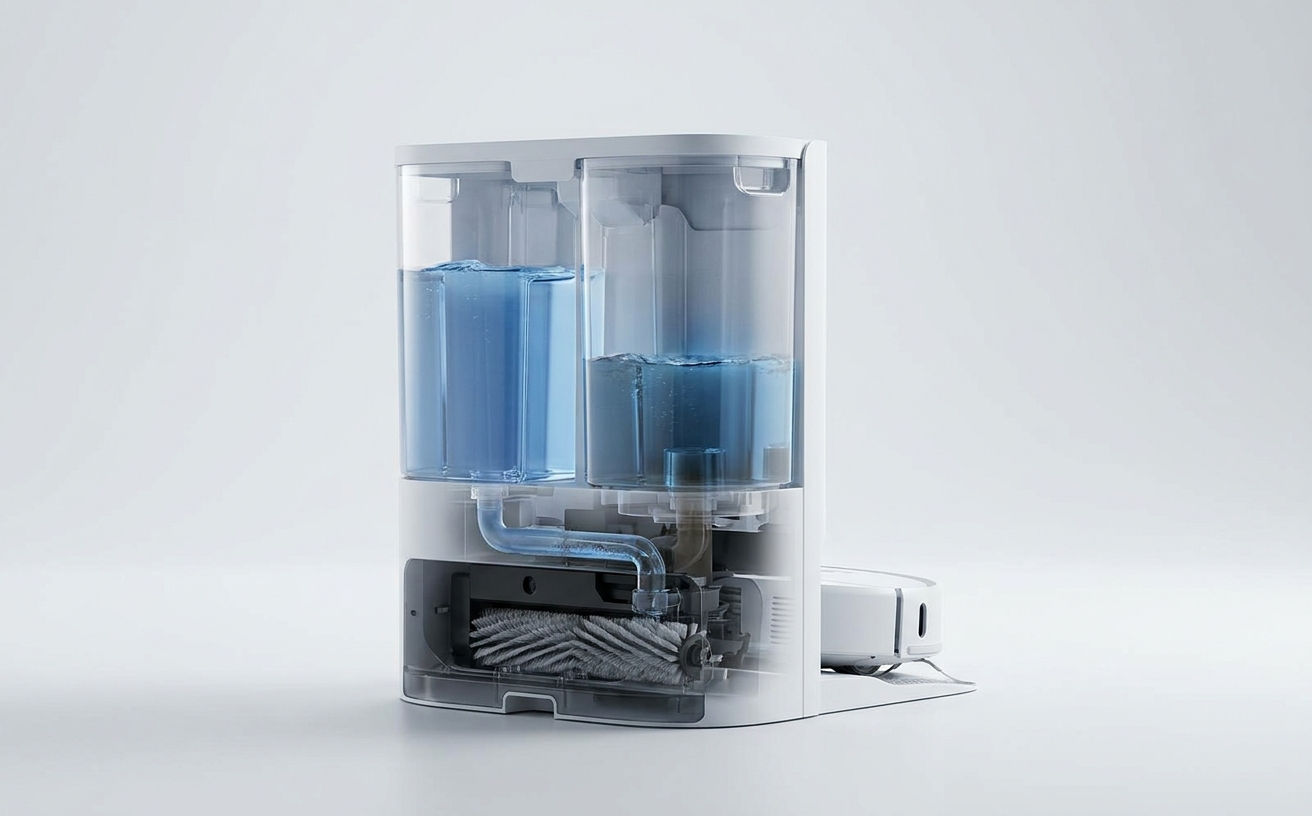
A self-cleaning dock station handling mop washing, drying, and dust collection automatically
Why Auto Vacuum and Mop Suits Australian Homes
Australian households face a specific combination of dust exposure, pet hair, and mixed flooring that makes a mop and vacuum combo more effective than running separate machines.
Outdoor Dust and Fine Particulate
Fine particulate matter carried by wind settles indoors through doors, windows, and ventilation, coating hard floors with a thin film that vacuuming alone does not fully remove. An automatic vacuum and mop tackles both visible debris and finer residue in the same pass.
Pet Hair and Tracked-In Dirt
Over 60 per cent of Australian households have at least one pet, and fur, dander, and tracked-in dirt from yards create ongoing cleaning demands. A machine that vacuums hair, mops paw prints, and keeps its own brushes tangle-free handles what would otherwise be a daily manual chore.
Mixed Floor Types
Many Australian homes combine timber or laminate in living areas, tiles in kitchens and bathrooms, and carpet in bedrooms. An effective auto vacuum and mop detects these transitions automatically, adjusts suction for carpet, lifts its mop pads to keep rugs dry, and switches cleaning modes without manual input.
What to Look for in an Auto Vacuum and Mop
The gap between a basic robot with a mop pad and a fully automated floor-care system comes down to five features.
Suction Power
Suction determines how well a robot picks up fine dust, embedded hair, and heavier debris like cereal or sand. For daily cleaning on hard floors, 8,000 Pa to 12,000 Pa is adequate. Homes with carpet or heavier debris loads benefit from 15,000 Pa or above, since carpet fibres trap particles that lower suction cannot dislodge. The Narwal Flow robot vacuum and mop sits at 22,000 Pa, which places it at the top of the current range.
Mopping Pressure and Mechanism
A mop pad that simply drags across the floor dampens the surface but does not scrub dried stains. Effective mopping requires downward pressure, typically 8N to 12N from rotating or rolling pads, combined with clean water delivery during the cycle. Look for models that rinse or replace dirty water mid-session rather than reusing it. The Narwal Flow applies 12N through a track-roller system and rinses the roller with 113°F warm water in real time, so the pad stays clean throughout each pass.
Self-Cleaning Dock
The dock is what separates a hands-free robot from one that still needs regular manual cleaning. A capable dock should wash mop pads with heated water, dry them to prevent mould, empty the dustbin into a sealed bag, and dispense cleaning solution on its own. Hot-water washing at 140°F or above provides better hygiene than cold or warm rinses. The Narwal Flow dock goes to 176°F across the mop, internal pipes, and water tank, then dries pads with 104°F warm air.
Navigation and Obstacle Avoidance
A robot that bumps into furniture or misses sections of the room wastes time and leaves dirty patches. LiDAR-based navigation creates accurate room maps and plans efficient routes. Camera-assisted obstacle detection adds the ability to identify and avoid small objects like cables, shoes, and pet bowls. Models with dual-camera systems and onboard AI chips provide the most reliable avoidance in cluttered spaces. The Narwal Flow uses dual 136° RGB cameras paired with a dedicated AI chip for real-time object recognition.
Carpet Detection and Mop Lifting
Without automatic carpet detection, wet mop pads soak your rugs every time the robot crosses a transition. Ultrasonic or infrared sensors should identify carpet and raise the mop before the robot rolls onto it. A lift height of 12mm is the current premium standard and keeps most carpet types dry.
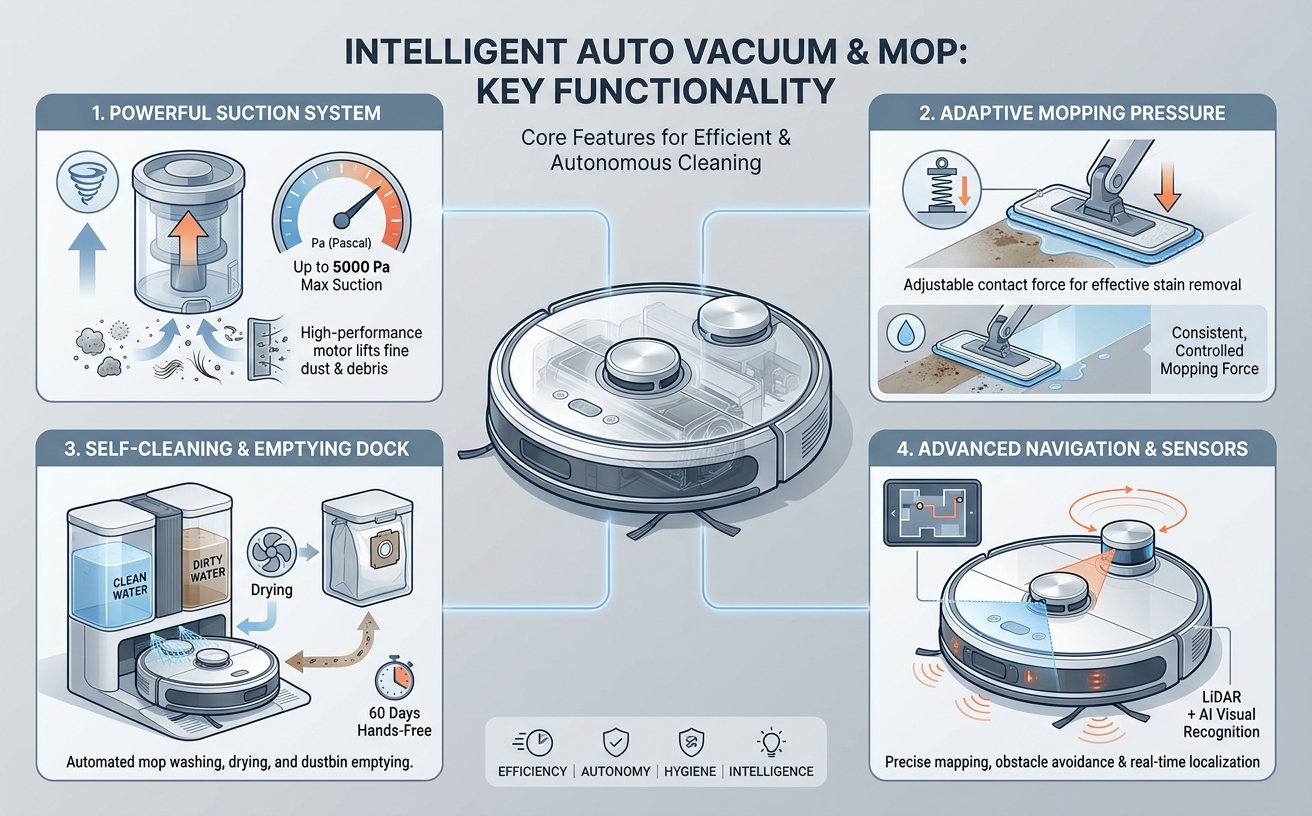
Key features that define a high-performing automatic vacuum and mop
Does an Auto Vacuum and Mop Work on Carpet?
Hard floors including tiles, timber, laminate, vinyl, and polished concrete are where an auto vacuum and mop performs best. Carpet requires more nuance. A good automatic vacuum and mop detects carpet using ultrasonic or infrared sensors, lifts its mop pads to avoid dampening the fibres, and increases suction on low-pile carpet to pull embedded dust and hair. On thicker high-pile carpet, some models avoid the area entirely.
The Narwal Flow handles carpet transitions with 12mm automatic mop lifting and a CarpetFocus system that lowers its brush cover to create a sealed high-pressure zone, boosting pickup by 182 per cent over its standard suction mode.
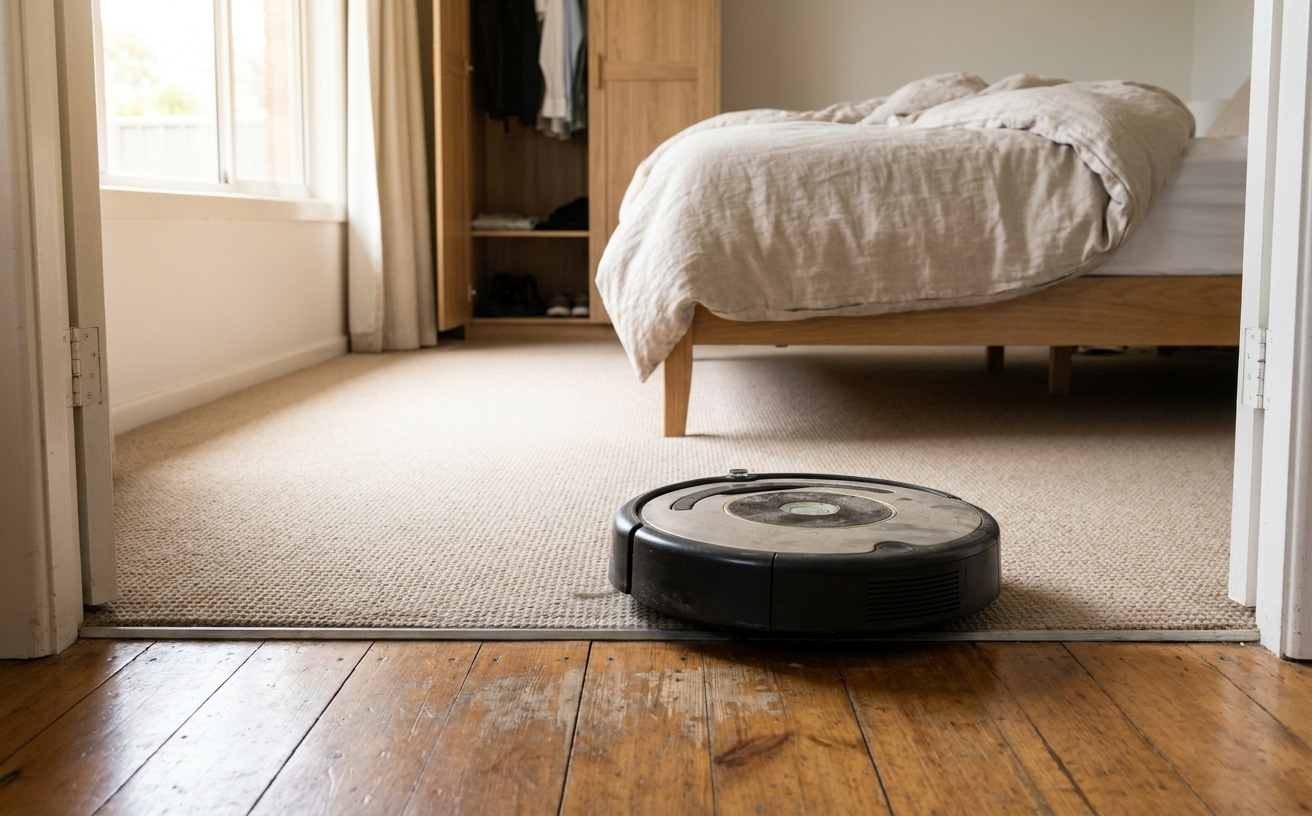
An auto vacuum and mop transitioning between hard floor and carpet with automatic mop lifting
Which Auto Vacuum and Mop Is Right for Your Home?
The right model depends on your floor area, floor types, and how much manual upkeep you want to avoid. Our robotic vacuum cleaner and mop overview covers the full Narwal range in detail.
Large Open-Plan Homes
For homes with open-plan layouts exceeding 150 square metres, runtime and water capacity are the priority. A battery of 5,000 mAh or above and a dock with automatic water refill allow extended cleaning without interruption. The Narwal Flow robot vacuum and mop runs on a 6,400 mAh battery with 90-minute runtime and supports an optional auto water refill and drainage system, making it suited to multi-room floor plans.
Apartments and Smaller Layouts
For smaller apartments or single-storey homes, a mid-range model covers daily needs without the flagship price. The Narwal Freo X10 Pro robot vacuum and mop offers 11,000 Pa suction, a patented Reuleaux triangular mop with 8N pressure, a 120-day self-emptying dock, and a MopExtend system that swings into edges and toe kicks.
Spot Cleaning and On-Demand Use
If your main concern is kitchen spills or quick daily maintenance on hard floors, a cordless wet and dry vacuum complements or replaces a robot. The Narwal S30 Pro cordless wet and dry vacuum delivers 20,000 Pa suction with 20N downward mopping force, built-in scissors that cut through tangled hair, and 194°F hot-water self-cleaning. At 4.35 kg, it is light enough for daily handheld use and pairs well with a robot for on-demand cleanup.
Narwal Auto Vacuum and Mop Models Compared
| Feature | Narwal Flow | Narwal Freo X10 Pro | Narwal S30 Pro |
|---|---|---|---|
| Type | Robot vacuum & mop | Robot vacuum & mop | Cordless wet & dry vacuum |
| Suction Power | 22,000 Pa | 11,000 Pa | 20,000 Pa |
| Mopping Pressure | 12N | 8N | 20N |
| Self-Cleaning Dock | Yes, 176°F hot water | Yes, 104°F hot air drying | Yes, 194°F hot water |
| Dust Storage | 120 days, 2.5L bag | 120 days | Disposable waste bag |
| Anti-Tangle System | DualFlow, SGS certified | DualFlow, SGS certified | Built-in scissors + comb |
| Navigation | Dual RGB cameras + AI chip | 3D structured light | Manual (handheld) |
| Battery / Runtime | 6,400 mAh / 90 min | 5,000 mAh | 4,000 mAh / 60 min |
| Best For | Large homes, deep mopping | Mid-size homes, daily cleaning | Targeted spills, kitchen cleanup |
For most Australian households looking for a single auto vacuum and mop, the Narwal Flow is the strongest overall pick. It combines the highest suction in the lineup with the deepest mopping pressure, the most thorough dock hygiene system, and AI-driven navigation that handles cluttered rooms. The Narwal Freo X10 Pro suits more compact homes that still need daily vacuuming and mopping at a lower price point. The Narwal S30 Pro fills a different role for immediate, targeted messes and pairs well with a robot for homes that need both scheduled and on-demand cleaning. For a broader comparison including third-party models, see our best robot vacuum and mop picks for Australia.
How Much Maintenance Does an Auto Vacuum and Mop Need?
Day to day, a well-designed model handles mop washing, drying, dust emptying, and water refilling on its own. Over weeks and months, you will need to empty the dust bag (every 60 to 120 days depending on debris volume), refill cleaning solution, and occasionally rinse the dock’s water tank to prevent mineral buildup. Brush replacement is typically needed every three to six months.
Mop drying is where models diverge most. Docks with heated air drying prevent mould and odour on the pads, which matters in humid Australian coastal climates. The Narwal Flow uses 104°F warm air drying at only 39 dB, quiet enough to run overnight. Models without heated drying tend to develop musty smells faster, particularly during summer in Queensland or northern New South Wales.
Is an Auto Vacuum and Mop Worth It in Australia?
If you vacuum and mop separately, each session takes 30 to 60 minutes depending on home size. Over a year, that adds up to well over 100 hours. A robot that runs daily while you are at work or asleep recovers that time entirely.
The price range for a capable automatic vacuum and mop in Australia runs from around $999 for models with basic dock features to $2,999 for flagships with full automation, hot-water cleaning, and advanced navigation. The higher-end models earn back their cost through reduced maintenance time, better cleaning consistency, and longer intervals between manual intervention.
For pet owners, allergy sufferers, or anyone maintaining more than 100 square metres of floor space, an auto vacuum and mop is one of the most practical home cleaning investments available in Australia in 2026.
An Australian household enjoying clean floors maintained by an auto vacuum and mop
FAQs
How often should I run an automatic vacuum and mop?
Daily runs work best for homes with pets or high foot traffic. For lighter cleaning needs, every second day is usually sufficient. Most models support app-based scheduling.
Do robot vacuum mops use a lot of water?
Most onboard tanks hold 200 ml to 800 ml, enough for a full session covering 100 to 200 square metres. Docks with auto refill systems top up the tank between rooms, so dock refills are only needed every few days.
Will an auto vacuum and mop damage timber floors?
Not if the machine has floor-type detection and adjustable mop pressure. Narwal robots lower mop pressure to 7N on detected wood surfaces and reduce water flow to a drier setting, cleaning effectively without risking swelling or warping.
Do robot mops leave the floor wet?
Well-designed models leave floors dry to the touch within a minute or two. Machines with controlled water output and active suction extract excess moisture during mopping rather than flooding the surface. On wood floors, models like the Narwal Flow further reduce water flow automatically.
How long do robot vacuum mops last?
Most quality robot vacuum mops are built for three to five years of daily use. Consumables like mop pads, brushes, and dust bags need periodic replacement, but the robot and dock themselves are designed for long-term operation. Narwal offers replacement parts through its online store.


