
Yes, robot vacuums work well on hardwood floors. They are designed to pick up dust, pet hair, and everyday grit without scratching sealed timber, as long as the robot uses soft wheels, gentle brushes, and sensible suction control.
This article explains what good hardwood cleaning looks like in real homes, including how to avoid scuffs, how mopping can stay safe on sealed boards, and which features matter most when you are choosing a model. It also highlights one top option that is well suited to regular hardwood care.
Quick Summary
- Robot vacuums work best on hardwood when they use soft wheels, non-abrasive brushes, steady suction control, and careful water use
- Hardwood is usually easier than carpet because debris stays on the surface instead of embedding in fibres
- Floor protection depends on wheel and brush materials, stable navigation, and reduced bumping against edges and furniture
- Mopping can be safe on sealed hardwood when water output is low and the floor is left close to dry
- The best hardwood models focus on consistent pickup, pet hair handling, smart mapping, scheduling, and controlled moisture rather than raw suction alone
How Robot Vacuums Perform on Hardwood Floors
Robot vacuums perform exceptionally well on hardwood floors thanks to their advanced suction systems, safe brush designs, and smart floor detection. In this section, we’ll explain how they remove debris, handle pet hair, and protect your hardwood surfaces during cleaning.
Effective Dust and Debris Removal
Robot vacuums are highly effective at picking up dust, dirt, and small debris from hardwood floors. Unlike carpets, hardwood doesn’t trap dirt, but dust and pet hair can easily accumulate and scatter. Robot vacuums use strong suction and side brushes to direct debris into the center suction path, allowing for efficient collection of fine particles.
Many models can automatically adjust suction based on floor type, ensuring optimal cleaning without applying excessive pressure or energy use. This makes them especially suitable for delicate hardwood finishes.
Handling Pet Hair and Small Debris
For homes with pets, robot vacuums are designed to pick up fur without getting tangled. Many use specialized rubber and bristle brushes that rotate at varied speeds, grabbing hair and pulling it into the dustbin while avoiding clogs.
These designs reduce maintenance needs and ensure a consistent clean, even with long-haired pets or multiple shedding animals.
Gentle on Surfaces
Concerns about scratching or damage are common when using vacuums on hardwood. Most robot vacuums today feature soft, rubberized wheels and non-abrasive brushes. These materials reduce friction, allowing the vacuum to glide smoothly and safely.
Some vacuums also have sensors that detect floor types and adjust their movement accordingly, ensuring a secure and gentle clean across all surfaces.
Learn more about whether robot vacuums scratch floors.
Water Control for Mopping
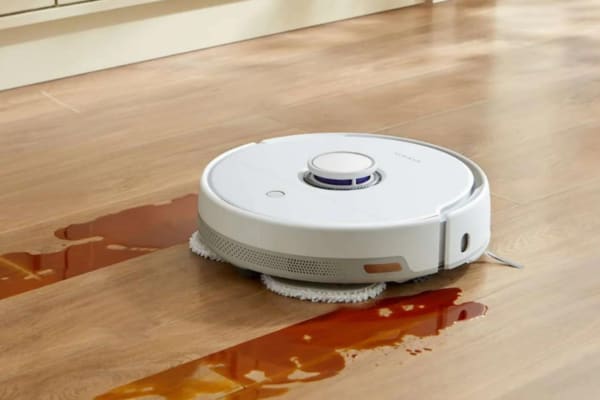
For robot vacuums with a mopping function, managing water levels is critical on hardwood. Too much moisture can warp or stain wood. High-quality models dispense only minimal water through a microfiber cloth, which absorbs moisture and leaves the floor nearly dry.
This precision helps prevent water-related damage while still achieving a hygienic clean.
Smart Features That Make Hardwood Floor Cleaning Easier
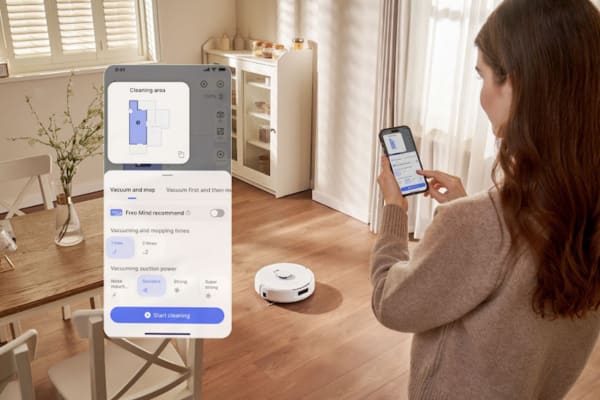
Robot vacuums make cleaning hardwood floors easier by combining automation with intelligent navigation. These smart devices can clean on a schedule, adjust suction power based on dirt levels, and map your home for precise, thorough coverage. In this section, we’ll look at how automated scheduling and smart navigation help maintain hardwood floors with minimal effort.
Automated Cleaning for Effortless Maintenance
One of the standout benefits of robot vacuums is their ability to clean automatically. You can set up a cleaning schedule, and the robot will carry out the task without needing any intervention from you. This is especially useful for hardwood floors, as it ensures regular cleaning without taking up your time or energy.
Robot vacuums adjust their cleaning strength automatically, responding to the amount of dirt they sense. This is a key advantage for hardwood floors, where dust, pet hair, and small debris can accumulate. The vacuum will increase suction when needed and use lower suction when the floor is less soiled, saving energy while still ensuring a thorough clean. Setting up routine cleaning helps keep dust and allergens from accumulating, improving indoor air quality—without any effort on your part.
Studies have shown that regular vacuuming is vital for maintaining healthy indoor environments, as it helps reduce airborne dust particles that settle on smooth surfaces. Robot vacuums do this consistently, ensuring your hardwood floors stay clean with minimal effort on your part.
Smart Navigation for Precise and Efficient Coverage
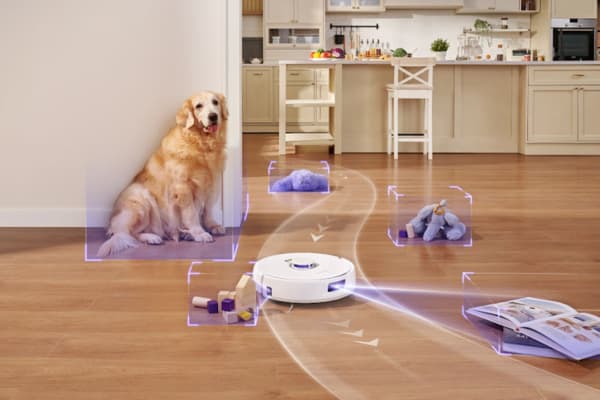
Robot vacuums use sophisticated navigation technology to maneuver around obstacles and clean hard-to-reach areas on hardwood floors with ease. With sensors that map out your home, these vacuums can calculate the best cleaning path, ensuring the entire floor area is covered, even in tricky spots.
Instead of randomly bumping into furniture and walls, robot vacuums can intelligently navigate around obstacles. This is especially beneficial on hardwood floors, where scratches or damage from repetitive bumping could be a concern. By following an efficient cleaning pattern, the robot minimizes collisions and ensures thorough coverage of your entire floor.
Many modern models also use LIDAR (Light Detection and Ranging) technology to scan the environment and create detailed floor plans. This technology not only helps the vacuum map out your home's layout but also ensures that it avoids missing areas, covering every inch of the floor. According to industry studies, robot vacuums with advanced mapping capabilities, like LIDAR, can improve cleaning efficiency by 40% or more, especially in larger or more complex room layouts.
Thanks to these automated and smart features, robot vacuums offer an efficient solution for keeping hardwood floors spotless. They can clean regularly, tackle tricky spots, and provide a level of consistency that manual cleaning can't always match.
Selecting the Best Robot Vacuum for Hardwood Floors
To get the best performance on hardwood floors, look for the following features in a robot vacuum:
- Auto-Suction Adjustment: This ensures the vacuum adapts to the surface it’s cleaning, providing optimal suction on hardwood floors.
- Soft Brushes and Wheels: These prevent scratches and scuff marks, allowing the vacuum to glide smoothly across the floor.
- Efficient Mopping System: If you need a vacuum with mopping capabilities, choose one with a controlled water dispensing system.
- Advanced Navigation: Look for a robot with smart mapping and edge-cleaning functions to ensure thorough coverage, including hard-to-reach corners.
Top Robot Vacuum Model for Hardwood Floors
If you’re looking for a robot vacuum that excels on hardwood floors, the Narwal Freo Z Ultra stands out. It combines advanced technology, powerful cleaning performance, and key features designed to maintain your hardwood floors without compromising privacy.
[cta:narwal-freo-z-ultra-robotic-vacuum-and-mop-cleaner-clean-before-you-even-notice]
Powerful and Smart Cleaning
- 12,000Pa Suction: The Freo Z Ultra provides robust suction power to effectively pick up dust, dirt, and pet hair from hardwood floors.
- AI-Powered Cleaning: Equipped with dual cameras and AI, it adapts in real time to different messes, optimizing cleaning by switching between vacuuming and mopping based on detected dirt or liquid.
Privacy Protection
- Local Data Processing: The dual RGB cameras process data locally on the device, ensuring no footage is uploaded to the cloud. This ensures your data remains secure, as it never leaves your home.
- TUV Certified Security: With a focus on privacy, the Freo Z Ultra is TUV certified, guaranteeing safe and secure data handling.
Quiet and Efficient Operation
- Quiet Operation: The Freo Z Ultra delivers strong suction while maintaining a peaceful 53dB, making it perfect for routine cleaning without disturbing your home.
Self-Cleaning and Maintenance
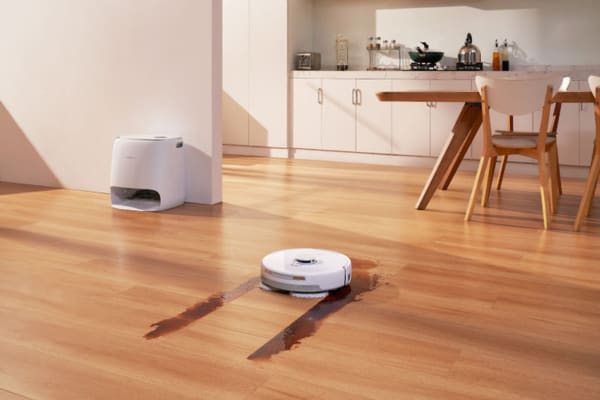
- Self-Cleaning Mop: The robot automatically cleans and dries its mop, ensuring it stays hygienic after every use without extra effort on your part.
- Self-emptying Dustbin: The robot automatically transfers debris into a sealed bag, storing up to 120 days' worth of dust, minimizing frequent upkeep.
Hardwood Floor-Friendly Features
- No Water Damage: The Freo Z Ultra controls water usage carefully to prevent moisture damage to your hardwood floors, ensuring safe and efficient cleaning.
The Narwal Freo Z Ultra is an ideal choice for those with hardwood floors, offering strong suction, smart AI cleaning, and a focus on privacy. Its advanced features make it a reliable, efficient, and secure solution for keeping your home spotless.
Conclusion
Robot vacuums are an efficient, low-maintenance way to keep hardwood floors clean and protected. With features like adaptive suction, floor-safe brushes, and precision mopping, they simplify daily cleaning while preserving your floor’s finish.
If you’re looking for a reliable model, explore the best robot vacuums for hardwood floors available at Narwal AU. Let smart technology handle the mess, so your floors stay spotless with less effort.
Are robot vacuums safer on hardwood than traditional vacuums?
They often can be, especially when designed with soft wheels, gentle brushes, and better obstacle navigation. Because they usually move more slowly and use lighter floor contact, they may reduce some of the rough handling that can happen during manual vacuuming.
Do hardwood floors need different robot vacuum settings than carpets?
Yes. Hardwood floors usually benefit from gentler brush contact, lower or optimized suction, and very controlled water use if mopping is enabled. Carpet-oriented settings can be too aggressive or unnecessary for sealed wood surfaces.
Can a robot vacuum help reduce visible dust on hardwood floors?
Yes. Because dust sits on top of hardwood rather than sinking into fibers, robot vacuums can be especially effective at keeping smooth floors looking clean with regular use.
Is mopping on hardwood always safe with a robot vacuum?
Not always. Safety depends on whether the floor is sealed and whether the robot uses minimal, controlled moisture. Too much water can still be a problem on sensitive or poorly sealed wood surfaces.
Why do pet owners often benefit from robot vacuums on hardwood floors?
Pet hair and dander are very noticeable on hardwood, and robot vacuums can remove them regularly before they spread across the room. Frequent automatic cleaning also helps reduce the need for constant sweeping.
Can robot vacuums miss debris along hardwood edges and corners?
Some can, especially if they lack strong edge-cleaning brushes or smart wall-following behavior. Buyers with lots of skirting boards or visible edge dust should pay attention to corner and wall-cleaning features.
Does navigation matter more on hardwood floors than people expect?
Yes. Good navigation helps the robot clean efficiently, avoid unnecessary collisions, and reduce repetitive bumping against furniture or walls, which can matter for both cleaning quality and floor care.
Should buyers prioritize suction power or floor protection for hardwood?
They should balance both. Hardwood floors do not usually need extreme suction, but they do benefit from consistent pickup, gentle movement, and features that prevent scratches or excess moisture.
Is a robot vacuum enough for full hardwood floor care?
It is excellent for routine maintenance, but occasional deeper cleaning may still be needed. A robot vacuum is best for regular dust, hair, and everyday debris control rather than every possible floor-care task.


